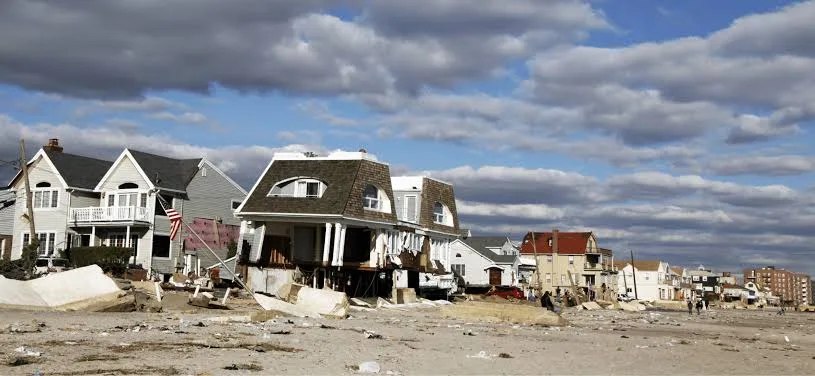
The worst time to evaluate a catastrophe insurance adjuster is when you actually need one. By the time a hurricane is in the Gulf, a hailstorm is moving across the Midwest, or a wildfire is consuming a region, the entire industry is calling the same firms. Capacity gets allocated to whoever moved first. The carriers still in the evaluation phase get whatever's left.
This is one of the more consistent operational mistakes a claims program can make. Vendor selection for catastrophe response is treated as a reactive decision when it should be a deliberate one made months in advance. The carriers who handle CAT events well almost universally share one habit - they finished their partner evaluation work in the off-season, not during it.
If you're a claims leader thinking about your CAT readiness for the next event, this is the piece worth reading now. Here's what actually matters when you're evaluating a catastrophe adjuster partner, and how to tell the genuinely capable firms from the ones who simply accept the assignment.
What a Catastrophe Adjuster Actually Does Differently
Before the evaluation framework, it's worth being clear about what makes catastrophe work different from daily claims work. The mistake most carriers make is treating it as the same job done at higher volume. It isn't.
A catastrophic insurance adjuster operates inside a much messier set of conditions than a daily adjuster. Hurricane files involve wind versus flood causation disputes, multiple damaged structures on single properties, code upgrade implications, and ALE clocks running on residential losses. Hail deployments compress hundreds of inspections into days, with ladder logistics, soft-metal evidence requirements, and increasingly contested causation arguments. Wildfire response involves total loss documentation, access constraints from active disaster zones, and contents inventory work that can take weeks per file.
None of this is impossible for a daily adjuster. But the combination of complexity, speed, and surge volume requires an operational discipline that doesn't show up in a normal claims environment. The adjusters and firms who handle this consistently aren't just experienced - they're operating inside an infrastructure built specifically for the work.
The carriers who get vendor selection right understand this distinction. The ones who get it wrong tend to evaluate CAT vendors using daily claims criteria, and then wonder why the deployment didn't perform.
The Five Things Worth Asking Before You Sign
Most RFPs for catastrophe claims adjuster companies focus on the wrong things - adjuster headcount, geographic coverage maps, technology stack, sample reports. These are easy to document and easy to misread. Here are the five questions that actually surface operational fit.
1: How is the adjuster roster built and maintained?
A roster size of 1,000 names isn't the same as 1,000 deployable, currently-licensed, recently-trained adjusters. The useful question isn't how many adjusters the firm has - it's how the roster is maintained between events.
A serious catastrophe insurance adjuster firm verifies licensing across hurricane-corridor states quarterly. It tracks each adjuster's recent deployment history, certifications, and specializations. It refreshes training mid-year, not just at hire. And it knows, at any given moment, which adjusters are genuinely available versus which are listed but unreachable.
Ask the vendor to walk you through their last roster review. The specificity of the answer tells you everything.
2: What does the firm do in the pre-season months?
The work that decides how a CAT event goes happens long before the event itself. Pre-positioned rosters. Ladder assist relationships secured. Carrier alignment calls completed. File standards stress-tested under simulated surge. Communication protocols documented.
If a vendor's answer to "what happens in February?" is vague, they're going to scramble when the cone shows up on a map. If the answer is specific - actual dates, actual deliverables, actual carrier coordination - they're going to walk into the event with a plan.
3: How do file standards behave under surge?
This is the question that separates the genuinely capable independent catastrophe claims adjuster firms from the ones running on capacity alone. File standards that hold up at normal volume often degrade quickly under surge. Photo discipline gets thinner. Scope notes get shorter. Coverage documentation becomes a sentence rather than a paragraph.
The cost of that degradation doesn't disappear. It shows up months later as supplements, reopens, and complaint files. A vendor whose internal QA continues to apply the same standard during surge as it does in March is doing the work that prevents downstream cost. A vendor whose QA shifts to sampling during CAT is exporting that quality work back to your desk.
Ask specifically what the QA function does differently during CAT, if anything. The right answer is "nothing - the standard doesn't change."
4: How is communication managed during the deployment?
The natural instinct during a busy deployment is to communicate less. The carrier desk hears from the vendor when there's a problem, not on a steady cadence. This produces chase calls, surprise escalations, and policyholder complaints that the carrier learns about second-hand.
The catastrophe claims adjuster companies that handle communication well treat it as an operational obligation, not a courtesy. Daily file movement reports. Proactive flags on anything unusual. Escalations made the moment they're needed, not the moment they become a problem.
Ask the vendor to describe their communication cadence during a recent event in specific terms. If they can't, the cadence probably doesn't exist.
5: Who is your point of contact, and what is their authority?
Most CAT deployments give the carrier a field adjuster name that changes file to file. The carrier ends up tracking which adjuster has which file, and any continuity in the relationship has to be rebuilt with each new claim.
The vendors who handle this better use a desk adjuster model - a named point of contact who owns communication, status, and escalation across every file on the carrier's book, regardless of which field adjuster is on the ground. The carrier has one relationship to manage. The field complexity is the vendor's to handle.
Ask whether the firm runs a single point of contact model and what authority that contact has. If escalation requires routing through someone else, that's friction during the worst possible week to have friction.
What Carriers Often Miss
A few quieter signals worth paying attention to during evaluation.
How the vendor talks about past failures. The catastrophe adjuster firms worth working with have been through events where things didn't go perfectly, and they can describe what they changed afterward. Vendors who can't name a past failure either haven't been through enough events or aren't being honest about what they've learned. Both are problems.
Whether the field adjuster experience matches the sales pitch. The capabilities deck and the actual deployment are sometimes different things. Ask to speak with adjusters who have worked recent events, not just leadership. The texture of those conversations tells you what the vendor's day-to-day operation actually looks like.
What the firm does for daily claims. Vendors with strong daily operations usually have stronger CAT operations too - the discipline that produces clean daily files is the same discipline that holds up under surge. Vendors who only show up during events tend to operate with looser standards across the board.
When to Have This Conversation
The right time to evaluate a catastrophe insurance adjuster is in the months when nothing is happening. February for hurricane season. October for winter losses. The off-season is when serious vendors have the time and incentive to walk through their operation in detail. It's also when capacity decisions can be made deliberately rather than under pressure.
The carriers who consistently come out of CAT events ahead are usually the ones who started this work six months before the event. By the time the storm forms, their bench is locked, their file standards are aligned, and their communication protocols are documented.
The math doesn't favor waiting. Worth thinking about before the next event makes the decision for you.