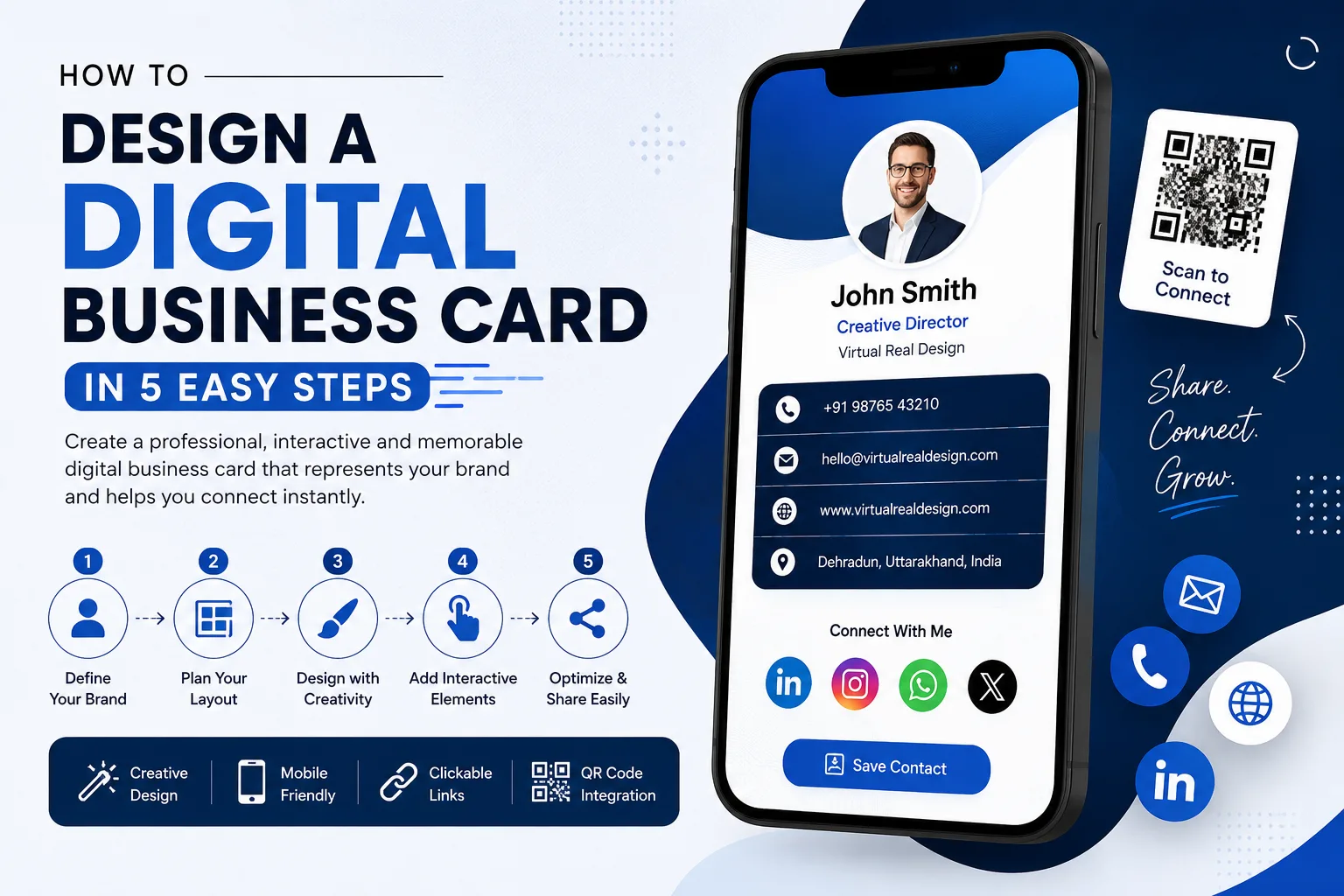
In today’s digital-first world, networking has evolved far beyond traditional paper cards. Businesses and professionals now prefer smart, interactive, and easily shareable solutions that improve accessibility and brand visibility. This is where Digital Business Card Design becomes important. A well-designed digital business card not only shares contact details but also strengthens your professional identity and improves digital branding.
Unlike traditional cards, a Digital Business Card can include clickable links, social media profiles, portfolio access, QR codes, and interactive elements. It creates a modern impression while making networking faster and more effective. Whether you are a freelancer, startup owner, or established business, a professional digital business card helps you stay memorable and accessible.
This guide explains how to create a high-performing and visually professional digital card in five practical steps.
Why Is Digital Business Card Design Important?
A digital business card is more than just a contact-sharing tool. It acts as a compact branding asset that reflects your professionalism and brand identity. Businesses today focus heavily on Digital Branding, and a modern business card supports that strategy by maintaining consistency across platforms.
A professionally designed card improves:
- Brand credibility
- Networking efficiency
- User accessibility
- Online visibility
- Customer engagement
Many businesses now work with a Graphic Design Company in India to create visually strong and interactive business cards that align with their branding strategy.
Step 1: Define Your Brand Identity Before Designing
Before starting the design process, identify the purpose and style of your card. Your Business Card Design should visually represent your profession, industry, and personality. Think about your brand colors, typography, logo placement, and communication style.
A professional digital business card should answer three questions instantly:
- Who are you?
- What do you do?
- How can people contact you?
Consistency is important. Your card design should match your website, social media profiles, and overall branding materials. This strengthens brand recognition and trust.
Step 2: Focus on a Clean and User-Friendly Layout
One of the biggest mistakes in Virtual Business Card Design is overcrowding information. A cluttered card reduces readability and weakens user experience. Instead, focus on a clean layout that highlights only essential details.
Include:
- Name and designation
- Company name
- Phone number and email
- Website link
- Social media icons
- QR code (optional)
This is where UI/UX Design plays a major role. A strong layout ensures users can quickly understand and interact with the card without confusion. Proper spacing, visual hierarchy, and alignment improve usability significantly.
Step 3: Use Modern Visual Elements for Better Engagement
A Creative Business Card Design stands out because of its visual presentation. Instead of using generic templates, use customized visuals that align with your brand personality. Modern design elements create a stronger first impression and improve engagement.
Some effective design elements include:
- Minimalist layouts
- High-quality icons
- Brand-consistent color schemes
- Interactive buttons
- Smooth typography combinations
Businesses often use Graphic Design Services in India to create modern and conversion-focused business card designs that leave a lasting impact.
Step 4: Add Interactive and Clickable Features
The biggest advantage of a Digital Business Card is interactivity. Unlike printed cards, digital versions allow users to interact directly with your information. Adding clickable elements improves convenience and user engagement.
Useful interactive features include:
- Click-to-call buttons
- Email shortcuts
- Website redirects
- Portfolio links
- Social media integration
- Google Maps location
Interactive functionality improves the overall user experience and makes your card more effective for networking and lead generation.
Step 5: Optimize Your Digital Business Card for Sharing
After completing the design, ensure your card is easy to share across platforms. A Professional Digital Business Card should work smoothly on smartphones, tablets, and desktops. Test loading speed, responsiveness, and accessibility before finalizing it.
You can share your card through:
- Email signatures
- LinkedIn profiles
- QR codes
- NFC-enabled smart cards
- Social media platforms
Businesses focusing on Brand Identity Design often integrate digital business cards into their larger marketing strategy to improve visibility and communication.
Common Mistakes to Avoid in Digital Business Card Design
Many professionals create digital cards without focusing on usability or branding consistency. Avoid these common mistakes:
- Overloading the card with information
- Using too many colors or fonts
- Ignoring mobile responsiveness
- Adding low-quality visuals
- Using unclear CTAs
To create a successful Modern Business Card Design, focus on simplicity, clarity, and accessibility.
How Does Digital Business Card Design Help Businesses?
A well-designed digital card supports both branding and marketing efforts. It improves professional presentation while making communication easier for potential clients and partners. Businesses investing in Digital Branding and professional design often experience:
- Better networking opportunities
- Improved brand recall
- Faster lead sharing
- Higher engagement rates
- Stronger online presence
This is why many companies collaborate with a Graphic Design Company in India for customized branding solutions.
FAQs
What is a Digital Business Card?
A digital business card is an electronic version of a traditional business card that includes interactive contact details, branding, and clickable features.
Why is Digital Business Card Design important?
Digital Business Card Design improves professional branding, networking efficiency, and accessibility across digital platforms.
What should a professional digital business card include?
It should include contact details, company information, branding elements, website links, and social media integration.
How does UI/UX Design improve a digital business card?
UI/UX Design improves readability, navigation, and user interaction, making the card more effective and user-friendly.
Can digital business cards improve branding?
Yes, a consistent and visually strong digital card supports brand identity, professionalism, and online visibility.
Conclusion
Creating a strong Digital Business Card Design is not just about appearance—it is about building a smart and interactive networking tool that reflects your brand professionally. By focusing on branding, UI/UX Design, clean layouts, and interactive features, businesses can create digital cards that improve engagement and leave lasting impressions.
As digital networking continues to grow, investing in a professional and modern digital business card is becoming an essential part of business communication and digital branding strategy.