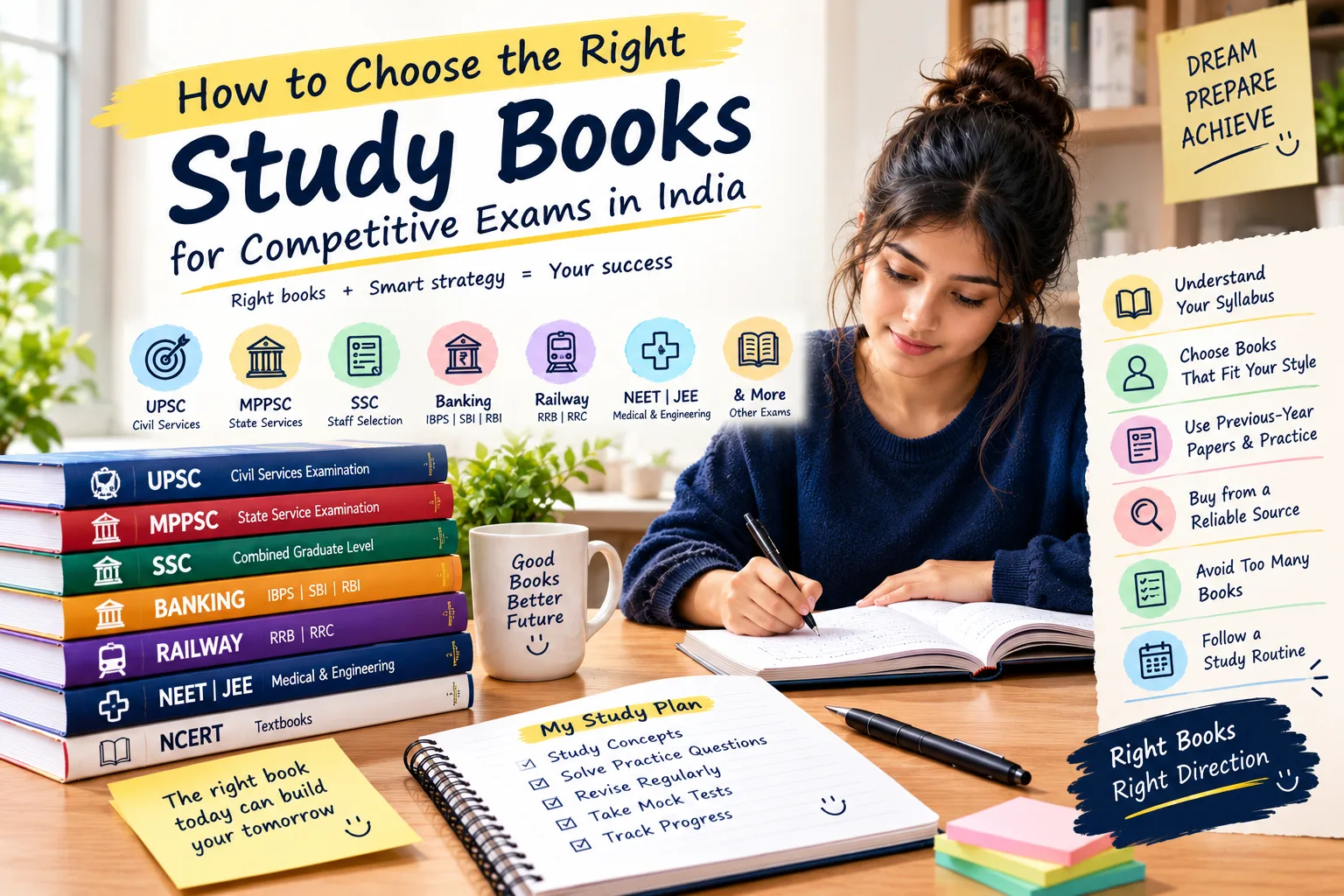
Preparing for a competitive examination is a journey that requires patience, regular practice, and the right study strategy. Whether you are preparing for UPSC, MPPSC, SSC, banking, railway, police recruitment, NEET, or JEE, one question often comes up early in the process: Which books should you study?
With so many publications, guides, practice sets, and online resources available, selecting study material can feel confusing. The good news is that you do not need a large collection of books to begin. You need resources that match your examination, help you understand concepts, and give you enough opportunities to practise.
Understand Your Examination Before Buying Books
The first step is to understand the exam you are preparing for. Read the latest official syllabus and examination pattern before choosing any book. Pay attention to the subjects, important topics, question format, marking scheme, and stages of the selection process.
For example, a student preparing for a government recruitment examination may need to focus on general knowledge, mathematics, reasoning, and language skills. An engineering or medical entrance aspirant will require a different approach, with greater attention to subject concepts and problem-solving practice.
Making a list of the required subjects helps you avoid buying books that do not contribute directly to your preparation.
Choose Books That Match Your Learning Style
Not every book explains a topic in the same way. Some provide detailed explanations for beginners, while others focus on short notes, solved examples, and practice questions.
If you are learning a subject for the first time, look for clear explanations and examples that build your understanding step by step. If you already know the basics, question banks, mock tests, and previous-year papers may help you identify weak areas.
Language also matters. Choose Hindi- or English-medium material according to your examination requirements and comfort level. Studying from a book you can understand properly is more useful than struggling with unfamiliar terminology throughout the syllabus.
Why Previous-Year Papers and Practice Books Matter
Reading theory is only one part of exam preparation. You also need to apply what you learn to actual questions.
Previous-year papers help you understand the question format and the level of difficulty. Practice books allow you to work on specific topics, recognise recurring mistakes, and improve your speed.
Try following a simple routine:
- Study one topic from your main textbook.
- Solve related practice questions.
- Review incorrect answers and understand why you made each mistake.
- Revisit difficult questions during revision.
- Take timed mock tests as your preparation progresses.
Do not use previous-year papers to predict the exact questions in an upcoming exam. Instead, use them to understand the examination and strengthen your preparation.
Finding Study Material From a Reliable Source
Once you know which books you need, finding them from a convenient and reliable source becomes the next step. A useful online bookstore allows students to explore different categories, compare available titles, and check product details before placing an order.
When shopping for books, check the author or publisher, edition, language, syllabus coverage, and whether the book includes solved papers or additional practice material. These details are particularly important when an examination syllabus or pattern has changed.
Students can also organise their search by exam category instead of browsing unrelated titles. This makes it easier to focus on relevant resources and build a manageable study collection.
Avoid the Mistake of Buying Too Many Books
Collecting study material can create the impression that preparation is moving forward, but unfinished books rarely help improve performance. Switching between several resources for the same subject may also lead to repeated reading and inconsistent revision.
A better strategy is to select one primary book for each subject and use supplementary material only when necessary. Complete the important chapters, solve questions, revise regularly, and evaluate your progress before adding another resource.
Students looking for competitive exam books can explore materials for various examinations and choose titles according to their individual syllabus and preparation needs.
Build a Study Routine You Can Maintain
Even excellent study material needs to be supported by consistent effort. Create a realistic timetable that includes learning new topics, solving questions, revising completed chapters, and taking mock tests.
Set small weekly goals rather than trying to finish everything at once. At the end of each week, review what you completed and identify the topics that need more attention.
It is equally important to take short breaks and get enough rest. A sustainable routine helps you remain focused over a longer preparation period without feeling pressured to study continuously.
Final Thoughts
Choosing the right books is an important part of competitive exam preparation, but success depends on how effectively you use them. Begin with the syllabus, select relevant study material, practise questions regularly, and revise what you learn.
Instead of comparing your preparation with others or collecting every recommended book, focus on your own progress. A clear plan, suitable resources, and consistent practice can make your preparation more organised and help you approach the examination with greater confidence.