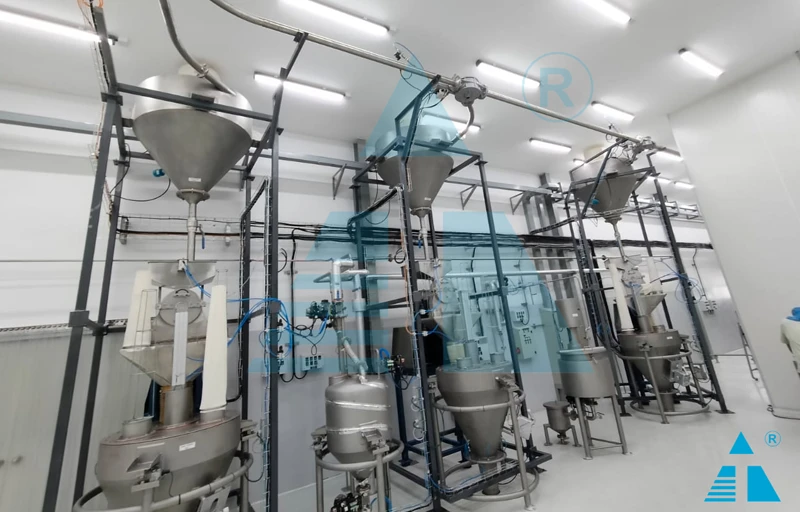
In industries like cement, food, pharmaceuticals, chemicals, and plastics, the handling of bulk powders and granules is a critical part of daily operations. A Pneumatic Conveying System offers an efficient, dust-free, and automated way to transport materials through pipelines using compressed air or gas. But with so many options available, how do you choose the right system for your plant?
The right decision can save costs, improve efficiency, and ensure product quality—while the wrong one can lead to downtime, excessive wear, or material loss. This guide will help you understand the key factors to consider before investing in a Pneumatic Conveying System.
1. Understand Your Material Properties
Different materials behave differently during conveying. Before selecting a system, assess the following:
- Particle size and shape (fine powders vs. coarse granules)
- Bulk density (lightweight or heavy materials)
- Abrasiveness (cement, fly ash, or chemicals may cause wear)
- Moisture content (can affect flowability)
- Fragility (materials like food powders may require gentle handling)
For example, cement and fly ash often require dense phase conveying, while lighter materials can be handled with dilute phase systems.
2. Choose Between Dilute Phase and Dense Phase
The two main types of Pneumatic Conveying Systems are:
- Dilute Phase Conveying
- Uses high velocity, low pressure.
- Suitable for light, non-abrasive materials.
- Cost-effective but can cause particle degradation.
- Dense Phase Conveying
- Uses low velocity, high pressure.
- Suitable for abrasive, fragile, or heavy powders.
- Provides gentle handling with less wear on pipelines.
Your choice depends on the type of material, distance, and volume you need to transfer.
3. Consider Distance and Conveying Capacity
- Short distances (up to 100m): Dilute phase may be more economical.
- Long distances (above 100m): Dense phase systems provide reliability.
- High-capacity plants: Choose a system that matches throughput needs without overloading compressors or blowers.
4. Focus on Energy Efficiency
Energy is a major operating cost in pneumatic conveying. Look for systems that include:
- Energy-efficient blowers or compressors.
- Optimized pipeline design to reduce resistance.
- Automation features for smart air usage.
This ensures long-term cost savings and supports sustainability goals.
5. Ensure Hygiene and Safety Standards
In industries like food, pharma, or chemicals, hygiene and safety are critical. Choose systems that offer:
- Enclosed, dust-free transfer.
- Stainless steel construction for GMP compliance.
- Easy cleaning (CIP systems) to prevent contamination.
- Explosion-proof design for combustible powders.
6. Evaluate Maintenance and Reliability
Downtime is expensive. Select a Pneumatic Conveying System with:
- Minimal moving parts (lower maintenance).
- Wear-resistant pipelines and bends.
- Easy access for inspection and cleaning.
- Vendor support for spare parts and servicing.
7. Work with a Trusted Manufacturer
Every plant is unique, so it’s essential to partner with a manufacturer who can customize solutions. A reliable partner will analyze your process, design the right system, and provide after-sales support for smooth operations.
Conclusion
Choosing the right Pneumatic Conveying System requires careful consideration of your material properties, plant requirements, hygiene standards, and long-term cost factors. By selecting a system tailored to your industry, you can improve efficiency, reduce risks, and ensure sustainable operations.
If you’re looking for a trusted partner to design and install a Pneumatic Conveying System for your plant, Times Automation is here to help. We provide end-to-end solutions customized for cement, food, pharma, chemical, and other industries.
📞 Call us today: +91 94160 55180