How to Choose the Right Himalayan Pink Salt Grade for Your Business
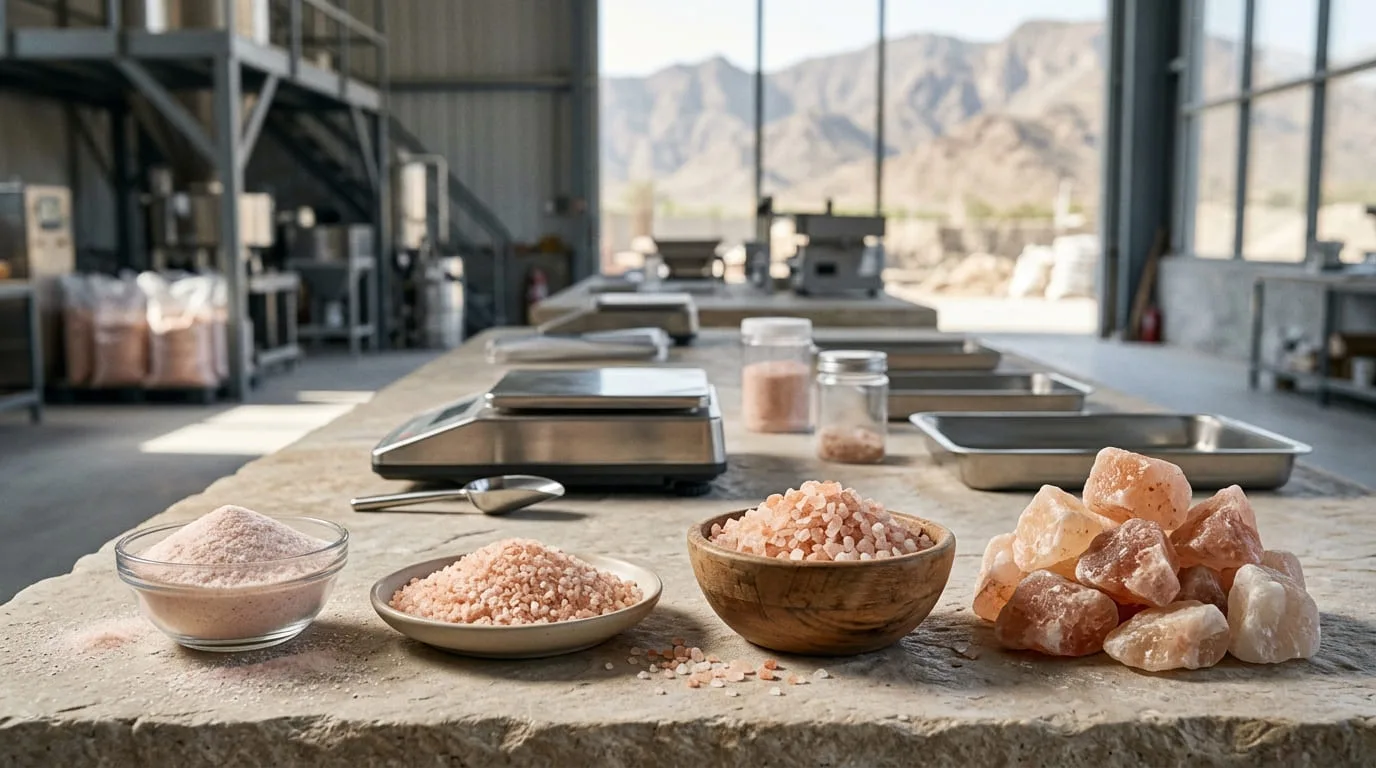
Himalayan pink salt comes in different colours, crystal sizes, and product formats. While these differences may seem small at first, they can affect how businesses process, package, market, and sell the final product. A food manufacturer may need fine salt for seasoning, while a retailer may prefer attractive crystal packs or decorative salt products.
Choosing the right grade is therefore an important part of building a successful salt business. The wrong product can lead to packaging problems, inconsistent results, customer complaints, or unnecessary costs. On the other hand, selecting the right specifications from the beginning can help businesses manage inventory and meet customer expectations.
Pakistan is a recognised source of Himalayan pink rock salt, offering products for food, retail, wholesale, and decorative markets. However, buyers should understand their requirements before contacting a supplier.
This guide explains how to compare salt grades, choose suitable packaging, assess product quality, and work with a supplier that understands your business needs.
Why Does Himalayan Pink Salt Grade Matter?
Not every salt product serves the same purpose. The ideal grade depends on the intended application, the equipment used to process the salt, the packaging format, and the expectations of the final customer.
For example, fine salt works well in applications that require even distribution, while coarse crystals may suit grinders, seasoning blends, and certain retail products. Larger salt pieces can also serve specialist food applications, depending on the required specifications.
Businesses should consider three main factors before selecting a product:
- Intended use: Decide whether you need edible salt, decorative products, or another specific commercial grade.
- Physical specifications: Confirm the required crystal size, colour range, and consistency.
- Commercial requirements: Consider order volume, packaging, storage, transportation, and target-market regulations.
When buyers define these requirements early, they can compare suppliers more accurately and avoid paying for specifications they do not need.
1. Understand the Different Himalayan Pink Salt Grades
The first step is to understand the main product formats available in the market. Each grade offers different practical benefits, so your choice should reflect how you plan to use or sell the salt.
Fine Himalayan pink salt
Fine pink salt has smaller particles and a texture suited to applications that require easy mixing and even distribution. Food brands may use it in seasoning blends, cooking products, and packaged edible salt.
Before purchasing, confirm the particle-size range and processing specifications. Different manufacturers may use different grading standards, so the word “fine” alone may not provide enough detail.
Coarse Himalayan pink salt
Coarse salt contains larger crystals than fine salt. Retailers may sell it for cooking, grinders, and selected seasoning applications.
Buyers should confirm crystal size, packaging requirements, and the intended use before ordering. Consistent grading can help businesses achieve a more uniform product across different batches.
Himalayan pink salt chunks
Larger salt chunks may suit certain decorative applications, specialist product manufacturing, or further processing. Buyers should specify the required dimensions and acceptable variations because natural rock salt does not have a perfectly uniform shape.
Custom-ground salt
Some businesses need a particular particle size for a specific product or manufacturing process. In these cases, buyers should discuss their requirements directly with the manufacturer and confirm whether the requested grade is available.
A suitable supplier should explain its available specifications rather than assume that one grade will work for every application.
2. Match the Salt Grade to Your Target Market
Understanding your customer is just as important as understanding the product itself. Different markets value different product features, and your sourcing decisions should reflect those priorities.
Food manufacturers and seasoning brands
Food manufacturers often need consistent particle sizes, suitable processing, clear product specifications, and relevant food-safety documentation. They may also require bulk packaging that protects the salt during storage and transportation.
If your business produces seasoning blends, ask the supplier whether the salt meets your required particle-size range and processing standards.
Supermarkets and retail brands
Retail businesses often focus on product appearance, package size, labelling, and shelf presentation. Smaller packs may suit individual consumers, while larger packs may appeal to families or frequent users.
If you plan to launch a private-label product, discuss packaging design, minimum order quantities, and repeat-order availability before selecting a supplier.
Restaurants and hospitality businesses
Restaurants may need dependable supplies of edible salt in practical quantities. Consistency, suitable packaging, storage conditions, and delivery schedules can matter more than decorative presentation.
Decorative product businesses
Companies selling salt lamps and other decorative products need a different product category from food businesses. These buyers may focus on shape, dimensions, finishing, appearance, and protective packaging.
For example, businesses exploring edible product options can review the edible Himalayan salt range from Friends Rock Salt, while decorative product buyers can explore its Himalayan salt lamp collection.
Choosing a product that fits your target market helps you avoid sourcing unsuitable stock and makes it easier to plan your product range.
3. Evaluate Product Quality Before Ordering
Natural Himalayan pink salt can vary in colour and appearance. These variations do not automatically indicate poor quality, but buyers should establish clear specifications before placing a commercial order.
Start by asking the supplier about the following factors:
- Colour range: Confirm the acceptable natural colour variations for your intended product.
- Crystal size: Request the particle-size range or dimensions relevant to your application.
- Cleanliness: Ask about screening, cleaning, and foreign-material control.
- Processing: Understand how the supplier prepares the salt for its intended use.
- Consistency: Discuss how the supplier checks products across repeat batches.
For edible salt, request relevant product specifications and laboratory reports where appropriate. You should also confirm whether the product meets the food-safety and import requirements of your target market.
A sample can help your team evaluate the product before committing to a large order. Compare it against the agreed specifications rather than relying only on photographs or general descriptions.
This process is especially useful when working with new suppliers or introducing a product under your own brand.
4. Compare Manufacturers and Suppliers Carefully
Businesses searching for a Himalayan salt manufacturer in Pakistan should evaluate more than the company's product catalogue. Manufacturing capability, quality control, communication, and documentation all deserve attention.
First, establish whether the business manufactures the product itself, processes raw salt, or sources finished products from other companies. This distinction can help you understand its role in the supply chain.
Next, ask about minimum order quantities, production capacity, packaging options, and typical lead times. If you expect to place repeat orders, discuss how the supplier maintains product specifications and manages changes in demand.
You should also check the company's background and verify important claims. Review its available business information, product documentation, and contact details before making a purchasing decision.
Friends Rock Salt provides company and product information on its About Us page. Prospective buyers can use this information as a starting point and contact the business to verify the details relevant to their own requirements.
Apply the same checks to other pink salt companies in Pakistan so you can compare suppliers using consistent criteria.
5. Choose Packaging That Protects Your Product
Packaging affects product protection, storage, transportation, and presentation. The right choice depends on the type of salt, the sales channel, and the distance the product must travel.
Wholesale buyers may need large bags or bulk packaging, while retail brands may prefer smaller packs with customised labels. Food businesses should ensure that packaging is appropriate for the intended product and complies with applicable regulations.
Before confirming an order, ask about:
- Available package sizes and materials
- Minimum quantities for custom packaging
- Labelling and private-label options
- Protection against moisture and contamination
- Packaging lead times and additional costs
Also consider how the product will move through your supply chain. Packaging that works for a local retail shipment may not be suitable for a long international journey.
Clear packaging specifications can reduce misunderstandings and help you receive products that fit your operational needs.
6. Understand Pricing and Wholesale Requirements
The lowest price does not always represent the best value. Two suppliers may offer different prices because they provide different grades, processing levels, packaging formats, or delivery arrangements.
When comparing salt suppliers in Pakistan, request detailed quotations that identify the product specifications, order quantity, packaging, production time, and delivery terms.
Ask whether the supplier has minimum order requirements and whether the quoted price changes with larger quantities. However, avoid ordering more stock than your business can reasonably sell or store.
You should also consider freight charges, insurance, import duties, and other applicable expenses when calculating the total landed cost.
For international purchases, confirm which party handles shipping arrangements and export documentation. Your quotation or purchase agreement should clearly state the responsibilities of both parties.
Comparing complete offers rather than isolated prices will help you make a more informed purchasing decision.
7. Check Export Readiness and Market Requirements
Businesses sourcing products internationally should confirm that their supplier understands the practical requirements of exporting salt.
A Himalayan pink salt exporter in Pakistan may need to provide documents such as commercial invoices, packing lists, certificates of origin, transport documents, and relevant product-specific records, depending on the transaction and destination.
Import requirements vary between countries. Buyers should confirm the applicable rules with their customs broker or the relevant authorities before arranging a shipment.
You should also discuss production schedules, order tracking, packaging standards, and procedures for addressing discrepancies.
If your business plans to sell in multiple markets, check the requirements of each destination rather than assuming that one set of documents will work everywhere.
These checks can help reduce delays and make international sourcing more predictable.
Final Thoughts
Choosing the right Himalayan pink salt grade starts with understanding your customers, product specifications, and commercial goals. Fine salt, coarse crystals, larger chunks, and decorative products each serve different purposes, so buyers should match their selection to the intended application.
Before placing an order, evaluate product quality, request samples when appropriate, compare detailed quotations, and verify the supplier's documentation. Clear communication about packaging, quantities, and delivery terms can also help prevent avoidable problems.
Whether you are a food manufacturer, retailer, wholesaler, or decorative product distributor, a structured sourcing process can help you choose products that suit your business.
If you are exploring salt products for wholesale or export, you can contact Friends Rock Salt to discuss your requirements and confirm which options may suit your business.