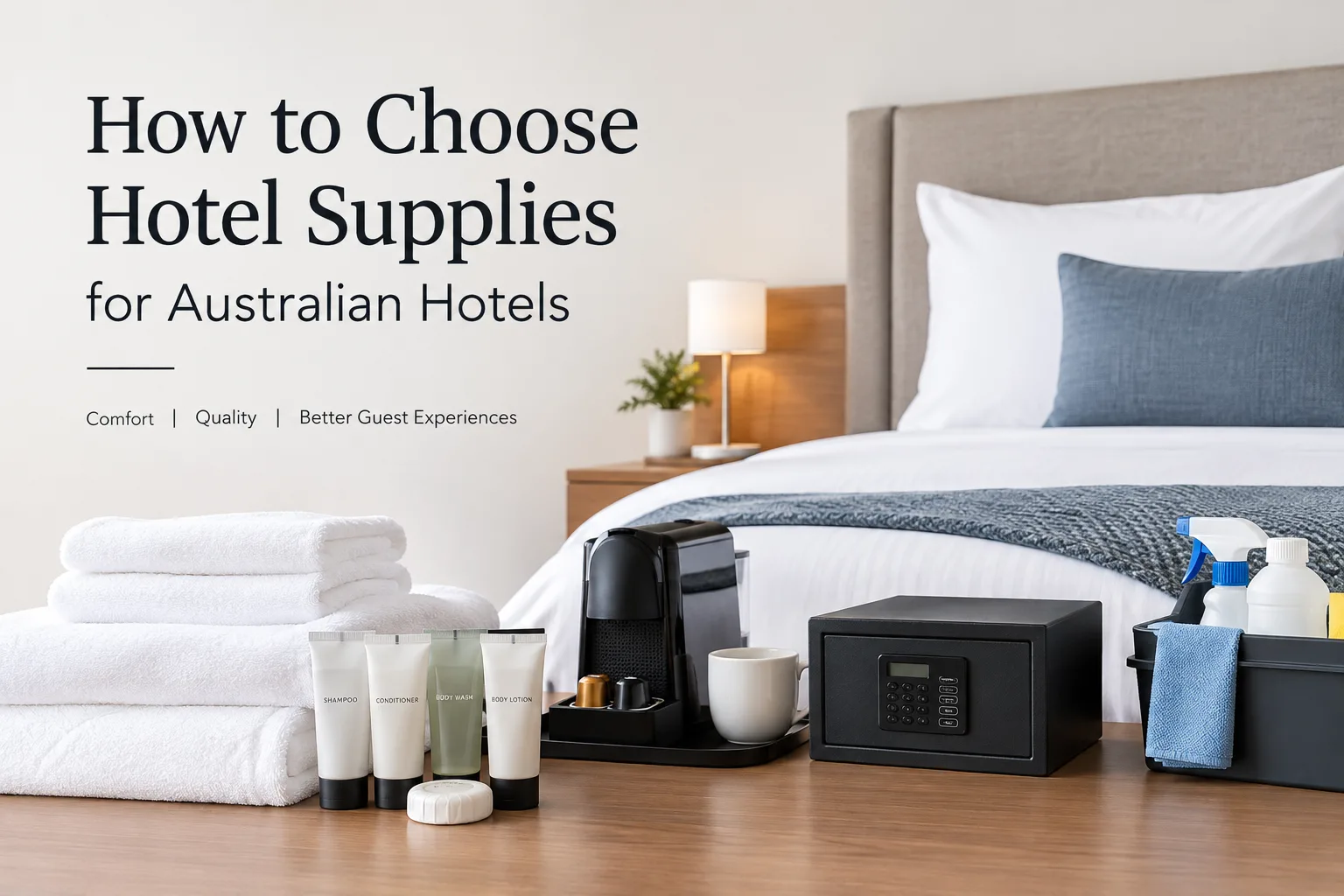
Running an accommodation business involves much more than preparing rooms for arriving guests. From providing a comfortable night's sleep to maintaining clean bathrooms and well-presented guest rooms, every detail contributes to the overall experience. Behind the scenes, hotel owners and housekeeping teams also need to manage stock, control purchasing costs, and ensure essential products are available when required.
Choosing the right hotel supplies can make these daily responsibilities easier. Quality bedding, practical guest amenities, reliable room accessories, and suitable cleaning products all play a part in keeping an accommodation property running smoothly. However, with so many products available, knowing what to prioritise can be challenging, particularly for businesses managing multiple rooms.
Whether you operate a boutique hotel, regional motel, holiday accommodation property, or serviced apartment, understanding your requirements before placing an order can help you make better purchasing decisions.
1. Start with the Essential Requirements of Your Property
Every accommodation business has different priorities. A luxury hotel may focus on premium bedding and carefully selected bathroom amenities, while a regional motel might prioritise durability, straightforward maintenance, and products that can withstand frequent use.
Before choosing a supplier, consider your room count, average occupancy, guest expectations, and housekeeping arrangements. These factors will help you determine which products you need, how frequently you need to replenish them, and where investing in better-quality items makes the most sense.
For businesses researching tasmania hotel supplies, the same principles apply. Properties in Tasmania may experience seasonal fluctuations in bookings, particularly around holiday periods. Planning stock levels around expected occupancy can help prevent shortages during busy periods without tying up unnecessary money in excess inventory.
Create a list of essential products and divide it into categories such as bedding, bathroom amenities, room accessories, and cleaning equipment. This simple step makes purchasing more organised and helps identify items that need regular replenishment.
2. Choose Commercial Linen That Suits Frequent Use
Bed linen is one of the most noticeable elements of a guest room. Clean, comfortable sheets and neatly presented bedding contribute to the impression guests form when they enter their room. At the same time, hotel linen must withstand repeated washing, drying, handling, and storage.
When comparing commercial linen supplies, consider fabric composition, texture, care requirements, sizing, and expected laundering frequency. A fabric that feels comfortable but requires complicated maintenance may not be the most practical option for a busy property.
Poly-cotton blends are commonly considered for their balance of comfort and everyday practicality, while 100% cotton may appeal to properties seeking a natural fibre option. The right choice depends on the desired guest experience, budget, and laundry arrangements.
It is also worth standardising linen sizes across rooms wherever possible. Consistent specifications simplify stock management, make replacements easier, and reduce the risk of purchasing items that do not fit existing mattresses or bedding.
3. Compare Linen Suppliers Before Placing Bulk Orders
Buying linen in larger quantities requires careful planning. A lower price per item may initially seem attractive, but it is important to consider product consistency, availability, replacement requirements, and the supplier's ability to meet your needs over time.
When comparing linen suppliers Australia, look beyond the advertised price. Check the product specifications, available sizes, fabric details, ordering conditions, and delivery arrangements relevant to your property.
For example, replacing worn sheets across several rooms can become difficult if the replacement products differ noticeably in colour, texture, or dimensions. Selecting consistent products from the outset can make future purchasing simpler.
Before committing to a substantial order, calculate how many complete linen changes your property requires. Consider how much stock will be in guest rooms, how much will be in the laundry, and how much needs to remain available as a reserve.
This approach helps you establish a realistic purchasing quantity instead of relying on estimates that may not reflect your actual operations.
4. Invest in Bedding That Supports Guest Comfort
Guests might not know the technical specifications of their bedding, but they are likely to notice whether the bed feels comfortable and looks clean. Sheets, pillowcases, blankets, doona covers, and mattress protectors all contribute to the sleeping environment.
When sourcing commercial bed linen Australia, consider how each component performs as part of the complete bed rather than evaluating individual products in isolation.
Start with the mattress dimensions and select correctly sized sheets and protectors. Poorly fitting bedding can shift during the night, create an untidy appearance, and make room preparation more difficult for housekeeping staff.
Mattress protectors are particularly useful because they provide a layer between the mattress and everyday use. Their suitability will depend on the mattress type, required protection, washing instructions, and property maintenance procedures.
A dependable hotel bedding supplier should offer products that match the practical needs of your accommodation business. Look for consistent sizing and suitable options for the room standards you want to maintain.
Properties aiming for a more premium presentation may also consider coordinated colours, quality pillowcases, and bedding that complements the overall room design.
5. Create a Consistent Standard Across Guest Rooms
Consistency matters when guests expect the same standard of accommodation throughout their stay. Bedding, towels, bathroom amenities, and room accessories should be selected with a clear idea of how they will work together.
When evaluating hospitality linen suppliers, consider whether their product range can support your existing requirements as well as future replacements.
A property with ten rooms may manage stock differently from a hotel with a hundred rooms, but both benefit from having clear product specifications. Record the sizes, materials, preferred product types, and quantities used in each room category.
This information becomes especially valuable when different staff members are responsible for ordering supplies. Instead of relying on memory, they can refer to an established purchasing list and select the correct items.
Businesses comparing hotel bedding suppliers should also consider the relationship between comfort, appearance, maintenance, and cost. The most expensive option will not automatically be the best fit for every property.
Choose products that meet your guests' expectations while remaining practical for the way your accommodation business operates.
6. Select Guest Toiletries That Match Your Accommodation
Bathroom amenities are another important part of the guest experience. Shampoo, conditioner, body wash, soap, and other toiletries provide everyday convenience while helping maintain a consistent bathroom presentation.
When choosing hotel toiletries suppliers, consider the type of accommodation you operate and the expectations of your guests.
Individual guest amenities may suit properties where presentation and convenience are priorities, while refillable dispensers may be appropriate for businesses looking to reduce packaging and simplify replenishment. Whichever approach you choose, make sure the products fit your housekeeping procedures and can be maintained hygienically.
It is also important to consider product availability and storage requirements. Standardising the toiletries used throughout your property can make purchasing easier and help staff identify when supplies need replenishing.
Rather than selecting products solely because of their appearance, assess their suitability for your guests, budget, and operational requirements.
7. Make In-Room Coffee and Beverage Facilities Practical
For many travellers, being able to prepare a hot drink in their room is a welcome convenience. Coffee facilities can be particularly useful in hotels, serviced apartments, and accommodation properties where guests appreciate having refreshments available without leaving their rooms.
When selecting hotel room coffee machines, consider ease of use, available bench space, cleaning requirements, and the type of coffee service you intend to provide.
Pod machines may suit properties seeking a straightforward in-room option, provided the selected machine and consumables meet the property's requirements. Other businesses may prefer different brewing methods depending on guest expectations and ongoing costs.
Before purchasing equipment for every room, consider the practical details. Are suitable power outlets available? Will housekeeping staff be able to clean the machine efficiently? How will used pods and other waste be managed?
You should also account for the cost and storage of coffee pods, cups, and any accompanying supplies.
A well-planned beverage setup should be easy for guests to use and straightforward for staff to maintain between stays.
8. Consider Security When Selecting Guest Room Safes
Guests travelling with passports, electronics, jewellery, and other valuables may appreciate having a secure storage option in their room. A suitable safe can therefore be a useful addition to accommodation where this facility is expected.
When comparing a hotel safe, look at its internal dimensions, locking mechanism, installation requirements, and ease of operation. The safe should accommodate the items guests are reasonably likely to store without taking up excessive room space.
For properties purchasing multiple units, standardising the equipment can also simplify staff training and maintenance.
Businesses researching hotel safes Australia should check the specifications of each model before ordering. Consider how the safe will be positioned, how access will be managed, and what procedures staff will follow if a guest forgets their code.
A safe is only one element of a property's broader security arrangements, so its use should complement the hotel's established policies and procedures.
9. Organise Laundry Supplies and Housekeeping Operations
Laundry and housekeeping are essential to the daily running of an accommodation business. Used linen must be collected, separated, transported, and processed efficiently, while clean products need to remain organised and ready for the next room turnover.
Selecting appropriate commercial laundry supplies can help staff manage these routines. Laundry bags, for example, should suit the volume of linen handled, the collection process, and the available storage space.
It is worth reviewing the entire laundry workflow rather than purchasing equipment without considering how it will be used. Think about where used linen is collected, how it reaches the laundry, and how clean linen returns to storage.
The same principle applies when choosing hospitality cleaning supplies. Products should be appropriate for the surfaces being cleaned and compatible with the property's cleaning procedures.
Staff should follow product labels, safety instructions, and relevant workplace requirements. Clear storage arrangements and consistent cleaning procedures can also help reduce confusion during busy room turnovers.
10. Choose Cleaning Products That Meet Your Property's Needs
Cleanliness affects both the appearance of an accommodation property and the confidence guests place in it. Bedrooms, bathrooms, corridors, reception areas, and shared facilities all require appropriate cleaning routines.
When sourcing hotel cleaning supplies wholesale, consider the surfaces involved, the frequency of cleaning, the size of the property, and the amount of storage available.
Buying in bulk may help reduce repeat ordering, but only when the products are suitable and likely to be used before their recommended expiry dates. Purchasing more than your property can store or consume may create unnecessary costs.
It is also important to distinguish between general cleaning products and products intended for specific tasks. Different surfaces and cleaning requirements may call for different formulations, application methods, or equipment.
Review your existing cleaning inventory periodically. Remove unnecessary duplication, identify products that run out frequently, and establish minimum stock levels for essential items.
These small improvements can make purchasing more predictable and help housekeeping teams maintain consistent standards.
11. Build a Purchasing Plan That Works Long Term
Once you have identified the products your property needs, bring everything together in a simple purchasing plan. Include the product name, specifications, quantity required, preferred supplier, and approximate replenishment frequency.
Review this list against occupancy patterns and seasonal demand. A coastal holiday property, for example, may need a different stock plan during peak travel periods than during quieter months.
When assessing suppliers, consider product range, pricing, delivery arrangements, stock availability, and the ease of reordering. Having a reliable source for frequently used products can simplify procurement, particularly when several departments require supplies at the same time.
National Hotel Supplies offers a range of accommodation products, including hotel linen, bedding, guest amenities, room accessories, and housekeeping essentials. Its Australia-wide supply offering allows accommodation businesses to explore products across several operational categories through one website.
Final Thoughts
Choosing hotel supplies is ultimately about finding the right balance between guest comfort, product quality, practical maintenance, and purchasing costs. The best decisions come from understanding how your property operates rather than selecting products based on price or appearance alone.
Start with the essentials, standardise frequently used items, and review your stock requirements regularly. Pay particular attention to linen quality, guest amenities, room equipment, and the products your housekeeping team relies on every day.
With a clear purchasing plan and a suitable supplier, accommodation providers can make replenishment easier to manage while maintaining a consistent standard across their property.