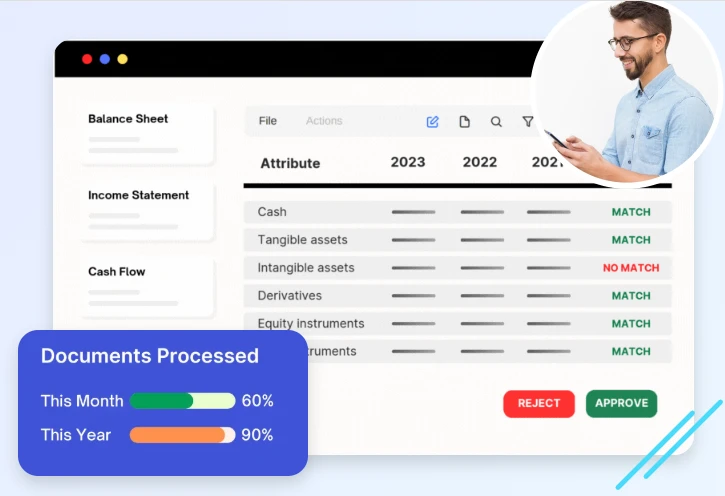
Finance teams today face a familiar problem. Reports take too long. Numbers come from too many sources. Errors surface late, usually during reviews. That’s where automated financial reporting software enters the conversation.
Choosing the right solution, though, isn’t as simple as buying a tool and switching it on. The wrong choice can lock teams into rigid workflows, poor data visibility, and limited flexibility.
This post breaks down what truly matters when selecting a reporting solution that supports accuracy, scale, and smarter financial decisions.
Why finance teams struggle with reporting as complexity grows
As businesses scale, financial reporting stops being a monthly task and becomes a continuous process. New data sources appear. Regulatory requirements tighten. Leadership expects faster insights with fewer errors. Manual reporting workflows, often built around spreadsheets and disconnected systems, struggle to keep up.
The challenge isn’t effort. Finance teams work hard. The challenge is fragmentation. Data lives across ERPs, accounting tools, operational platforms, and external documents.
Every report requires reconciliation, validation, and formatting. That repeated effort slows teams down and increases risk. This is why many organizations begin evaluating financial reporting software as a way to reduce manual handling and improve reliability.
Start by understanding your reporting pain points.
Before comparing tools, finance leaders need clarity on their own bottlenecks. Some teams struggle with close delays. Others face version control issues. Many deal with inconsistent definitions across reports. Automation should solve specific problems, not add another layer of complexity.
Strong solutions centralize data, standardize logic, and maintain traceability. Weak ones automate surface-level tasks while leaving deeper issues untouched. Understanding where errors originate and where time is lost helps teams choose software that delivers measurable value instead of improvements.
The goal isn’t faster reports alone. The goal is confident reporting that supports decisions.
Key capabilities that separate strong tools from weak ones
Not all platforms labeled as automated financial reporting software offer the same depth. Some focus on presentation. Others focus on data movement. The most effective solutions address the full reporting lifecycle.
Data ingestion must handle multiple formats and sources without manual cleanup. Validation rules should flag inconsistencies early, not during final review. Reporting logic needs to remain transparent so teams can explain numbers when questioned.
Equally important is adaptability. Reporting needs change. A system that cannot evolve with new entities, regulations, or metrics quickly becomes a constraint rather than a solution.
Comparing reporting approaches as organizations scale
The difference between manual, semi-automated, and fully automated reporting becomes clearer as volume increases.
The table below highlights how each approach performs under growing complexity.
This comparison explains why growing organizations eventually move toward automation. The decision becomes less about cost and more about control.
Integration matters more than feature lists.
Many tools promise advanced dashboards, templates, and visualizations. Those features matter, but integration matters more. Reporting software must connect cleanly with accounting systems, ERPs, and operational platforms. Without strong integration, automation breaks down quickly.
Data delays create reporting delays. Manual uploads reintroduce the error. The best platforms operate quietly in the background, pulling data consistently and applying the same logic every time.
When evaluating options, finance teams should focus less on how reports look and more on how data flows into them.
Governance, control, and audit confidence
Automation without governance creates risk. Reporting systems must allow role-based access, clear approval workflows, and full audit trails. Finance leaders need visibility into who changed what and when.
Strong financial reporting software supports compliance by design. It documents calculations, preserves historical versions, and ensures consistency across periods. This level of control reduces audit stress and builds confidence with stakeholders. Without these safeguards, automation simply accelerates mistakes.
Scalability and future readiness
Finance teams rarely stay the same size or structure. Mergers, new entities, global expansion, and regulatory changes are common. Reporting software must scale without forcing a rebuild every year.
Scalable systems handle new data volumes without performance loss. They support additional reporting frameworks without custom development. They allow finance teams to respond quickly instead of relying on external support for every change. This flexibility separates long-term platforms from short-term fixes.
Common mistakes teams make when choosing reporting software
One common mistake is prioritizing speed over accuracy.
- Faster reporting means little if trust in the numbers declines.
- Another mistake is selecting tools designed for IT users rather than finance professionals.
- If analysts can’t easily adjust logic or explore data, adoption suffers.
- Teams also underestimate change management. Even the best system fails if users don’t understand how to work with it.
Successful implementations focus on usability, transparency, and gradual adoption. Avoiding these mistakes saves time, budget, and credibility.
FAQ
What does automated financial reporting software actually automate?
It automates data collection, validation, consolidation, and report generation. The goal is to reduce manual handling and repetitive reconciliation. Automation improves consistency while freeing analysts to focus on interpretation.
Is automation suitable for small finance teams?
Yes, especially for lean teams. Automation reduces dependency on individuals and improves continuity. Smaller teams often see faster ROI because time savings are immediate.
How long does implementation usually take?
Timelines vary by complexity and integration needs. Some teams see value within weeks. Full optimization may take a few months as workflows mature.
Can automated reporting handle regulatory requirements?
Modern systems are designed with compliance in mind. They support audit trails, standardized logic, and consistent reporting. This reduces regulatory risk over time.
Does automation eliminate the need for spreadsheets?
Not entirely. Spreadsheets still serve ad-hoc analysis. Automation replaces spreadsheets as systems of record, not exploration tools.
Final thoughts
Choosing the right automated financial reporting software is a strategic decision, not a technical one. The right system strengthens accuracy, improves confidence, and gives finance teams room to think instead of react.
Finance leaders should focus on integration, governance, scalability, and usability. When those foundations are right, automation becomes a long-term advantage rather than a short-term fix.
If your reporting process feels heavier every quarter, that’s a signal. Explore smarter approaches. Reclaim analyst time. Build reports that leadership can t