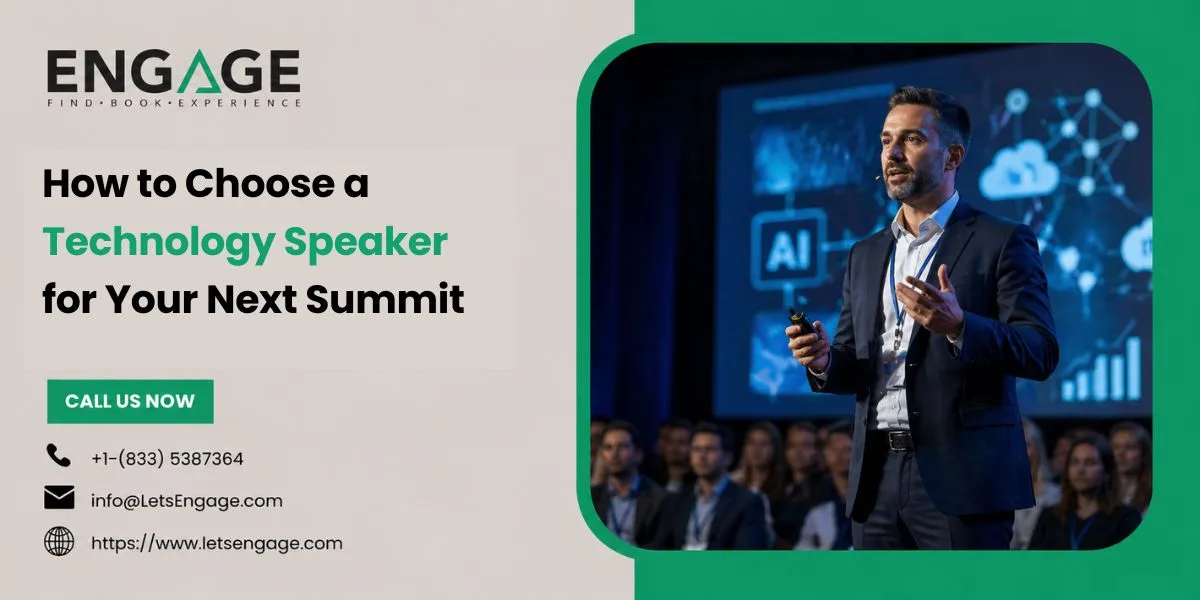
Summits often begin with grand concepts - innovation, growth, future trends. But that's followed by a question of how to present those ideas to an audience. And this is where the decision to book a technology speaker often comes into play.
Not all speakers are created equal. There are trendsetters, leaders, and the very technical. When it comes to selecting a technology speaker, it's not about the most popular, but the most suitable for your audience.
Understanding the Role of a Technology Speaker
What a Technology Speaker Does
A technology speaker usually talks about trends, technology transformation, and innovation in business.
To learn more about the field of technology, check out:
https://en.wikipedia.org/wiki/Technology
The job can be more than about tools. It's about relating concepts to consequences.
Bridging Technical and Non-Technical Audiences
Audiences at summits are diverse. Some may be technical, others more interested in business strategy.
An effective presenter can make complex ideas simple.
Shaping Event Themes
Keynote sessions can be the foundation for the event. Speakers can help reinforce the summit theme.
Creating Engagement Through Perspective
Tech talks can be sometimes theoretical. A strong presenter adds context to make ideas more accessible.
Defining Your Event Goals First
Clarifying the Purpose of the Summit
It's a good idea to have a clearity of the event's purpose. To inform, motivate or inspire?
Identifying Target Audience Needs
Knowing the audience helps to select speakers. Audiences have varying preferences.
Aligning Topics With Industry Trends
Technology evolves quickly. Topics must be relevant for the event to be meaningful. Relevance can boost participation.
Setting Expectations for Outcomes
Understanding what people will learn from the session aids in speaker choice. Expectations create expectations.
Key Qualities to Look for in a Technology Speaker
Ability to Simplify Complex Ideas
Technology topics can become overly technical. An effective technology speaker explains ideas without losing depth.
Real-World Experience
Technology speakers with experience in the industry can offer more valuable insight.
Their knowledge speaks to the audience.
Engaging Communication Style
It's not just what you say. If the speaker engages the audience, it's a successful session.
Adaptability to Different Audiences
Most of the times different audiences may need unique tactics. The adaptability surely helps get the message across.
Evaluating Speaker Options
Reviewing Past Speaking Engagements
Past talks can give a glimpse into a speaker's communication style. Consistencies in speaking styles may emerge.
Considering Audience Feedback
Previous events may provide insight into impact areas. This may offer assurance of consistency.
Matching Content to Event Format
Keynotes, workshops and panels require different types of speakers. It maximises their impact.
Comparing Multiple Candidates
Comparisons help find the right match. Comparing helps highlight differences.
Role of Speaker Agencies in the Selection Process
Simplifying the Search Process
Most of the organizations often work with a speaker agency to identify suitable speakers. This approach reduces the time needed to find the right match.
Access to a Broader Network
Agencies provide access to a wide range of professionals, including the best technology speaker options available.
This expands the pool of choices.
Handling Logistics and Coordination
The most important thing is scheduling and communication. Which are often managed through structured processes. This helps avoid last-minute complications.
Supporting Customization
Speakers can tailor their content based on event requirements. Customization improves audience engagement.
Considering Different Audience Types
Corporate and Industry Audiences
Corporate events often seek presentations on innovation and strategy. Speakers may address the use of technology.
Educational Settings
They may be attended by students or young people.
In such cases, speakers for schools often adapt their content to be more accessible and engaging.
Mixed Audience Groups
For the mixed audience, there should be balanced approach. The presenter needs to cater for different levels of expertise.
Common Mistakes to Avoid
Choosing Based Only on Popularity
Popularity is not always a good thing. Event goals are more important.
Ignoring Audience Needs
The content should be relevant to audience. It can help in building a great engagement. Knowing your audience is key.
Overlooking Presentation Style
Good content can be ruined by poor presentation. Aesthetics matter in engaging the audience.
Rushing the Decision Process
It's important to take your time. And then come to your final decision. Hurrying the process could result in overlooking key issues.
Making the Right Choice for Your Summit
Selecting a technology speaker is more than just scheduling a talk. Most of the times, It's about enhancing the event's experience. A good speaker can clarify, engage and inspire.
Careful choices can make a difference. Over time these choices shape how events are remembered - not only for the content they cover, but for how the content is presented.