
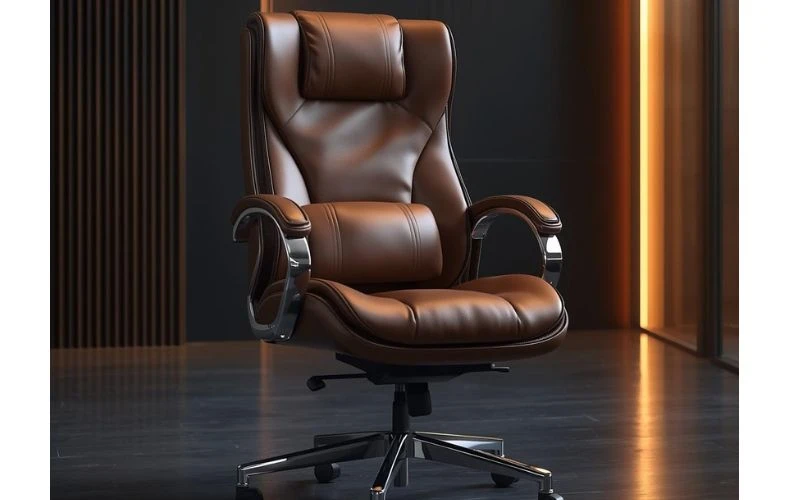
Australians are sitting longer than ever. According to national workplace data, musculoskeletal disorders remain one of the leading causes of work-related injury claims — and prolonged sitting is a major factor. Meanwhile, hybrid work has quietly turned kitchen corners and spare rooms into full-time offices.
Here’s the catch: most people choose a chair based on looks first. Comfort later. And posture? That’s an afterthought — until the back pain starts.
So how do you choose a leather office chair that supports you properly — and how do trendy options like velvet or Chesterfield styles compare?
Let’s unpack it.
What Actually Causes Back Pain in Office Chairs?
Interestingly, it’s rarely about firmness alone.
Back pain usually comes from poor alignment and lack of adjustability. When your spine isn’t supported, muscles overcompensate. Over hours and days, that strain builds.
Common culprits include:
- No lumbar support
- Seat depth that cuts circulation
- Fixed armrests at the wrong height
- Backrests that don’t follow spinal curves
- Cheap foam that flattens quickly
Think of it like this: a chair shouldn’t just hold you up — it should guide your posture naturally.
What Should Be Checked Before Buying a Leather Office Chair?
Before making a decision, run through this simple checklist:
✔ Adjustable Lumbar Support
Your lower back has a natural inward curve. The chair should support that curve without forcing you forward.
✔ Seat Height Range
Feet flat on the floor. Knees at roughly 90 degrees. Hips slightly higher than knees is even better.
✔ Seat Depth
There should be 2–3 finger widths between the seat edge and the back of your knees.
✔ Recline With Tension Control
Micro-movements reduce spinal fatigue. A slight recline during reading or calls eases pressure.
✔ High-Density Foam
Low-density cushioning compresses within a year. Quality foam maintains support long-term.
An easy way to test? Sit fully back and relax. If your lower spine feels gently supported without effort, that’s a strong sign.
Is Leather Better Than Fabric for Long Work Hours?
In many cases, yes.
Leather is naturally durable and adapts to body temperature better than synthetic materials. It’s also easier to clean — particularly useful in warm Australian climates where sweat and dust can accumulate.
Meanwhile, quality leather holds its shape longer than many fabric alternatives, meaning your support structure doesn’t collapse prematurely.
That said, material alone doesn’t guarantee ergonomics. The internal frame and cushioning matter more than surface texture.
Is Velvet Suitable for an Office Chair?
Velvet looks luxurious. It adds warmth and softness to a home office.
But here’s the reality.
Velvet tends to trap heat and can show wear faster in high-contact areas. It’s ideal for occasional seating — not necessarily for 8-hour workdays.
Best suited for:
- Decorative desks
- Low-usage workspaces
- Style-focused interiors
Less ideal for:
- Full-time remote work
- Hot climates
- High daily usage
Think of velvet like a tailored jacket. Stylish. Impressive. Not always practical for everyday heavy lifting.
Is a Chesterfield-Style Office Chair Ergonomic?
Chesterfield designs — with deep button tufting and rolled arms — bring timeless sophistication. But historically, they were built for lounges, not desks.
If considering a Chesterfield-style office chair, check for:
✔ Hidden lumbar support beneath tufting
✔ Adjustable height mechanism
✔ Strong internal frame
✔ Reinforced seat base
✔ Smooth swivel and tilt function
Modern interpretations sometimes blend classic design with ergonomic engineering. When done right, it’s possible to enjoy both style and spinal support.
But never assume tufting equals comfort. Structure matters more than appearance.
Are Leather Recliner Chairs Good for Home Offices?
Some people consider leather recliner chairs for dual-purpose spaces. And interestingly, they can work — if used wisely.
Recliners are excellent for breaks, reading, or relaxed calls. However, they shouldn’t replace an upright ergonomic position during typing or focused tasks.
Think of recline as recovery mode — not productivity mode.
If choosing a reclining office chair, ensure it:
- Locks upright securely
- Provides lumbar support even when upright
- Maintains firm seat cushioning
How Long Should a Quality Office Chair Last?
A well-built chair can last 8–12 years. Lower-quality models often show sagging within 2–3 years.
To extend lifespan:
- Adjust settings properly
- Clean leather regularly
- Avoid sitting on edges
- Tighten hardware annually
- Condition leather to prevent drying
Small maintenance habits make a big difference.
Conclusion: A Simple Checklist Before You Buy
Choosing the right office chair isn’t about chasing trends. It’s about long-term comfort and spinal health.
Before purchasing, make sure your chair:
✔ Supports your lumbar curve
✔ Allows feet to sit flat
✔ Has adjustable height and recline
✔ Uses high-density foam
✔ Feels supportive after 15 minutes — not just impressive at first glance
✔ Prioritises structure over style
Velvet may win on aesthetics. Chesterfield may win on tradition. But when it comes to daily productivity, proper ergonomic support wins every time.
Your back will thank you — quietly, consistently, and for years to come.