How to Choose a Custom Clothing Manufacturer for Your Growing Fashion Brand
Starting a fashion brand involves more than creating attractive designs and choosing the right fabrics. You also need a manufacturing partner who can turn your ideas into finished garments that meet your quality standards, fit your budget, and satisfy your customers.
For a growing fashion business, choosing the wrong clothing manufacturer can lead to inconsistent sizing, delayed shipments, unexpected costs, and products that do not match the original samples. The right partner, on the other hand, can help you build a reliable product line and prepare your business for long-term growth.
Whether you are launching a streetwear label, developing a gym wear collection, or expanding an existing apparel business, here are the key factors to consider before selecting a custom clothing manufacturer.
1. Define Your Clothing Requirements Before Contacting Manufacturers
Before requesting quotations, decide what you want to produce. A manufacturer cannot provide an accurate estimate without understanding your product requirements.
Start by identifying your clothing categories, such as T-shirts, hoodies, tracksuits, leggings, gym wear, or other custom apparel. Consider the fabric composition, garment weight, colors, sizing, stitching details, printing methods, and embroidery requirements.
For example, a streetwear brand producing oversized hoodies may require heavyweight cotton fabric, dropped shoulders, ribbed cuffs, and custom labels. A fitness brand may need breathable fabrics, stretch properties, reinforced seams, and moisture-management features.
Prepare a basic technical specification or tech pack whenever possible. Include measurements, sketches, fabric details, color references, artwork, and construction instructions.
Clear specifications help manufacturers understand your expectations and reduce misunderstandings during production.
2. Look for Experience in Your Clothing Category
Not every clothing manufacturer specializes in every type of apparel. A factory experienced in basic T-shirts may not have the same expertise in technical sportswear or complex streetwear designs.
Review the manufacturer's product range, previous work, available production capabilities, and experience with similar garments.
If you are building a streetwear label, look for experience with oversized fits, heavyweight fabrics, custom hoodies, screen printing, embroidery, and private labeling. You can explore the services offered by a streetwear manufacturer to understand the types of capabilities that may be relevant to your collection.
For activewear brands, consider fabric stretch, seam strength, garment flexibility, and construction quality. A specialized gym wear manufacturer may be better suited to products designed for training and regular physical activity.
Ask potential suppliers whether they have produced similar items before. Request relevant samples or photographs, and confirm which processes they handle in-house and which they outsource.
3. Request Samples Before Ordering in Bulk
One of the most important steps in apparel sourcing is checking product samples before approving bulk production.
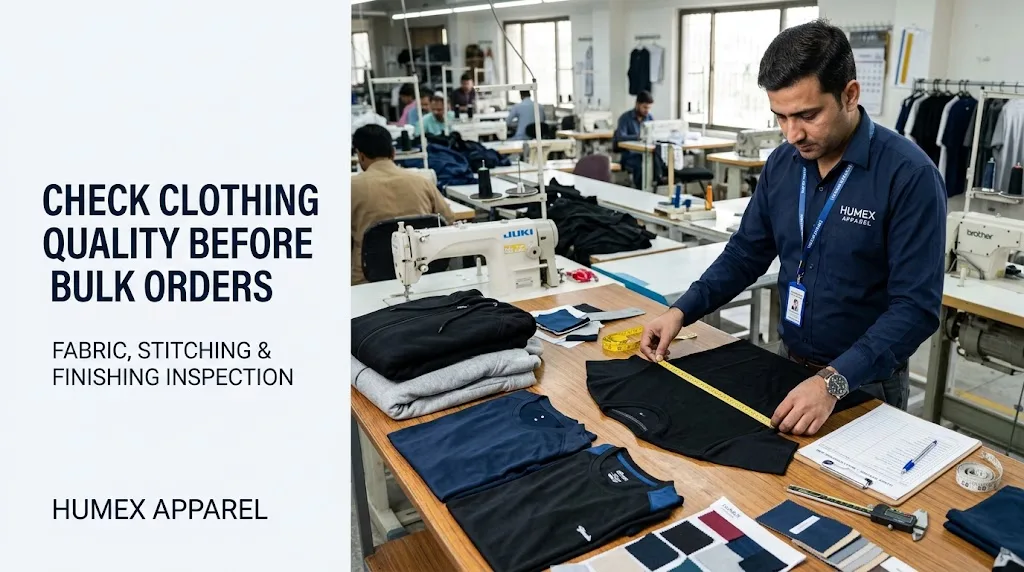
Photographs and product descriptions cannot fully show how a garment feels, fits, or performs. A physical sample allows you to examine the fabric, stitching, finishing, sizing, and overall construction.
When reviewing a sample, check the following:
- Fabric feel, thickness, and composition.
- Stitching quality and seam consistency.
- Measurement accuracy and fit.
- Print quality, embroidery, and color consistency.
- Zippers, buttons, labels, and other accessories.
- Shrinkage or color changes after washing, where relevant.
For example, a hoodie may look attractive in a photograph but feel too thin for your target market. A sample helps you identify this problem before spending money on hundreds of units.
Discuss sample costs, revisions, and approval timelines with the manufacturer. Confirm that the approved sample will serve as the reference for bulk production.
4. Understand Minimum Order Quantities and Pricing
Minimum order quantity, commonly called MOQ, refers to the smallest quantity a manufacturer is willing to produce for a particular order or product.
Some manufacturers accept smaller orders, while others require larger quantities because of fabric purchasing, setup costs, and production efficiency.
When comparing suppliers, do not focus only on the price per garment. Ask for a detailed quotation covering fabric, cutting, stitching, printing, embroidery, labels, packaging, sampling, and any additional charges.
You should also clarify whether prices change according to order quantity, fabric selection, or customization requirements.
For example, a supplier offering a lower price per hoodie may require a much larger order. Another supplier might charge more per piece but allow a smaller initial run, helping you test customer demand before investing heavily in inventory.
Choose an order size that fits your budget, sales forecasts, and storage capacity. A low unit price is not necessarily the best deal if it leaves you with unsold stock.
5. Evaluate Fabric Quality and Customization Options
Fabric selection affects comfort, durability, appearance, and the perceived value of your products. The right material depends on the garment's purpose and the customers you want to reach.
Cotton and cotton blends are commonly used for everyday apparel and streetwear. Polyester blends and elastane-containing fabrics may be suitable for particular activewear applications, depending on the required stretch, breathability, and performance.
Ask manufacturers about fabric composition, available weights, color options, and sourcing arrangements. If sustainability is important to your brand, request relevant material documentation rather than relying on unsupported environmental claims.
You should also confirm the available customization options, including screen printing, embroidery, heat transfers, sublimation, woven labels, hangtags, and custom packaging.
Not every method suits every fabric or design. Discuss the expected appearance, durability, production cost, and care requirements before selecting a decoration technique.
6. Check Quality Control and Production Capacity
Consistent quality becomes increasingly important as your brand grows. A manufacturer should have a clear process for checking garments during production and before shipment.
Ask how the factory checks measurements, stitching, fabric defects, print placement, and finishing. Find out how defective products are handled and whether the supplier agrees to defined quality standards before production begins.
It is also important to understand production capacity. A manufacturer that can handle your first small order may need additional time or resources to produce larger quantities later.
Discuss expected lead times, seasonal demand, production scheduling, and procedures for handling delays. Make sure the supplier can explain how it plans to maintain quality as order volumes increase.
7. Assess Communication and Delivery Reliability
Clear communication helps prevent expensive mistakes. Before placing an order, observe how quickly the manufacturer responds, whether its answers are specific, and whether it asks sensible questions about your requirements.
Confirm the main contact person, approval process, payment terms, production milestones, and expected shipping arrangements.
International buyers should also discuss packaging, shipping methods, customs documentation, applicable import duties, and responsibility for freight costs.
Never assume that a quoted delivery date includes every stage from sampling to arrival at your warehouse. Request a realistic timeline covering each major step.
Written agreements and documented approvals help both parties understand their responsibilities.
8. Consider the Manufacturer as a Long-Term Partner
A good manufacturing relationship should support your business beyond a single order. As your fashion label develops, you may need new designs, additional sizes, more colors, and higher production volumes.
Look for a supplier willing to discuss improvements, provide practical feedback, and maintain consistent product specifications across repeat orders.
Before committing to a large production run, compare several suitable manufacturers and evaluate them against the same criteria: product quality, customization, pricing, MOQ, communication, and delivery reliability.
You can also review Humex Apparel to explore apparel manufacturing options for brands looking for custom clothing and production support. Discuss your specific product requirements directly with the company to confirm available services, minimum quantities, and production timelines.
Final Thoughts
Choosing a custom clothing manufacturer is a business decision that affects your product quality, customer satisfaction, operating costs, and ability to grow.
Start with clear product specifications, examine relevant samples, understand the full pricing structure, and verify the manufacturer's quality control and production capabilities. Pay equal attention to communication and delivery expectations.
Most importantly, avoid choosing a supplier based on price alone. A manufacturer who understands your requirements and consistently delivers garments to the agreed specifications can help your fashion brand build customer trust and develop a stronger product range over time.
Take the time to compare your options before placing your first bulk order. A careful selection process can reduce unnecessary risks and give your business a more reliable foundation for growth.