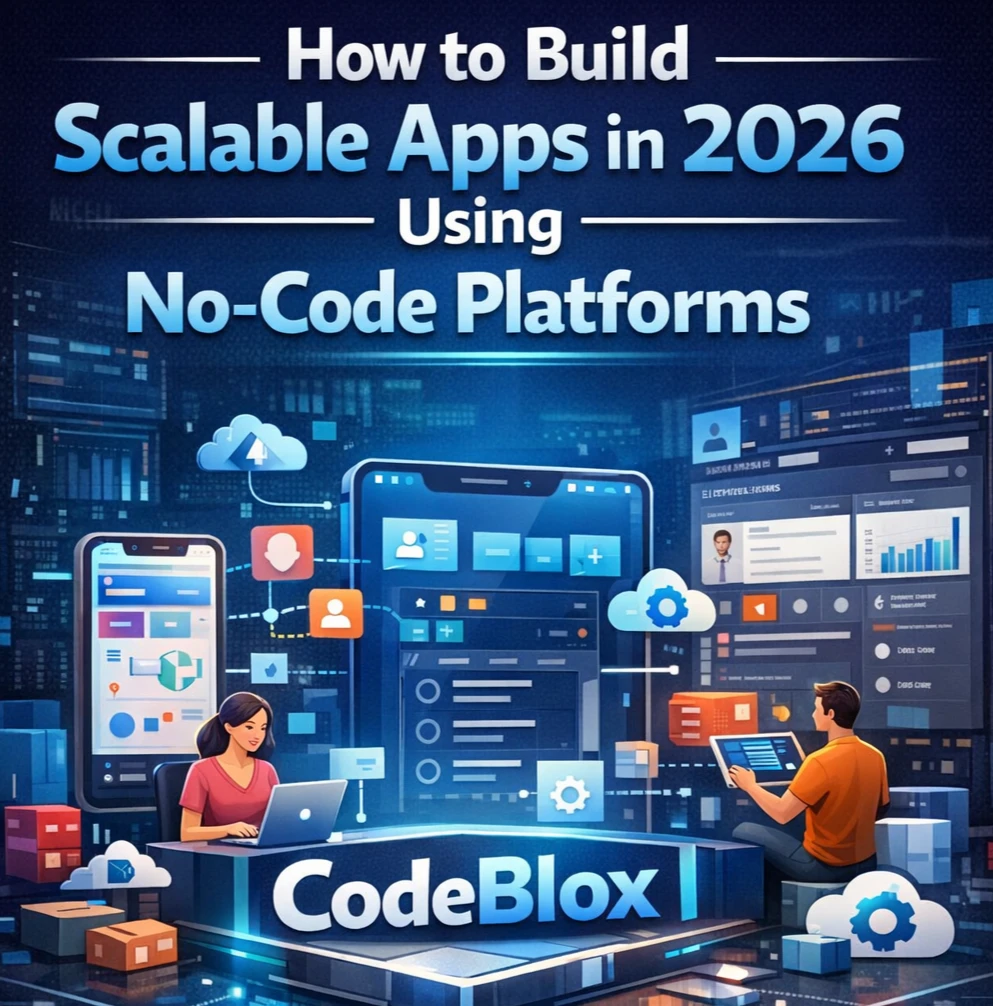
In 2026, No-Code Platforms are no longer just productivity tools for startups or non-technical founders—they are now core infrastructure for building scalable, enterprise-grade applications. As businesses race toward faster digital transformation, no-code solutions have evolved into robust ecosystems capable of handling millions of users, complex workflows, and mission-critical operations without traditional software development bottlenecks.
With AI-assisted automation, cloud-native architectures, and composable design systems baked in, no-code platforms are redefining how modern applications are planned, built, deployed, and scaled. This article explores how organizations can leverage no-code in 2026 to create future-proof, scalable apps while maintaining performance, flexibility, and security.
The Evolution of No-Code: From MVP Tools to Scalable Architectures
Early no-code tools were primarily designed for rapid prototyping or internal tools. Fast forward to 2026, and the landscape has changed dramatically. Today’s platforms offer modular microservices, event-driven workflows, and elastic cloud infrastructure—all without writing traditional code.
Modern no-code solutions now support:
- Horizontal and vertical scaling
- API-first integrations
- Role-based access control (RBAC)
- AI-powered logic optimization
- Real-time analytics and observability
This shift has allowed no-code app development to move beyond simple use cases and into regulated industries like fintech, healthcare, logistics, and telecommunications.
Building Enterprise Use Cases with No-Code Telecom CRM System
One of the most compelling examples of scalability in 2026 is the rise of the No-Code Telecom CRM System. Telecom providers manage massive datasets, real-time customer interactions, billing cycles, and multi-channel communication—all traditionally handled by custom-built software.
With no-code CRM systems tailored for telecom, companies can now:
- Design omnichannel customer journeys without backend coding
- Automate subscriber lifecycle management
- Integrate billing, ticketing, and network monitoring tools.
- Scale to millions of concurrent users using cloud elasticity
These systems rely on declarative logic, workflow orchestration engines, and distributed databases that automatically scale under heavy traffic, making them ideal for high-demand environments.
Designing Scalable Mobile Experiences with a No-Code Mobile App Builder
Mobile-first experiences dominate digital engagement in 2026. A modern no-code mobile app builder empowers teams to create high-performance Android, iOS, and progressive web apps with built-in scalability features.
Key scalability advantages include:
- Auto-generated native components optimized for performance
- Load-balanced backend services
- Offline-first data synchronization
- Edge computing support for reduced latency
Advanced no-code mobile platforms now include AI-driven UX optimization, allowing apps to dynamically adjust layouts and features based on user behavior. This results in higher retention, faster load times, and seamless scaling as user demand grows.
Can a Free No-Code App Builder Really Scale?
A common question in 2026 is whether a free no-code app builder can support scalability. The answer is yes—with caveats.
Free tiers often provide:
- Limited API calls
- Shared cloud infrastructure
- Restricted storage or bandwidth
However, many free platforms are built on the same scalable backbone as their paid counterparts. This allows startups and solo founders to validate ideas, build traction, and stress-test performance before upgrading.
For scalable architecture on free plans:
- Use modular workflows to reduce resource usage
- Optimize database queries and data structures.
- Leverage caching and lazy loading.
- Integrate external cloud services where supported.
In essence, free no-code builders are ideal for early-stage scalability experiments, not long-term high-volume deployments.
Best Practices for Scalable NoCode App Development in 2026
To ensure long-term scalability, no-code app development must follow architectural best practices—just like traditional software engineering.
1. Adopt a Composable Architecture
Composable design allows apps to be built from interchangeable components. This ensures flexibility, easier updates, and independent scaling of features.
2. Use API-Driven Integrations
API-first platforms enable seamless communication with third-party services, legacy systems, and AI models—critical for scaling functionality without rebuilding core logic.
3. Implement Asynchronous Workflows
Event-driven automation reduces system strain and improves responsiveness during traffic spikes.
4. Optimize Data Models Early
Poor data modeling is the fastest way to kill scalability. Use normalized schemas, indexed fields, and distributed storage options whenever possible.
5. Leverage AI-Augmented Optimization
Many no-code platforms in 2026 now include predictive scaling, anomaly detection, and automated performance tuning—features once exclusive to elite DevOps teams.
Power and Uncommon Keywords Driving No-Code Scalability
To understand the depth of modern no-code systems, it’s important to recognize some less common but powerful concepts shaping the ecosystem:
- Hyperautomation frameworks for end-to-end process orchestration
- Composable digital fabric enabling seamless feature expansion
- Low-latency orchestration layers for real-time operations
- Declarative logic engines replacing imperative coding models
- Cloud-agnostic deployment pipelines ensuring vendor resilience
- AI-assisted schema evolution for adaptive data growth
- Event-stream processing without custom middleware
These innovations make no-code platforms not just accessible—but strategically superior for scalable development.
Security and Governance at Scale
Scalability isn’t just about performance—it’s also about governance. In 2026, enterprise-grade no-code platforms offer:
- Zero-trust security models
- Audit-ready compliance logs
- Granular permission controls
- Automated vulnerability patching
This ensures that as apps scale across regions, teams, and users, security and compliance remain intact without manual intervention.
The Future of Scalable App Development Is No-Code
As we move deeper into 2026, no-code platforms are no longer an alternative—they are a competitive advantage. By eliminating development friction, accelerating iteration cycles, and embedding scalability at the infrastructure level, no-code empowers businesses to innovate faster than ever.
Whether you’re building a telecom CRM, a mobile-first SaaS product, or a data-intensive enterprise application, no-code platforms now provide the performance, reliability, and elasticity required to scale globally.
The era of writing thousands of lines of code to achieve scalability is fading. The future belongs to visual logic, intelligent automation, and no-code systems designed for scale by default.