Introduction
The prediction market industry is rapidly transforming the way people forecast real-world events by leveraging collective intelligence and data-driven decision-making. From politics and financial markets to sports, entertainment, and emerging technologies, prediction market platforms are becoming powerful tools for gathering market sentiment and generating actionable insights.
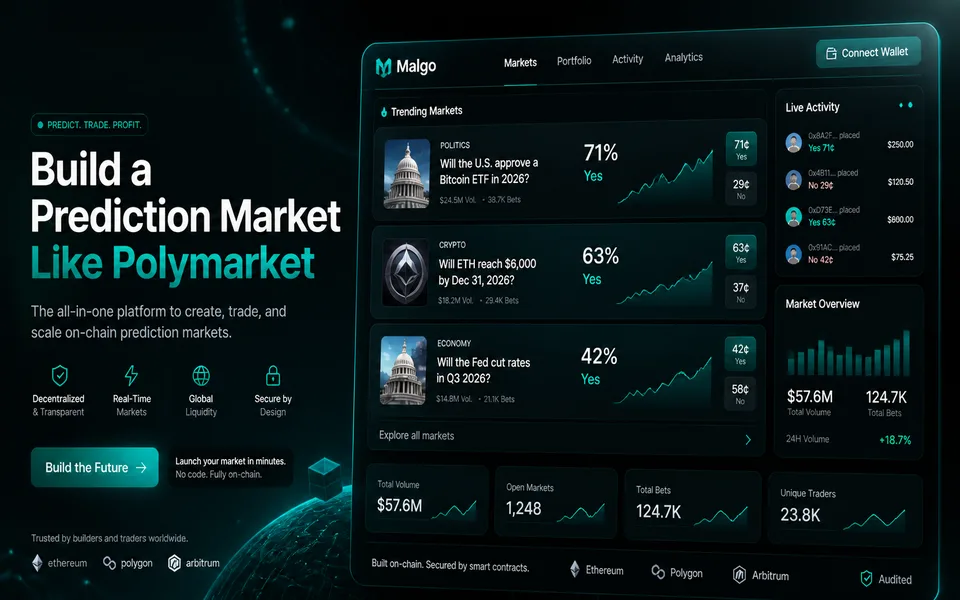
As the popularity of decentralized forecasting platforms continues to grow, many entrepreneurs and businesses are exploring the opportunity to build a Polymarket clone with enhanced features, improved user experiences, and scalable business models. Rather than simply replicating an existing platform, the focus should be on developing a next-generation prediction market solution that prioritizes security, transparency, regulatory readiness, liquidity, and long-term user engagement.
Building a sustainable prediction market business requires much more than launching a feature-rich platform. Success depends on creating a trusted ecosystem supported by robust technology, responsible governance, active community participation, and continuous innovation. This guide explores the essential strategies, technologies, and business considerations needed to build a sustainable prediction market business that delivers lasting value for users while supporting scalable, long-term growth.
How to Build a Sustainable Prediction Market Business
The prediction market industry is evolving beyond speculative trading into a data-driven ecosystem where users forecast the probability of real-world events. From politics and finance to sports, entertainment, and emerging technologies, prediction markets are becoming valuable tools for gathering collective intelligence and market sentiment.
However, building a successful prediction market platform requires more than launching a feature-rich application. Long-term sustainability depends on strategic planning, regulatory awareness, user trust, liquidity management, and continuous innovation.
This guide explores the essential elements required to build a sustainable prediction market business that delivers lasting value to users while creating scalable growth opportunities.
Understanding the Foundation of a Prediction Market Business
A prediction market is a platform where participants trade shares based on the likelihood of future events. The market price reflects collective expectations, allowing businesses, organizations, and individuals to gain valuable insights from crowd intelligence.
A sustainable prediction market business focuses on creating an ecosystem that encourages long-term participation instead of relying solely on short-term trading activity. Success comes from balancing technology, compliance, security, transparency, and community engagement.
Why Sustainability Matters in Prediction Markets
Many platforms attract users during periods of market excitement but struggle to maintain engagement afterward. Sustainable businesses focus on creating continuous value through reliable infrastructure, diverse market offerings, and transparent operations.
Key advantages include:
- Consistent user engagement
- Strong platform credibility
- Better liquidity across markets
- Higher user retention
- Increased institutional interest
- Scalable business growth
- Long-term revenue opportunities
Core Components of a Sustainable Prediction Market Platform
Regulatory Compliance
Compliance forms the backbone of any legitimate prediction market business. Regulations vary across jurisdictions, making legal planning an essential part of platform development.
Important considerations include:
- User verification processes
- Anti-money laundering procedures
- Data privacy compliance
- Responsible trading policies
- Risk management frameworks
- Transparent operational practices
Businesses that prioritize compliance establish stronger relationships with users, partners, and regulators.
Secure Technology Infrastructure
Prediction markets process financial transactions and sensitive user information. Security should be integrated into every layer of the platform.
Critical security measures include:
- Multi-factor authentication
- End-to-end encryption
- Smart contract auditing
- Secure wallet integration
- Fraud detection systems
- Real-time monitoring
- Regular security assessments
A secure infrastructure minimizes operational risks while strengthening user confidence.
Reliable Liquidity Management
Liquidity determines how efficiently users can buy and sell prediction shares. Without sufficient liquidity, market participation declines and pricing becomes less accurate.
Effective liquidity strategies include:
- Automated market makers
- Market-making algorithms
- Incentive programs
- Community participation rewards
- Balanced market creation
- Active trading campaigns
Healthy liquidity improves user experience and enhances prediction accuracy.
Diversify Market Categories
A sustainable prediction market should not depend on a single niche.
Popular prediction categories include:
Politics
Election forecasts, policy decisions, and government outcomes.
Cryptocurrency
Digital asset adoption, token performance, blockchain developments, and regulatory changes.
Financial Markets
Interest rates, stock indices, inflation, and economic indicators.
Sports
Professional leagues, tournaments, player performance, and championship outcomes.
Entertainment
Award ceremonies, streaming releases, celebrity events, and television competitions.
Technology
AI adoption, product launches, startup milestones, and innovation trends.
Diversification helps maintain platform activity throughout the year.
Focus on User Experience
Even advanced prediction engines cannot compensate for poor usability.
A modern platform should provide:
- Simple onboarding
- Fast account creation
- Intuitive dashboards
- Mobile responsiveness
- Clear market visualization
- Easy trade execution
- Real-time notifications
- Transparent settlement processes
An intuitive experience encourages repeat participation.
Build Community Trust
Prediction markets rely heavily on user confidence.
Trust can be strengthened through:
- Transparent market rules
- Public settlement procedures
- Accurate historical data
- Community discussions
- Educational resources
- Responsive customer support
- Open communication
An engaged community often becomes the platform's strongest growth driver.
Integrate Blockchain Technology
Blockchain technology enhances transparency and security while reducing operational complexity.
Potential advantages include:
- Immutable transaction records
- Decentralized settlement
- Smart contract automation
- Tokenized incentives
- Increased transparency
- Enhanced security
Businesses should evaluate whether a fully decentralized or hybrid architecture aligns better with their long-term objectives.
Develop Multiple Revenue Streams
A sustainable prediction market business benefits from diversified revenue sources rather than relying on a single income channel.
Potential business models include:
- Trading-related platform fees
- Premium analytics subscriptions
- Enterprise prediction solutions
- API access for developers
- White-label platform licensing
- Data intelligence services
- Strategic partnerships
- Sponsored market categories
A diversified model helps maintain financial stability during changing market conditions.
Prioritize Data Analytics
Prediction markets generate valuable behavioral and forecasting data.
Analytics can improve:
- Market performance
- User engagement
- Liquidity allocation
- Risk monitoring
- Personalized recommendations
- Business decision-making
Data-driven improvements enable continuous platform optimization.
Encourage Long-Term User Retention
Sustainable growth depends on retaining active participants rather than focusing exclusively on new user acquisition.
Retention strategies include:
- Achievement systems
- Loyalty programs
- Educational content
- Community events
- Referral initiatives
- Seasonal competitions
- Personalized experiences
Consistent engagement strengthens the overall ecosystem.
Implement Responsible Risk Management
Risk management protects both the platform and its users.
Best practices include:
- Market monitoring
- Fraud prevention systems
- Trading surveillance
- Dispute resolution mechanisms
- Emergency response procedures
- Operational continuity planning
Strong governance contributes to long-term business resilience.
Scale with Future Innovation
The prediction market industry continues to evolve as new technologies reshape digital finance.
Emerging opportunities include:
- Artificial intelligence-assisted market analysis
- Cross-chain interoperability
- Decentralized identity solutions
- Institutional participation
- Enterprise forecasting applications
- Real-world asset integration
- Advanced predictive analytics
Businesses that continuously innovate are better positioned to remain competitive.
Best Practices for Long-Term Success
Organizations building sustainable prediction market platforms should focus on:
- Designing for scalability from the beginning
- Maintaining regulatory awareness
- Investing in platform security
- Expanding market diversity
- Building strong user communities
- Continuously improving liquidity
- Leveraging analytics for optimization
- Delivering transparent platform governance
- Encouraging responsible participation
- Adapting to changing market trends
Conclusion
Building a sustainable prediction market business requires a comprehensive strategy that extends beyond technology development. Long-term success is driven by transparency, security, regulatory readiness, liquidity, user engagement, and continuous innovation. By creating a trusted ecosystem that delivers meaningful forecasting experiences, businesses can establish a resilient prediction market platform capable of adapting to evolving industry demands while fostering lasting user confidence and sustainable growth.
Frequently Asked Questions (FAQs)
What makes a prediction market business sustainable?
A sustainable prediction market business combines secure technology, regulatory compliance, sufficient liquidity, transparent governance, diversified markets, and strong user engagement to support long-term growth.
Why is liquidity important in prediction markets?
Liquidity enables users to trade efficiently, improves price discovery, and enhances the overall market experience by reducing friction in transactions.
How can prediction market platforms build user trust?
Trust is built through transparent market rules, secure infrastructure, fair settlement mechanisms, responsive customer support, and consistent communication with the community.
Which industries can benefit from prediction markets?
Prediction markets have applications across finance, cryptocurrency, politics, sports, entertainment, healthcare, technology, research, and enterprise forecasting.
What are the key factors for long-term business growth?
Long-term growth depends on continuous innovation, scalable infrastructure, regulatory readiness, diversified revenue models, community development, and a commitment to delivering reliable user experiences.