
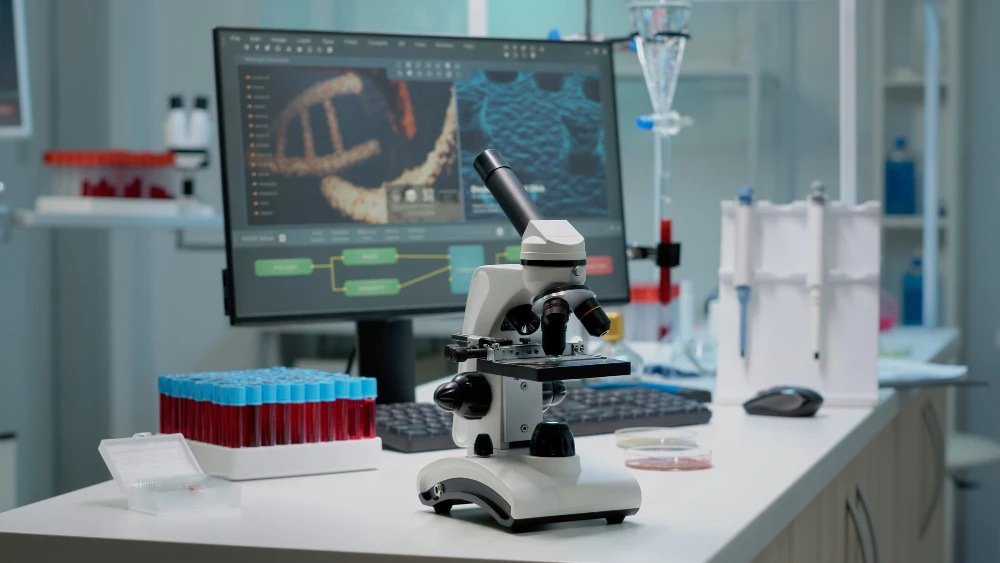
Outside in Orlando, the air is wet, and the orange glow of streetlights barely peeks through my apartment window. There I am hunched by my small kitchen counter, now the epicenter of my tiny experimental universe: a handful of potted plants, a smattering of beakers, a small water filtration setup, and blinking sensors that feed data into my laptop. It’s not some science-lab-of-the-future hidden inside some university building. No sirree. It’s my apartment. My little micro-lab. And somehow, it has become one of my favorite places on Earth.
I’m basically a dabbler at heart, interested in the world and how fine adjustments affect living systems, and on the side, covertly interested in turning data into stories I can play with. During the day, I advise on sustainability projects and do a little freelance work concerning mobile app development, creating air quality tracking apps and apps that monitor plant growth for small business in Orlando … and everywhere else. And by night, my apartment turns into a live working laboratory where curiosity is queen, and mistakes are fine.
Starting Small: What You Truly Need
The first time I tried to set up a micro-lab, I mistakenly had the dream that it would look something like those seen on a National Geographic special. I thought there would be rows of gleaming glassware, expensive sensors, and robots that do every measurement. Reality check: my apartment is tiny. There’s barely room for my bed, let alone a lab bench. So I started with the basics: mason jars, potted herbs, an LED grow light, and some simple water quality test strips.
Who knew that starting small was going to be so much more than practical—magical? It’s so much more intimate to watch seeds sprout under your homemade grow lights, to manually measure water pH, to record humidity levels in a spreadsheet. Every small observation feels significant, even if all you learn is that basil plants like their soil slightly acidic, or that a tiny filter clarifies some of the cloudiness in tap water beyond your tiny expectations.
I think one of the most important things that I have learned is that you do not need a lot of space, you do not need a lot of money for meaningful experiments. It is all about precision, curiosity, not gadgets. Although yes, it is nice to have some tech on your side – so I rely on apps that track conditions and remind me when a plant needs extra water or light.
Integrating Technology Without Losing the Human Touch
I’ve had my laptop open many a late night while tweaking configurations around my apartment. Some of this is because I wanted the lab to feel alive in a ‘smart’ way. The app I am developing for mobile app development Orlando will let me input experimental variables: water pH, hours of light, temperature, humidity, even soil moisture. The sensors will feed data automatically and the app will send alerts when something is not right.
But here’s where the shoe pinches: I didn’t ever wish technology to take over the experience. The aim isn’t automation; it’s interaction. I still walk over, touch the soil, smell the herbs, see condensation on jars, and observe how one tiny drop of water can flip everything over. The app marries this human engagement; it does not Orwellianly replace it.
Maybe in the way of living my life measures what matters tracks variables but stays present in the moment. You can quantify the environment but you can’t quantify curiosity or the thrill of small discoveries.
Joy of Everyday Experiments
There’s a soft joy in simple experiments: observation, instrumentation, and experiment. One evening, through visual observation, I realized that the small lettuce seedlings were drooping. On examining the sensor output, I found that the moisture of the soil was normal but the temperature reading was not as it should have been. A slight adjustment of the grow light cycle and they perked right up. It felt like that tiny fix made me decode a small secret of life.
Other days, I’ve been trying out water filtration systems on my micro-lab, looking for a simple, low-cost method that could be easily applied on a larger scale. I measure turbidity, note sediment, and changes over time. It’s fun at times. It’s hours of troubleshooting at other times, to find out finally that one tiny miscalculation in a variable messed up my experiment. And that’s fine by me, really: failures are nothing but data.
Recently, I have started adding little asides like testing what influence music has on plant growth or placing a small fan to create a gentle breeze. Every new experiment is like a little narrative happening in the present tense. And I write all of that out, sometimes in an app, sometimes in a notebook, always thinking about what went right, what didn’t, and what shocked me.
Creating a Sustainable Micro-Lab on a Budget
It seems to be an illusion that installing a micro-lab is quite an expensive venture. I wish to confess: there are gizmos that I wish to have but very many experiments of significance do not require them. The jars, cheap LED lights, and simple soil testers can be improvised for that purpose. The sensors I use are not that costly and one can change them to different projects.
Budget constraints have necessitated ingenuity. On one occasion, I cannibalized an old aquarium pump that had ceased to work and converted it to circulate water in a small hydroponics setup. One other time, I created an improvised humidity monitor based on a spare Raspberry Pi from a previous coding project. The net effect is that I not only save cash but imbue character and ingenuity to the lab. And really, that’s part of the fun: hacking, tweaking, and improvising, and learning in the process.
Exploring the Community Side of a Home Micro-Lab
I’m so lucky that there have been a few in the neighborhood and friends who have shown interest in my experiments. At times they just drop by to see the setups, raise some questions, or even provide a plant or little gadget. For Christmas once a neighbor gave me this miniature sensor kit for my daughter- she had no clue it was Christmas for the school colors me to have it- I used it to sense water quality. It’s like a toddler language development; though, it lives completely within my tiny apartment, it is an object of interest sharing.
Communities do, too. From forums and social media groups to some open-source projects, I can talk through observations, troubleshoot, and swap out ideas. It’s isolation discovery and heir education-a mix that keeps experiments in micro-lab life, interesting, and continually self-evolution.
Why a Micro-Lab Changes How You Think
There’s a small but crucial change when you let yourself experiment at home. You become an observer in ways never before. You can observe the lighting patterns on your balcony, how the soil dries after so many hours, and even variations in just small changes in humidity day to day. You easily become patient. Mistakes become lessons, curiosity becomes currency, and small victories feel huge.
It’s not about the plants or the water alone but about nurturing an attitude of appreciating awareness, reflection, and keen observation. You come to the realization that science is not limited to some big building with equipment flashing in science but wherever there is curiosity and willingness to engage with the environment.
Final Thoughts: The Lab as a Living Space
Building a micro-lab in your apartment is bound to get messy, very hands-on, and be very personal. It is supposed to be about curiosity and creativity, not perfection. Sensors will beep, water will spill, plants will droop, and data will be messy but there is some strange satisfaction in all of it.
The lab means some experiments for me. And not only about that but also those related to the small rhythms of life – this involves touching the world of soil and plants with the apps and sensors world. This is a daily reminder that discovery does not need to be grand but one’s curiosity, patience, and willingness to tinker.
I sometimes am reminded by a small LED light over a jar of seedlings of how far a small micro-lab can take you. One day it might inspire a larger project. One day, the observations made here might feed into real-world environmental solutions. And sometimes, it’s just to watch a seed sprout, feeling that tiny pulse of life under your fingertips. That, right there, feels like magic.