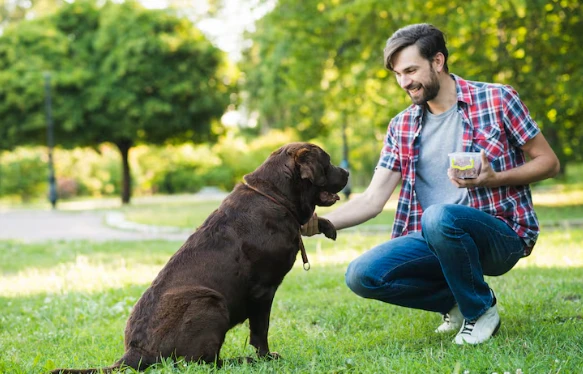
A dog bond rarely breaks in one dramatic moment. It frays in small, ordinary ways: a rushed walk, mixed signals at the door, a training method that makes the dog quieter but not calmer. The good news is that the opposite is also true. A bond grows in small, ordinary moments, too, when the dog learns that people are predictable, fair, and worth following.
There is a reason science keeps pointing back to reward-based methods. They do more than teach cues; they help the dog feel safe enough to learn and engaged enough to try again. In other words, the strongest relationships are usually built by the same thing that makes good training work: clarity.
Key Takeaways
- Bonding works best when training is clear, kind, and consistent.
- Reward what the dog does right; do not rely on pressure to get the job done.
- Enrichment, socialization, and calm routines matter as much as cues.
- Serious behavior problems deserve a real treatment plan, not guesswork.
What Science Says About Bonding
A long-lasting bond is not just affection. It is a pattern the dog can trust: “When I do this, good things happen; when I am unsure, my person helps me make sense of it.” That pattern is at the heart of reward-based training, and it is why modern veterinary and behavior guidance leans toward positive reinforcement rather than punishment.
The science behind the human-dog bond is still developing, and that is healthy. In one study of 20 dog-owner dyads, researchers compared bonded and familiar interactions while measuring oxytocin, which shows how carefully this relationship is studied rather than romanticized. The larger takeaway is simple: the bond is real, but it is shaped by interaction quality, not just shared time. “Dogs are not our whole life, but they make our lives whole.” — Roger Caras.
The Three Levers That Matter Most
The best bonds are built on three levers: predictability, reward, and emotional safety. Predictability helps the dog relax. Reward tells the dog what works. Emotional safety keeps learning open instead of defensive. When those three line up, training stops feeling like a battle and starts feeling like a shared language.
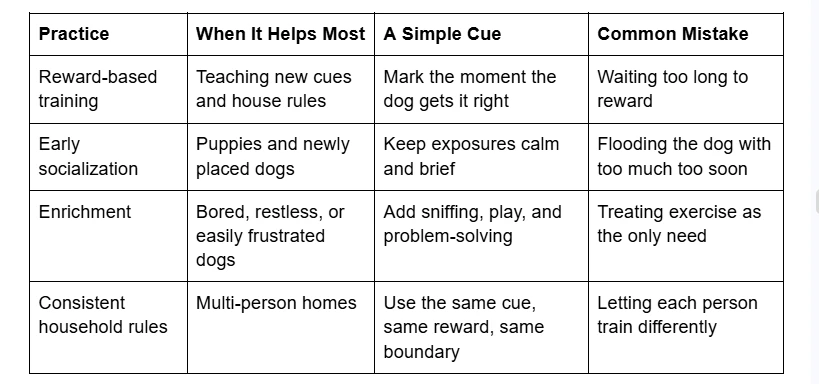
That is also why early socialization matters so much. AVSAB notes that early, adequate socialization and positive training can help prevent behavior problems and improve bonding between humans and dogs. The same logic applies later in life too: the more a dog is calmly exposed to the world in a guided way, the less life feels like a guessing game.
The Bond-Building Framework
- Teach one clean cue at a time.
- Reward immediately so the dog can connect action and outcome.
- Practice in calm places first, then add distractions slowly.
- Use daily enrichment so energy does not spill into stress.
- Keep the household consistent so the dog is not learning five different rules in one day.
This works because dogs learn by pattern, not by lectures. A treat, a marker word, a toy, or a quick game can all become part of that pattern when timing is clean. The point is not bribery. The point is that the dog can actually understand communication.
What Most People Get Wrong
The biggest mistake is thinking obedience and bonding are opposites. They are not. A well-taught dog often feels more connected, not less, because the home becomes easier to read. The second mistake is using correction to create calm. Punishment may suppress a behavior, but it does not teach the dog what to do instead.
Another common miss is ignoring enrichment. A dog that never gets to sniff, move, or engage socially is not “easier.” It is often understimulated. AAHA’s enrichment guidance highlights physical movement, scent work, and positive social connection as ways to reduce stress and prevent destructive behavior.
When Professional Help Matters
Some problems are bigger than home training. AVSAB is clear that aggression, anxiety, and fear need a treatment plan, not a quick fix. That is where a skilled professional matters: not because the dog is “bad,” but because the dog’s behavior is telling a deeper story.
A good trainer should explain methods, show how they fit the dog in front of them, and use reward-based techniques that support learning and the relationship at the same time. The better question is never “How fast can they make the dog obey?” It is “How well do they help the dog understand, cope, and improve?”
A Familiar Pattern
Picture a family that has everything in place except clarity. The dog is adored, well fed, and walked often, but the rules change by person and by mood. One adult laughs at jumping, another corrects it, and the dog ends up more excited, not less. Once the family switches to calm routines, immediate rewards, and a little structured enrichment, the dog does not just behave better. The whole home feels softer. That is the part many people notice first.
Final Verdict
A strong bond with a dog is not built by intensity. It is built by repetition, fairness, and trust. The most effective science-based methods teach the dog what works, reduce unnecessary stress, and make the human easier to follow. That is how training becomes relationship-building, and how a companion becomes a true partner.
For owners who want a premium, science-based path to better behavior, stronger communication, and a more dependable result, companies like Canine Behavior Institute can help shape that next step.
FAQs
- What makes a good dog training approach?
A good approach is calm, reward-based, and consistent. It teaches the dog what to do instead of focusing on punishment.
- What are the best practices for bonding?
Best practices include immediate rewards, early socialization, daily enrichment, and clear household rules.
- How to build trust with a dog?
Use predictable routines, reward good choices quickly, and avoid harsh corrections that make the dog wary.
- When to hire a professional?
When fear, aggression, or anxiety start affecting daily life, a professional should build a treatment plan.
- Which professional services are worth considering?
Look for behavior coaching, private training, and a plan that includes socialization, enrichment, and clear follow-up.