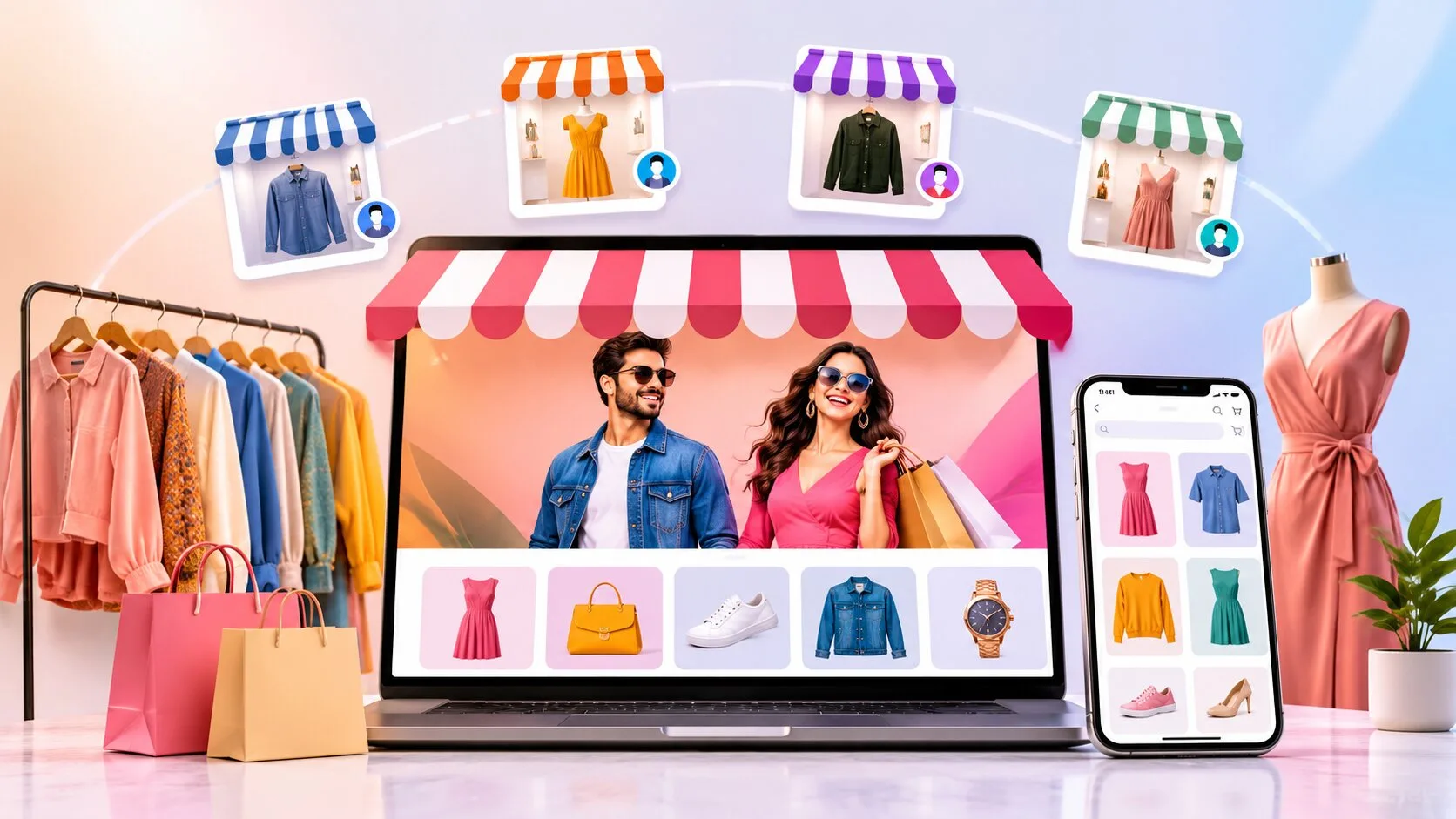
To build a fashion multi-vendor marketplace like Myntra, you need three things working together: a storefront where shoppers browse and buy, a vendor portal where sellers list and manage products, and an admin panel that controls commissions, payouts, orders and quality. You can build all of it from scratch, or start with a ready-made platform and customise it. The second route is usually faster and lighter on budget.
This guide explains how a fashion marketplace works, which features matter, the steps to build one, and how to choose between custom development and a ready-made platform.
What is a multi-vendor fashion marketplace?
A multi-vendor fashion marketplace is one website and app where many independent sellers list clothing, footwear and accessories, and customers buy from all of them in a single cart. The platform owner does not need to hold stock. Sellers manage their products, while the marketplace handles discovery, payments, trust and customer experience.
Marketplace owners usually earn through:
- Commission on every sale
- Seller subscription or listing fees
- Paid promotions and featured placements
- Brand advertising
- Fees for fulfilment or logistics services
Which features does a fashion marketplace need?
Fashion buyers are picky, so the details matter more here than in most categories.
For shoppers
- Search and filters by size, colour, brand, fit, price and occasion
- Product pages with several images, size charts and fabric details
- Wishlist, saved addresses and quick checkout with UPI, cards, wallets and cash on delivery
- Easy returns and exchanges
- Photo reviews and personalised recommendations
For vendors
- Simple onboarding with KYC and document upload
- Bulk product upload with size and colour variants
- Inventory, order and return management
- Sales reports and payout tracking
For the admin
- Vendor approval and quality control
- Commission rules by category or vendor
- Payout, refund and dispute management
- Homepage, banner and campaign control
- Analytics across sales, returns and seller performance
How to build a fashion multi-vendor marketplace, step by step
1. Pick a niche. A giant catalogue is hard to compete with. Most new marketplaces win by focusing on one segment, such as ethnic wear, plus-size fashion, kidswear, sustainable brands or local designers. A narrow niche is easier to market and easier to fill with quality sellers.
2. Define the business model. Decide commission rates, the payout cycle, the return policy and who handles shipping before you build anything.
3. Choose your technology route. You can develop custom software or start with a ready-made platform. The next section compares both.
4. Design for mobile first. A large share of fashion shoppers browse on their phones. Image-first layouts, fast loading and effortless size selection decide whether they buy.
5. Connect payments and logistics. You need a payment gateway that supports split payments for vendor payouts, courier integrations and a clear return pickup process.
6. Onboard sellers before launch. An empty marketplace does not convince anyone. Bring in enough quality vendors to offer a real choice on day one.
7. Test, launch and improve. Run real test orders through checkout, returns and payouts. Launch in one category or city, then track conversion, return rate and repeat purchases to guide what you build next.
Custom development or a ready-made platform?
Building from scratch gives you full control, but it needs a larger team, a bigger budget and many months before the first order arrives. A ready-made fashion eCommerce platform gives you the core marketplace already built, so your time goes into customisation, vendors and marketing instead of rebuilding basics like carts, order flows and payouts.
For most startups and retailers, starting with a ready-made platform and customising it is the safer path. A solution like OSPL-FashionX is a ready-made fashion eCommerce platform builder made for apparel businesses, which means you begin with a working foundation instead of a blank page.
Whichever route you take, check the following before you commit:
- Does it support size and colour variants, returns and exchanges?
- Can it handle multiple vendors, commissions and split payouts?
- Are Android and iOS apps available or easy to add?
- Is it secure and able to scale as traffic grows?
- Will you own the source code, and what support exists after launch?
What affects the cost and timeline?
There is no single price, because it depends on scope. The biggest factors are:
- Custom build or ready-made platform
- Number of features in the first version
- Android and iOS apps alongside the website
- Third-party integrations such as payments, shipping and ERP
- Design complexity and branding
- Hosting, maintenance and marketing after launch
A ready-made platform cuts both upfront spending and time to launch. Whatever you choose, ask for a written scope with clear milestones before work begins.
Common mistakes to avoid
- Trying to copy a giant marketplace instead of owning a niche
- Launching with too few sellers or a thin catalogue
- Ignoring returns, which are a big part of fashion eCommerce
- Poor product photos and missing size information
- Slow mobile experience
- Skipping vendor quality checks, which hurts customer trust
Frequently asked questions
How does a fashion marketplace make money?
Mostly through commission on each sale, plus seller fees, paid promotions and advertising.
Do I need to buy inventory?
No. In a multi-vendor model, sellers own and ship their products. You manage the platform, payments and customer experience.
Can I launch without a technical team?
With a ready-made platform, much of the technical work is already done. You will still need developers or a technology partner for customisation, design and integrations.
How long does it take to launch?
A custom build usually takes several months. A ready-made platform can often go live much sooner, depending on how much you customise.
Which niche should I start with?
Choose a segment where you understand the customer and can bring quality sellers on board, such as ethnic wear, kidswear or sustainable fashion.
Conclusion
Building a fashion marketplace is less about copying a big name and more about solving one group of customers' problems better than anyone else. Pick a clear niche, design for mobile, get returns and payouts right, and bring in good sellers early. Starting with a ready-made platform lets you reach customers sooner and spend your budget on growth instead of rebuilding the basics.