
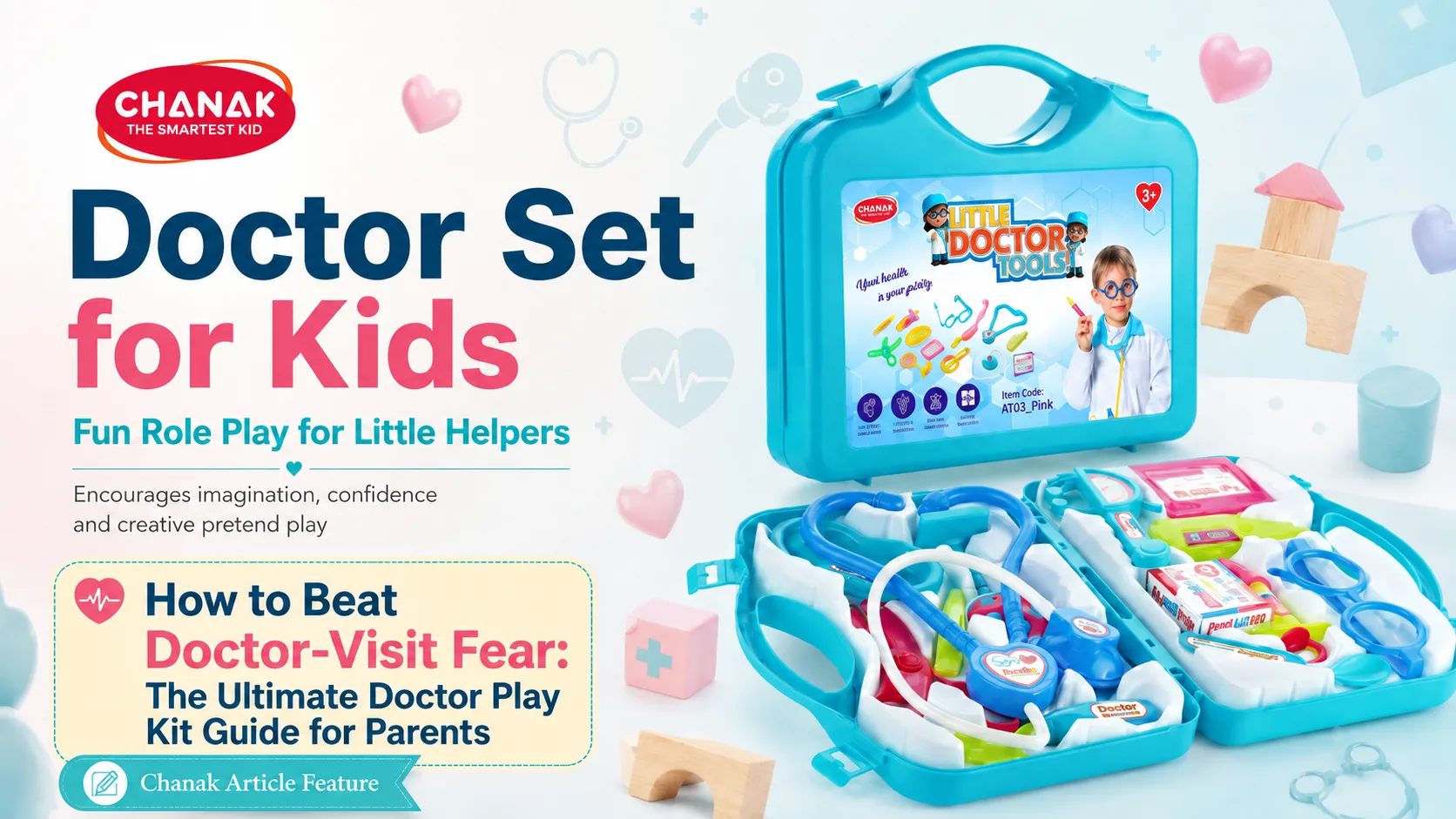
Every parent knows the scene. The waiting room is calm, the receptionist smiles, and then the moment your child's name is called, the tears start. A regular checkup turns into a wrestling match, and what should take ten minutes stretches into a stressful ordeal for everyone involved. If this sounds familiar, you're not alone — doctor-visit anxiety is one of the most common fears in early childhood, and the good news is that it's also one of the easiest to fix with a little preparation.
One of the simplest, most effective tools for this is a doctor set for kids. Long before the real appointment, this kind of pretend play toy lets children explore medical tools, ask questions, and build familiarity in a safe, playful environment. By the time the actual visit rolls around, the stethoscope, the thermometer, and even the doctor's white coat feel like old friends instead of scary unknowns.
This guide walks through exactly why children develop this fear in the first place, why pretend play is such an effective antidote, and how to use a doctor set for kids the right way — step by step, age by age — so that your next clinic visit feels less like a battle and more like just another part of your child's day.
Why Children Fear Doctor Visits
Understanding the root of the fear is the first step to solving it. Doctor-visit anxiety rarely comes from one single cause — it's usually a mix of a few overlapping triggers.
Fear of the unknown sits at the top of the list. Clinics are unfamiliar spaces filled with strange sounds, sterile smells, and equipment children have never seen up close. Fear of pain follows closely behind, largely shaped by memories or stories associated with injections and vaccines. Then there's the loss of control — being examined, undressed, or touched by someone the child doesn't know well can feel deeply unsettling for a toddler who is still learning about bodily autonomy. Finally, sensory overload plays a bigger role than most parents realize: bright overhead lights, cold metal instruments, and the sight of a stranger in a white coat can overwhelm a young child's senses within seconds of walking in.
None of these fears are irrational from a child's point of view. They're simply reactions to an environment that feels unpredictable — and unpredictability is exactly what pretend play is designed to fix.
It also helps to remember that fear of doctors is rarely about the doctor as a person. Most children have no issue with kind strangers in other settings — a friendly teacher, a shopkeeper, a family friend. What changes at the clinic is the loss of familiar cues: no toys to anchor attention, no home environment to feel safe in, and an adult who is about to do something physical without the child fully understanding why. Once you see the fear through this lens, it becomes clear why simply talking about the visit isn't enough. Children process new experiences best through play, not conversation alone, which is exactly the gap a doctor set for kids is built to close.
Why Pretend Play Works: The Psychology Behind It
Child psychologists have long recognized that role play is one of the most effective ways for children to process new or intimidating experiences. When a child uses a doctor set for kids to "treat" a stuffed animal or a parent, something important happens psychologically — the child shifts from being the passive patient to the active doctor. That role reversal restores a sense of control, which is often the missing ingredient in real-life medical anxiety.
Repetition also matters. Every time a child plays doctor, the tools and the process become a little more familiar, and familiarity is the natural antidote to fear. Pretend play additionally gives children a safe outlet to process emotions they don't yet have the vocabulary to express — through storytelling, a child can voice worries indirectly, saying things through their toy patient that they might never say about themselves. This is precisely why a well-designed pretend medical toy works so well as a rehearsal tool: it turns an abstract, scary concept into something tangible, controllable, and even fun.
Step-by-Step: Preparing Your Child With a Doctor Play Kit
Getting the timing and approach right makes all the difference. Here's a simple sequence that works well for most children.
Step 1: Introduce the kit early. Bring out the doctor set for kids several days before the actual appointment, not the morning of. This gives your child time to explore without the pressure of an upcoming visit hanging over the play session.
Step 2: Start with a stuffed toy or a parent as the "patient." Let your child practice using the stethoscope or thermometer on someone or something low-stakes before they ever imagine themselves in that position.
Step 3: Name each tool and explain its purpose. Point to the stethoscope and explain it listens to the heartbeat; hold up the thermometer and explain it checks for a fever. Simple, honest explanations remove mystery from the equipment.
Step 4: Swap roles. Once your child is comfortable playing doctor, gently invite them to be the patient too. This mirrors the real visit and helps them rehearse both sides of the interaction.
Step 5: Use calm, truthful language about what happens at a real clinic. Avoid vague reassurances. Instead of saying nothing will happen, explain simply what a checkup involves, including the possibility of an injection if relevant.
Step 6: Praise the effort, not just the outcome. After each play session, acknowledge your child's bravery and curiosity. Positive reinforcement builds confidence that carries over into the real appointment.
Age-Wise Approach to Doctor Role Play
Not every child engages with pretend play the same way, and adjusting your approach by age makes the exercise far more effective.
For toddlers between two and three years, keep sessions short and sensory-focused. A simplified doctor set for kids with soft, rounded tools works best, and five to ten minutes of play is often enough to hold their attention.
For preschoolers aged three to five, storytelling becomes a powerful addition. Set up a pretend "clinic" at home, assign roles to stuffed animals or siblings, and use any flashcards or picture guides that come with the kit to add a learning layer to the fun.
For early school-age children between five and seven, you can introduce more realistic tools and have deeper conversations about specific fears, such as injections or X-rays. At this stage, children are also capable of asking direct questions, so encourage them to voice their worries openly during play.
What to Look for in a Doctor Play Kit
Not all toys are created equal, and choosing the right doctor set for kids can significantly affect how well this method works.
Safety should always come first — look for non-toxic materials, rounded edges, and proper safety certification. Realism matters too; tools that closely resemble actual medical instruments help children make a stronger mental connection between play and the real visit. Educational value is another important factor — a doctor set for kids that includes flashcards or simple guides adds a layer of learning alongside the fun, helping children understand basic health concepts. Finally, consider durability and storage. A sturdy carry case or foldable suitcase keeps all the pieces organized, making it easy for children to return to the game again and again, which is exactly the kind of repeated exposure that builds lasting confidence.
Common Mistakes Parents Make When Prepping Kids
Even well-intentioned parents sometimes undermine their own efforts. A few patterns show up again and again.
Introducing the topic only on the morning of the appointment rarely leaves enough time for the fear to settle. Using fear-based reassurances, like insisting nothing will hurt when it might, can backfire and damage trust once the child discovers otherwise. Skipping the role-reversal step is another missed opportunity — when a child never gets to "be" the doctor, they miss out on the sense of control that makes pretend play so effective in the first place. And over-promising specific outcomes, such as guaranteeing there won't be a shot when you're not actually sure, can create bigger anxiety down the line if the promise turns out to be false.
Beyond the Kit: Additional Tips for a Fear-Free Visit
A doctor set for kids works best as part of a broader approach. Reading doctor-themed picture books together in the days leading up to an appointment reinforces the same ideas through a different medium. Choosing a pediatrician known for being gentle and child-friendly can make a noticeable difference in how the visit unfolds. Bringing a comfort object, or even the play kit itself, to the real appointment gives your child something familiar to hold onto in an unfamiliar setting. And afterward, celebrating their bravery, however small the moment, helps build a positive association that carries forward to the next visit.
Conclusion: Turning Anxiety Into Confidence
Doctor-visit fear is common, but it isn't permanent. With a little preparation, some patience, and the right tools, most children can move from tears in the waiting room to genuine curiosity about how their body works. A good doctor set for kids does more than entertain — it rehearses courage, one pretend checkup at a time. Start practicing at home, and by the next real appointment, your child might just be the one holding the stethoscope with confidence instead of fear.
Frequently Asked Questions
Why is my child suddenly afraid of the doctor?
Sudden fear often comes from a past unpleasant experience, an overheard conversation, or simply reaching an age where they understand more about needles and exams. It's a normal developmental phase, and it responds well to preparation through play.
At what age should I start doctor role play with my child?
You can start as early as age two with simple, soft tools and short sessions. Preschoolers and early school-age children benefit even more, since they can engage in storytelling and ask direct questions.
How do I explain vaccinations to a toddler without scaring them?
Use simple, honest words like a quick pinch instead of vague promises that nothing will happen. Pair the explanation with role play using a doctor set for kids so the idea feels rehearsed rather than sudden.
Is a pretend doctor kit safe for a 2-year-old?
Look for sets made with non-toxic materials, rounded edges, and pieces sized to avoid choking hazards. A doctor set for kids designed for younger ages typically uses softer plastics and larger, easy-to-grip tools.
What should I say to my child before a real doctor visit?
Keep it simple and truthful: explain who they'll see, what will happen, and why. Avoid last-minute surprises, and reference the same tools and language you've used during pretend play at home.
Can role play actually reduce a child's fear of hospitals?
Yes. Role play gives children a sense of control and familiarity, both of which are directly linked to lower anxiety in clinical settings, according to child development research on rehearsal-based coping.
What tools should a good doctor play set include?
A well-rounded doctor set for kids usually includes a stethoscope, thermometer, blood pressure cuff, syringe, and reflex hammer, ideally stored in a carry case for easy, repeated play.
How often should we practice doctor play before a checkup?
A few short sessions spread across the week leading up to the appointment work better than one long session the night before. Repetition, not duration, builds familiarity.
My child still cries at the doctor despite playing — what now?
Some fear may take multiple visits to fully fade. Keep practicing at home, stay calm and reassuring during the visit itself, and speak with your pediatrician about pacing exams gently for anxious children.
Are doctor play sets educational or just for fun?
Both. Beyond easing fear, a doctor set for kids introduces basic health concepts, builds empathy, and encourages communication skills, making it a genuinely educational toy alongside its emotional benefits.