Telecommunication ERP solutions support 5G and digital services by helping telecom companies manage complex operations, real-time data, billing, customers, and network resources from a single integrated platform. As telecom networks move from 4G to 5G, service providers need faster systems, smarter automation, and better visibility across their business. ERP software plays a key role in making this transition smooth and scalable.
5G is not just about faster internet. It enables digital services like IoT, smart cities, cloud communication, AI-driven analytics, edge computing, and ultra-low-latency applications. Managing these services manually or with disconnected systems is nearly impossible. This is where telecommunication ERP solutions become essential.
What Are Telecommunication ERP Solutions?
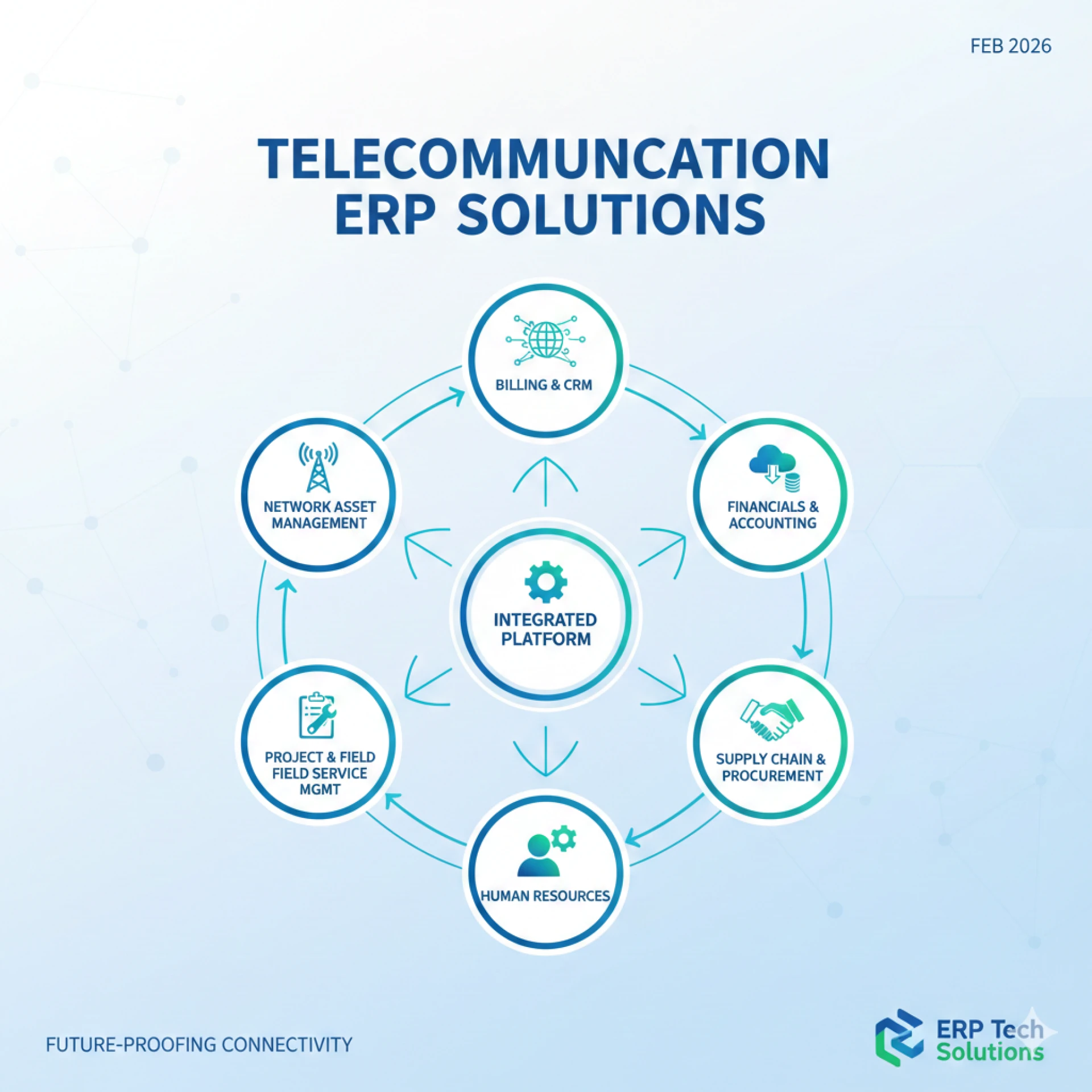
Telecommunication ERP solutions are enterprise software systems designed specifically for telecom operators, ISPs, and service providers. They integrate core business functions such as:
- Billing and revenue management
- Customer relationship management (CRM)
- Network and asset management
- Inventory and supply chain
- Finance and accounting
- Human resource management
- Analytics and reporting
Unlike generic ERP systems, telecom ERP platforms are built to handle high transaction volumes, complex pricing models, multi-service billing, and real-time network data.
Why 5G Needs ERP Support
5G networks are more complex than previous generations. Telecom companies must manage:
- Millions of connected devices
- Real-time service usage
- Dynamic pricing models
- Network slicing
- Multiple digital service offerings
- Higher customer expectations
Without a centralized ERP system, data remains scattered across OSS, BSS, billing tools, and third-party platforms. This leads to delays, errors, revenue leakage, and poor customer experience.
Telecommunication ERP solutions act as the business backbone that connects technology, operations, and digital services.
How Telecommunication ERP Solutions Support 5G
1. Real-Time Billing and Revenue Management
5G enables usage-based, subscription-based, and on-demand services. ERP systems support:
- Real-time usage tracking
- Dynamic pricing and charging
- Automated invoicing
- Accurate revenue recognition
This helps telecom operators launch new 5G services quickly without billing errors or revenue loss.
2. Integration with OSS and BSS Systems
Modern telecom ERP solutions integrate seamlessly with:
- OSS (Operational Support Systems)
- BSS (Business Support Systems)
- Network management platforms
This integration ensures smooth service provisioning, fault management, billing accuracy, and customer lifecycle management in 5G environments.
3. Scalable Infrastructure for Digital Services
5G supports digital services such as IoT platforms, smart utilities, video streaming, AR/VR, and edge computing. ERP systems help by:
- Managing service catalogs
- Handling multi-tenant environments
- Supporting rapid service rollout
- Scaling operations as demand grows
Cloud-based ERP solutions are especially effective for handling the scale and speed required by 5G.
4. Improved Customer Experience
With ERP-driven CRM and analytics, telecom providers can:
- Offer personalized 5G plans
- Track customer usage in real time
- Resolve issues faster
- Reduce service downtime
- Improve customer retention
A better customer experience is critical in competitive 5G markets.
5. Network Asset and Inventory Management
5G requires massive investments in infrastructure such as base stations, fiber, small cells, and edge devices. ERP systems help manage:
- Network assets and equipment
- Inventory levels
- Vendor contracts
- Maintenance schedules
This reduces operational costs and improves network uptime.
6. Data Analytics and Decision Making
5G networks generate huge volumes of data. ERP solutions provide:
- Centralized dashboards
- Real-time business insights
- Predictive analytics
- Revenue and cost analysis
Telecom leaders can make faster and smarter decisions using accurate data.
7. Support for IoT and Enterprise Services
5G enables enterprise-grade digital services like smart manufacturing, healthcare monitoring, and connected vehicles. ERP platforms support these services by:
- Managing enterprise customer accounts
- Handling complex contracts and SLAs
- Automating billing for IoT usage
- Tracking device lifecycles
This allows telecom companies to expand beyond traditional voice and data services.
Benefits of Telecommunication ERP Solutions for 5G
- Faster 5G service launches
- Reduced operational costs
- Better billing accuracy
- Improved customer satisfaction
- Higher revenue visibility
- Easier compliance and reporting
- Future-ready digital infrastructure
Cloud ERP and 5G: A Perfect Match
Cloud-based telecommunication ERP solutions are ideal for 5G because they offer:
- High scalability
- Faster deployment
- Remote access
- Lower infrastructure costs
- Easier integration with digital platforms
As telecom companies move toward cloud-native and software-defined networks, cloud ERP becomes a strategic advantage.
Choosing the Right ERP for 5G Telecom Operations
When selecting a telecommunication ERP solution for 5G, look for:
- Telecom-specific features
- Strong OSS/BSS integration
- Real-time billing capabilities
- Cloud and API support
- Advanced analytics
- Security and compliance readiness
A flexible and customizable ERP system ensures long-term success in the evolving 5G ecosystem.
Conclusion
Telecommunication ERP solutions play a critical role in supporting 5G and digital services. They help telecom companies manage complexity, scale operations, launch innovative services, and deliver better customer experiences. As 5G adoption accelerates, ERP systems are no longer optional — they are essential for digital transformation and sustainable growth.
By investing in the right ERP solution, telecom providers can fully unlock the business potential of 5G and stay competitive in a digital-first world.