
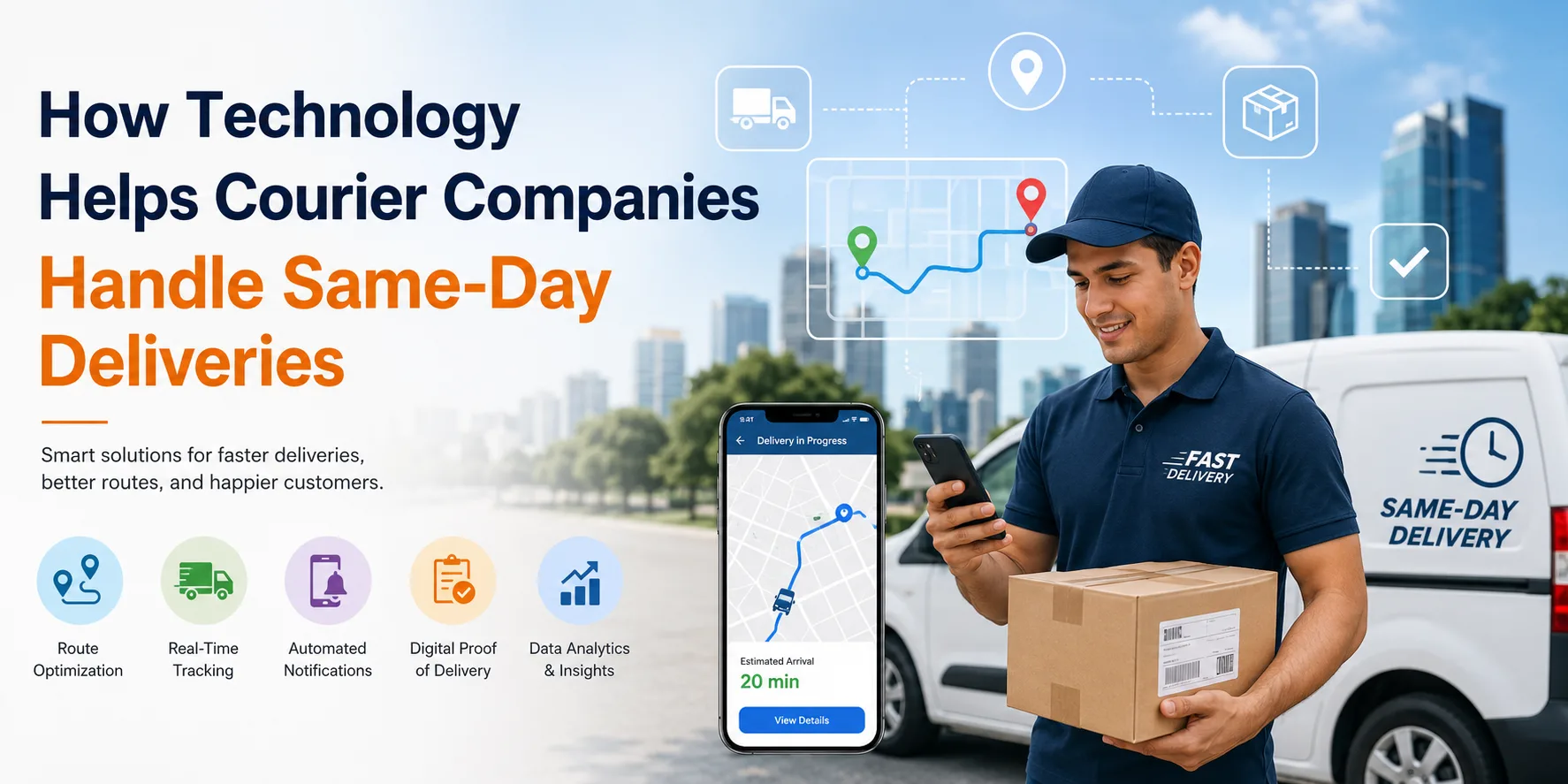
Same-day delivery has quickly become an important part of the modern courier and logistics industry. Customers no longer want to wait several days for important packages when faster delivery options are available. From e-commerce orders and business documents to medicines and urgent supplies, courier companies are under increasing pressure to collect, process, and deliver shipments within a limited time frame.
Managing these time-sensitive deliveries manually can be challenging. Dispatchers need to assign drivers, plan routes, monitor traffic, communicate with customers, and respond to unexpected changes throughout the day. Technology helps courier companies bring these activities together through connected digital systems, making same-day delivery faster, more organized, and easier to manage.
The Growing Need for Same-Day Courier Delivery
Same-day delivery requires much more than simply sending a driver from one location to another. Courier companies may receive multiple orders throughout the day, each with different pickup locations, delivery addresses, priorities, and deadlines. At the same time, drivers have to deal with traffic congestion, road closures, changing customer availability, and other unexpected situations.
Traditional delivery management methods can make these challenges more difficult to handle. When dispatching and route planning depend heavily on phone calls, spreadsheets, or manual calculations, valuable time can be lost. Technology provides courier businesses with a centralized way to coordinate these operations and make faster decisions.
Route Optimization Makes Same-Day Delivery More Efficient
One of the biggest advantages of technology in courier operations is intelligent route optimization. Instead of relying on manually planned routes, delivery software can consider multiple factors when determining the most efficient sequence of stops.
Route optimization systems can take delivery locations, driver availability, delivery priorities, traffic conditions, and time windows into account. This allows dispatchers to create practical routes that help drivers complete more deliveries within the available time.
Route optimization is particularly valuable for same-day delivery because even a small delay at one stop can affect the rest of the driver's schedule. Dynamic routing can help businesses adjust routes when traffic or new delivery requirements affect the original plan.
Automated Dispatching Speeds Up Driver Assignment
When a same-day order arrives, courier companies need to decide which driver should handle it as quickly as possible. Manual driver assignment can create unnecessary delays, especially when multiple drivers are already working on different routes.
Automated dispatching helps solve this problem by using predefined business rules and real-time operational information to identify suitable drivers. Depending on the system, factors such as driver location, availability, delivery priority, vehicle capacity, and route compatibility can be considered before assigning a delivery.
Real-Time GPS Tracking Improves Delivery Visibility
Real-time tracking is another important technology for same-day courier operations. GPS-enabled delivery systems allow businesses to monitor the location and status of vehicles while deliveries are in progress.
For dispatchers, this provides a live overview of the fleet. They can identify whether a driver is progressing normally, approaching a delivery location, or experiencing an unexpected delay. This visibility allows teams to respond proactively instead of waiting for a customer complaint or missed delivery.
Real-time tracking can also improve the customer experience. Customers can receive updates about their shipment and get a better understanding of when their package is expected to arrive. Greater visibility can reduce uncertainty and improve confidence in the courier service.
Technology Helps Manage Last-Minute Delivery Requests
Same-day courier operations often involve last-minute orders. A business may suddenly need an urgent document delivered, or an online customer may place an order shortly before the delivery deadline.
Technology makes it easier to incorporate these new requests into an existing delivery operation. Modern courier platforms can evaluate active routes and available drivers before determining how an additional delivery can be handled.
Instead of manually reviewing every driver's schedule, dispatchers can use digital tools to identify possible options more quickly. In some systems, routes can also be adjusted dynamically when new orders enter the system.
Digital Proof of Delivery Reduces Administrative Work
Completing a delivery is only one part of the courier process. Businesses also need to confirm that the package reached the correct recipient. Traditionally, proof of delivery could involve paper signatures and manual documentation.
Digital proof of delivery simplifies this process. Drivers can use mobile applications to capture electronic signatures, photographs, timestamps, delivery notes, or other required information directly from the delivery location.
Automated Customer Notifications Improve Communication
Customers want more than a simple message saying that their package has been dispatched. For same-day deliveries, they often want to know where their shipment is and when it is likely to arrive.
Technology enables courier businesses to automate customer communication throughout the delivery journey. Notifications can be triggered when an order is accepted, picked up, dispatched, approaching the destination, or successfully delivered.
Data Analytics Helps Courier Companies Improve Performance
Technology does not only help courier companies manage deliveries in real time. It also creates valuable operational data that businesses can analyze later.
Courier management systems can provide information about delivery times, route performance, driver productivity, failed deliveries, customer demand, fuel usage, and other operational factors. Managers can use these insights to identify recurring problems and improve future delivery planning.
AI Is Making Courier Operations More Intelligent
Artificial intelligence is adding another layer of intelligence to modern delivery management. AI-powered systems can analyze large amounts of operational information and support faster decision-making.
AI can assist with areas such as demand forecasting, route planning, driver assignment, estimated arrival times, and delivery optimization. When combined with real-time data, these capabilities can help businesses respond more effectively to constantly changing delivery conditions.
AI is particularly useful for operations where delivery demand changes throughout the day. Instead of relying entirely on fixed plans, intelligent systems can support more flexible and responsive delivery decisions.
Cloud-Based Systems Keep Delivery Teams Connected
Same-day delivery operations often involve multiple people working in different locations. Drivers are on the road, dispatchers are managing orders, and customers are waiting for their packages. Cloud-based delivery software helps keep these groups connected through centralized systems.
Managers can access delivery information from a dashboard, while drivers can receive tasks through mobile applications. Customers can receive tracking information without needing direct communication with the dispatch team.
Choosing the Right Technology for Courier Operations
Not every courier business has the same delivery requirements. A local courier company handling a small number of daily deliveries may need a different technology setup than a large logistics provider managing hundreds or thousands of shipments.
Businesses should therefore consider their operational requirements before selecting or developing a delivery management platform. Important areas may include automated dispatching, route optimization, GPS tracking, driver applications, customer notifications, digital proof of delivery, analytics, and integration with existing business systems.
Working with an experienced logistics software development company can also help businesses create solutions that match their specific workflows instead of forcing their operations into a one-size-fits-all platform.
The Future of Same-Day Courier Delivery
The future of same-day delivery will continue to depend on speed, visibility, automation, and intelligent decision-making. As customer expectations increase, courier companies will need technology that can help them manage growing delivery volumes without compromising service quality.
Artificial intelligence, real-time tracking, dynamic routing, mobile applications, cloud platforms, and automation are already changing how courier operations are managed. As these technologies become more advanced, courier companies will have more opportunities to improve delivery accuracy, reduce operational delays, and provide better customer experiences.
Same-day delivery is ultimately a race against time. Technology gives courier businesses the tools they need to make better decisions throughout that race. By connecting drivers, dispatchers, customers, and delivery data, modern courier technology can turn a complex delivery process into a more coordinated and efficient operation.
Conclusion
Same-day delivery requires precise coordination at every stage, from receiving an order to completing the final drop-off. Manual processes can make it difficult to maintain speed and visibility when order volumes increase or unexpected situations occur.
Technology helps courier companies overcome these challenges through route optimization, automated dispatching, GPS tracking, digital proof of delivery, customer notifications, analytics, AI, and cloud-based connectivity. Together, these tools enable courier businesses to manage deliveries more efficiently while providing customers with faster and more transparent service.