
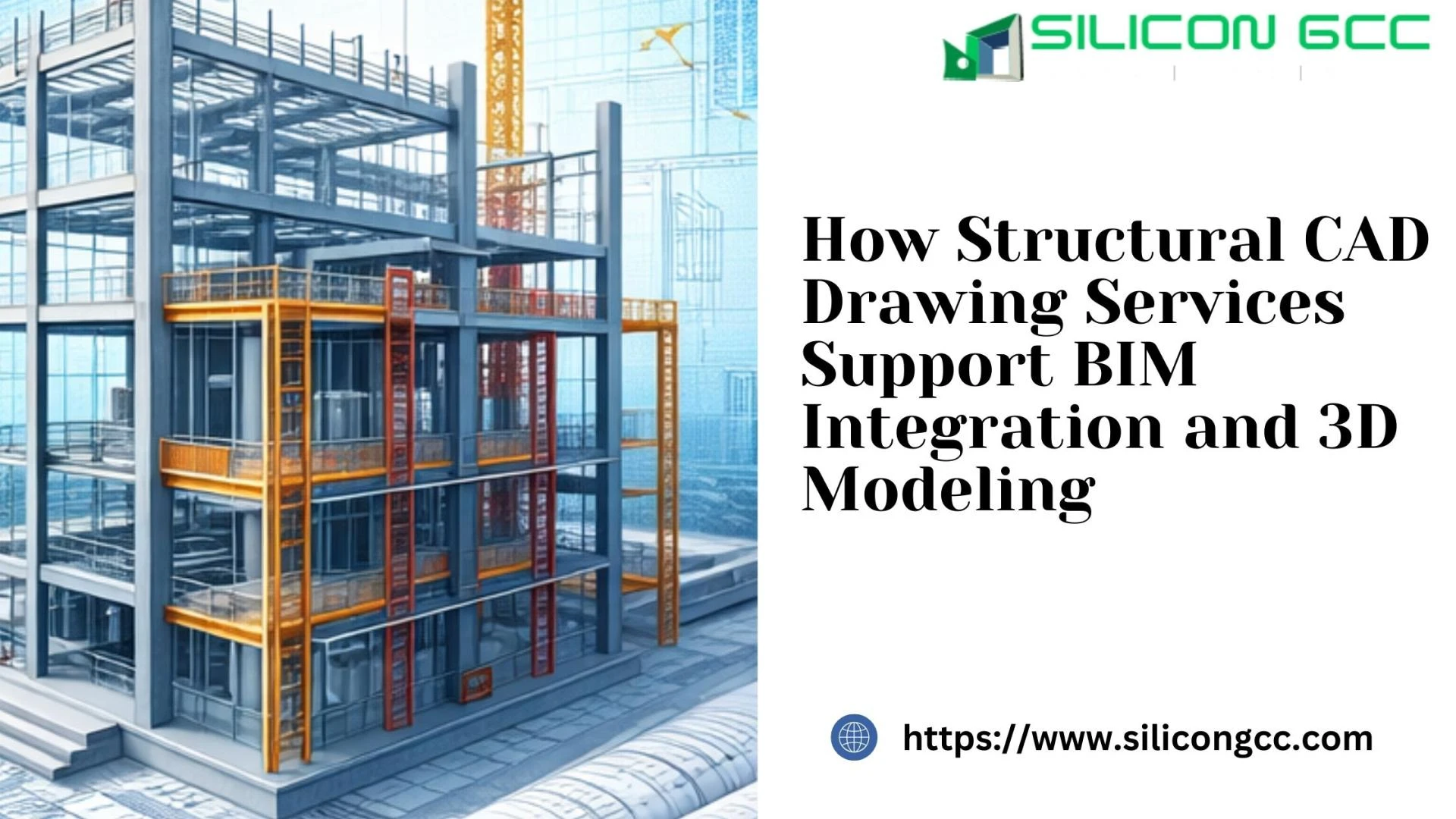
The construction and engineering industry has evolved far beyond traditional 2D drafting. Today, digital collaboration, coordinated models, and data-driven workflows define how projects move from concept to completion. At the center of this transformation are Structural CAD Drawing Services, which play a vital role in supporting BIM integration and advanced 3D modeling processes.
Structural documentation is no longer limited to static drawings. It now forms the foundation of intelligent models that guide engineering analysis, coordination, fabrication, and project execution. When properly aligned with BIM standards, structural drawings become powerful tools for precision and collaboration.
The Shift from 2D Drafting to Intelligent Modeling
In conventional workflows, structural drawings were created separately from architectural and MEP documents. This often led to inconsistencies, coordination gaps, and revision conflicts. With BIM-driven environments, all disciplines operate within a shared digital ecosystem.
Structural CAD Drawing Services bridge the gap between traditional drafting and intelligent 3D modeling. Detailed CAD drawings are developed with clarity, defined geometry, and structured data that seamlessly transition into BIM platforms. This ensures that structural members, reinforcement layouts, and connection details are not just visually accurate but digitally coordinated.
By aligning drawings with model-based workflows, structural teams contribute directly to clash detection, spatial validation, and multidisciplinary coordination.
Supporting Structural BIM 3D Modeling Services
One of the most significant advantages of integrating CAD drawings with BIM is the ability to create highly accurate 3D structural models. Structural BIM 3D Modeling Services rely on precise input data. Without well-prepared CAD documentation, modeling accuracy can be compromised.
Structural CAD drawings provide:
- Accurate beam and column layouts
- Slab thickness and reinforcement detailing
- Foundation plans and section clarity
- Connection and joint specifications
When these elements are developed systematically, BIM models reflect real-world structural intent. This enhances design visualization and reduces interpretation errors during later stages.
Enhancing Coordination Across Disciplines
Modern projects demand collaboration between architects, structural engineers, and MEP professionals. Misalignment between structural framing and mechanical routing can cause delays and documentation revisions.
Through well-organized Structural Design and Drafting Services, structural components are clearly defined in both plan and sectional views. When integrated into BIM platforms, these drawings allow teams to identify spatial conflicts early in the design phase.
For example, coordinated structural models enable:
- Clash detection between beams and ducts
- Verification of slab openings
- Alignment of core walls with service shafts
This level of coordination improves design reliability and strengthens communication between disciplines.
Improving Accuracy in Structural Engineering Services
Precision is essential in Structural Engineering Services. Even minor dimensional inconsistencies can affect load paths, reinforcement placement, and connection performance. CAD-based structural documentation ensures that geometry is accurately defined before it is translated into 3D environments.
When CAD standards, layering systems, and annotation protocols are properly maintained, BIM models inherit structured data. This reduces modeling ambiguities and ensures consistency between analytical models and visual representations.
Additionally, parametric modeling in BIM depends heavily on clean and organized drafting inputs. Structured CAD drawings simplify the transition into intelligent modeling platforms, maintaining alignment between structural analysis and documentation outputs.
Supporting Design Development and Revisions
Revisions are inevitable in structural projects. Changes in grid layouts, column spacing, or load requirements can impact multiple drawing sheets and model elements. Integrated workflows between CAD drafting and BIM modeling ensure that updates remain synchronized.
With structured Structural Design Services, changes in one part of the model can be reflected across plans, sections, and schedules. This reduces inconsistencies between drawings and 3D models. A disciplined approach to revision control enhances traceability and maintains design integrity throughout the project lifecycle.
Clear version management, coordinated model updates, and standardized drafting practices all contribute to smoother design progression.
Enabling Fabrication-Ready Documentation
Beyond design coordination, structural documentation must communicate detailed information for fabrication and construction planning. Steel members, rebar detailing, and connection assemblies require exact dimensions and specifications.
When Structural CAD Drawing Services are aligned with BIM workflows, fabrication-level details can be extracted directly from coordinated models. This improves drawing clarity and strengthens confidence in structural documentation.
3D visualization further enhances understanding of complex connections, load transfer mechanisms, and reinforcement congestion areas. Teams gain better insight into structural behavior through integrated digital representations.
Driving Efficiency Through Standardization
A structured drafting framework is critical for successful BIM integration. Consistent naming conventions, layering standards, and annotation systems create a stable foundation for digital modeling.
Organizations such as S E C D Technical Services LLC adopt disciplined drafting methodologies to maintain consistency across structural projects. Standardized CAD processes enable smoother transitions into BIM environments and improve overall documentation quality.
When structural drawings are prepared with BIM compatibility in mind, project teams benefit from improved clarity, streamlined coordination, and reduced documentation discrepancies.
The Future of Structural CAD and BIM Integration
As digital construction continues to evolve, the connection between CAD drafting and BIM modeling will grow even stronger. Automation, parametric modeling, and data-rich structural elements are shaping the future of engineering documentation.
Structural CAD Drawing Services will remain essential in ensuring that foundational structural information is accurate, organized, and ready for intelligent modeling. By supporting Structural BIM 3D Modeling Services, enhancing Structural Engineering Services, and strengthening Structural Design and Drafting Services, CAD documentation becomes a strategic asset in modern construction workflows.
The integration of structured drafting with BIM technology not only improves visualization but also reinforces precision, coordination, and technical reliability. In an industry driven by digital collaboration, well-executed structural CAD documentation forms the backbone of successful 3D modeling and integrated project delivery.