
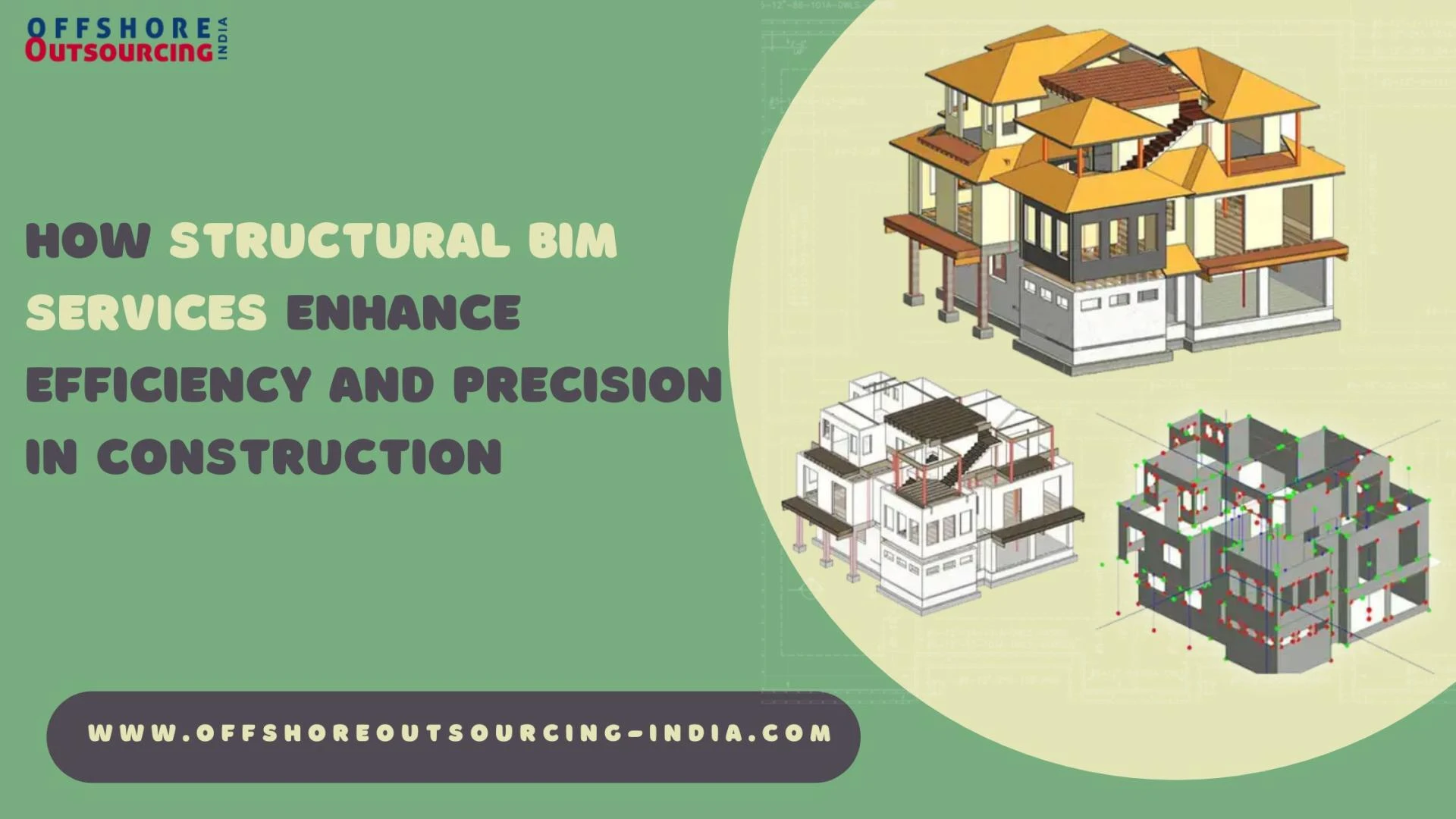
The construction industry has come a long way from hand-drawn sketches and disconnected 2D drawings. Today, projects are bigger, timelines are tighter, and the margin for error is smaller than ever. In this fast-paced environment, accuracy and efficiency aren’t just nice to have; they’re essential. That’s where Structural BIM Services step in and make a real difference.
By combining intelligent 3D modeling with data-driven workflows, Structural BIM is transforming how buildings are designed, coordinated, and constructed. From minimizing costly rework to improving collaboration across teams, BIM has become a game-changer for structural engineering and construction professionals alike.
Let’s explore how Structural BIM Services enhance efficiency and precision throughout the construction lifecycle and why they’re quickly becoming an industry standard.
Understanding Structural BIM Services
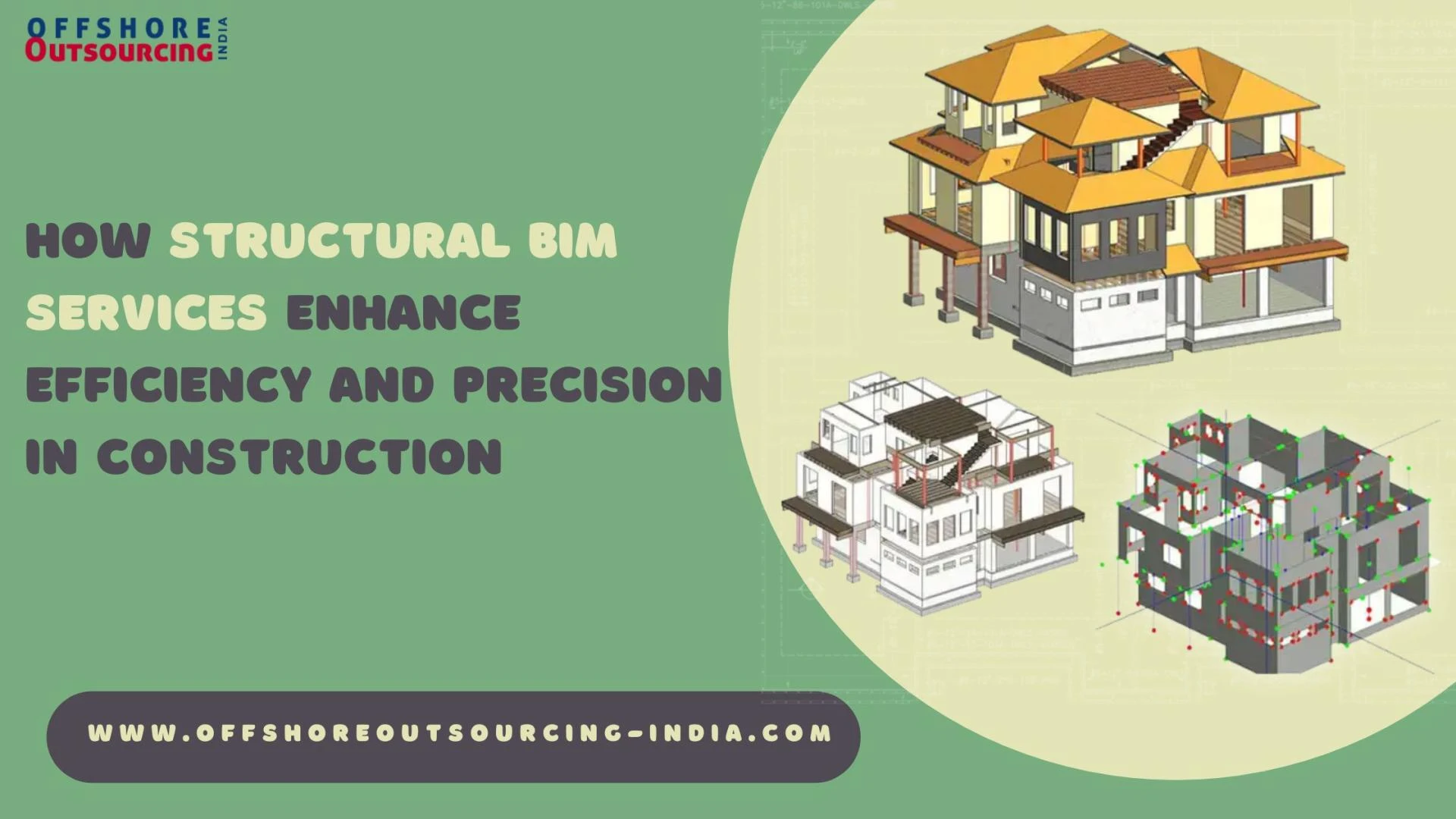
Structural Building Information Modeling (BIM) is the process of creating and managing detailed digital representations of a building’s structural components. Unlike traditional drafting methods, BIM models are intelligent, meaning every element (beams, columns, slabs, foundations) contains embedded information such as dimensions, material properties, and relationships with other elements.
Structural BIM CAD Services replace static 2D drawings with coordinated 3D models that update automatically when changes occur. This ensures consistency across plans, sections, elevations, and schedules.
Structural BIM goes beyond modeling. It includes:
- Structural BIM Drafting Services for precise technical drawings
- Structural BIM Modeling Services for accurate digital representation
- Structural BIM Detailing Services for constructible, fabrication-ready outputs
- Structural BIM Drawing Services for clear, coordinated documentation
Together, these services create a single source of truth that all project stakeholders can rely on.
Improving Design Accuracy Through Intelligent Modeling
One of the biggest advantages of Structural BIM is the dramatic improvement in design accuracy. Traditional design methods rely heavily on manual coordination, which increases the risk of inconsistencies and human error.
With Structural BIM Modeling Services, engineers work within a parametric environment. This means when one element changes, say, a column size or beam alignment, the entire model updates automatically. Drawings, schedules, and quantities remain consistent without the need for repetitive manual edits.
This intelligent modeling approach:
- Reduces design discrepancies
- Improves alignment between design intent and construction reality
- Ensures greater precision in complex structural systems
The result is a structurally sound design that’s accurate from concept to construction.
Enhancing Coordination and Collaboration
Construction projects involve multiple disciplines working simultaneously. Structural, architectural, and MEP teams must coordinate closely, yet traditional workflows often lead to clashes and miscommunication.
Structural BIM Services solve this problem by enabling seamless model integration. Structural models can be easily combined with architectural and MEP models in a shared environment. This allows teams to identify and resolve clashes early, long before construction begins.
Using Structural BIM Drafting Services and coordinated models:
- Conflicts between beams, ducts, and pipes are detected early
- Design teams collaborate more effectively
- RFIs and on-site surprises are significantly reduced
Better coordination leads to smoother workflows, faster decision-making, and fewer costly delays.
Streamlining Construction Workflows
Efficiency on a construction project isn’t just about speed; it’s about doing things right the first time. Structural BIM Services streamline workflows by eliminating redundancies and improving clarity across all project stages.
With BIM, drawings are generated directly from the model. This ensures that plans, sections, and details are always up to date. Structural BIM Drawing Services provide contractors with clear, accurate, and consistent documentation they can trust.
Key workflow benefits include:
- Faster drawing production
- Reduced rework due to outdated information
- Improved constructability through early validation
When teams work from coordinated BIM models, the entire construction process becomes more predictable and efficient.
Boosting Efficiency in Cost Estimation and Quantity Takeoffs
Accurate cost estimation is critical for project success, and even small errors in quantity takeoffs can lead to budget overruns. Structural BIM Services significantly improve the accuracy of material quantities and cost planning.
Because every structural element in a BIM model contains data, quantities can be extracted automatically and updated in real time. This makes Structural BIM CAD Services extremely valuable during budgeting and procurement.
Benefits include:
- Precise quantity takeoffs
- Better cost forecasting
- Reduced material waste
- Improved procurement planning
With reliable data at their fingertips, project teams can make informed financial decisions with confidence.
Precision in Construction Planning and Execution
Structural BIM doesn’t stop at design; it plays a crucial role in construction planning and execution as well. BIM models can be used to support construction sequencing, logistics planning, and site coordination.
By linking the structural model with time schedules, teams can visualize construction phases and identify potential issues before they happen. This level of foresight improves planning accuracy and reduces delays.
Structural BIM helps with:
- Better site layout planning
- Efficient resource allocation
- Improved scheduling accuracy
The precision offered by BIM ensures that construction activities align closely with the design intent.
Enhancing Structural Performance and Safety
Structural integrity and safety are non-negotiable in construction. Structural BIM Services support better performance analysis and compliance with design codes and standards.
Detailed models allow engineers to:
- Identify potential structural risks early
- Validate load paths and connections
- Ensure compliance with building regulations
Through Structural BIM Detailing Services, connections, reinforcements, and critical structural elements are modeled with a high level of accuracy. This reduces ambiguity during construction and enhances overall safety on site.
Long-Term Benefits Beyond Construction
The value of Structural BIM extends well beyond project completion. BIM models serve as accurate as-built records that can be used for facility management, renovations, and future expansions.
Owners and facility managers benefit from:
- Easy access to structural information
- Simplified maintenance planning
- Better lifecycle asset management
Additionally, organizations offering Structural BIM Outsourcing Services enable firms to scale their capabilities, reduce overhead costs, and access specialized expertise without expanding internal teams. One such provider, BIM Service Company, supports global clients by delivering high-quality BIM solutions tailored to project needs.
Conclusion
Structural BIM Services have redefined how construction projects are designed, coordinated, and delivered. By enhancing accuracy, improving collaboration, and streamlining workflows, BIM brings a new level of efficiency and precision to the construction industry.
From intelligent modeling and clash detection to accurate cost estimation and long-term asset value, Structural BIM is no longer optional; it’s essential for delivering high-quality, future-ready buildings.
As construction continues to evolve, those who embrace Structural BIM will be better equipped to meet industry challenges and deliver projects with confidence.
Frequently Asked Questions (FAQs)
1. What are Structural BIM Services?
Structural BIM Services involve creating intelligent 3D models of a building’s structural components, integrating data for design accuracy, coordination, and construction efficiency.
2. How do Structural BIM Services improve construction efficiency?
They reduce errors, eliminate rework, streamline coordination, and improve planning, leading to faster project delivery and lower costs.
3. What is the difference between Structural BIM Drafting and Structural BIM Modeling Services?
Structural BIM Drafting Services focus on producing accurate drawings, while Structural BIM Modeling Services involve creating data-rich 3D models that drive the entire project workflow.
4. Are Structural BIM Services useful for small projects?
Yes. Even small and mid-scale projects benefit from improved accuracy, better coordination, and cost control through BIM.
5. Why are Structural BIM Outsourcing Services becoming popular?
Outsourcing allows firms to access skilled BIM professionals, reduce operational costs, and scale resources based on project demand without maintaining large in-house teams.