
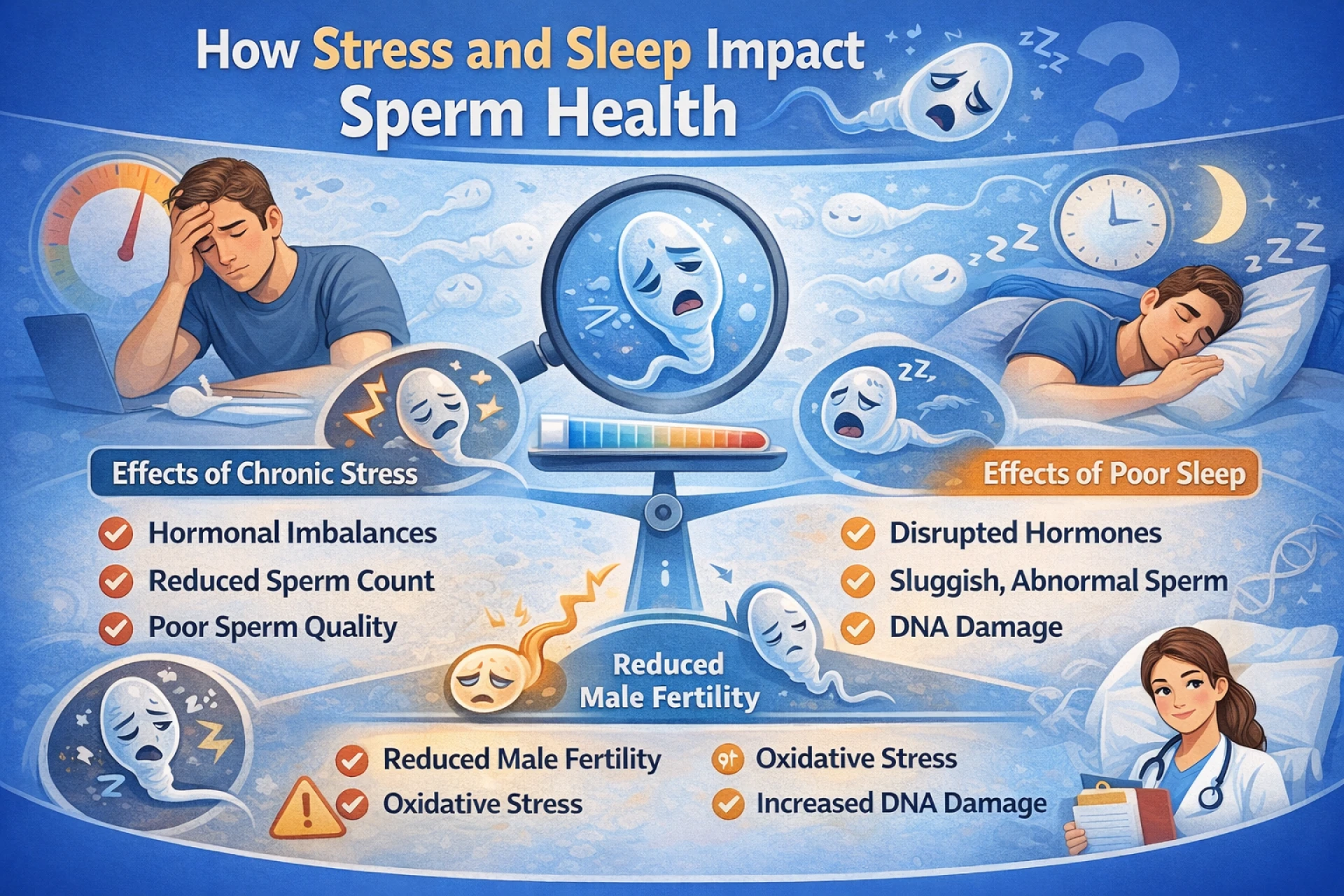
Stress and sleep are often ignored when talking about male fertility. Many men focus only on sperm count numbers, not realizing that mental stress and poor sleep directly affect sperm quality. Over time, these two factors can quietly reduce the chances of conception.
Understanding this connection helps men make small but powerful changes.
Why Sperm Health Is Sensitive to Lifestyle
Sperm production is controlled by hormones, and these hormones are highly sensitive to:
- Stress levels
- Sleep quality
- Daily routines
Since sperm take around 70–90 days to develop, ongoing stress or lack of sleep can show up clearly in semen reports.
How Stress Affects Sperm Health
Chronic stress is not just mental — it affects the body too.
1. Hormonal Imbalance
Stress increases cortisol levels, which:
- Lowers testosterone
- Reduces sperm production
- Affects sperm movement
2. Reduced Sperm Count and Motility
Men under long-term stress may show:
- Lower sperm count
- Poor motility
- Increased abnormal sperm
3. Increased DNA Damage
Stress increases oxidative stress in the body, which can damage sperm DNA and affect fertilization and embryo development.
4. Impact on Sexual Health
Stress can cause:
- Low libido
- Erectile difficulties
- Performance anxiety
These indirectly affect fertility as well.
How Poor Sleep Affects Sperm Health
Sleep is when the body repairs and balances hormones.
1. Lower Testosterone Levels
Testosterone is mainly produced during sleep. Poor or short sleep leads to:
- Reduced testosterone
- Lower sperm production
2. Poor Sperm Quality
Men who sleep less than 6 hours regularly may have:
- Reduced sperm count
- Poor motility
- Higher abnormal forms
3. Disrupted Body Clock
Irregular sleep timings confuse hormone release, affecting sperm development over time.
Signs Stress and Sleep May Be Affecting Fertility
- Constant fatigue
- Mood swings or irritability
- Poor semen reports without clear cause
- Low libido
These signs should not be ignored.
How to Improve Sperm Health Through Stress and Sleep Management
1. Improve Sleep Quality
- Aim for 7–8 hours of sleep
- Maintain a fixed sleep schedule
- Avoid screens before bedtime
2. Reduce Daily Stress
- Short walks or light exercise
- Breathing or relaxation techniques
- Avoid overworking without breaks
3. Balance Work and Rest
Long working hours without rest increase stress hormones and reduce fertility hormones.
4. Avoid Self-Blame
Stress often increases when men blame themselves. Fertility is a shared journey.
How Long Does Improvement Take?
Since sperm production takes time, improvements usually appear after 2–3 months of consistent lifestyle changes.
When to Seek Medical Help
If semen reports remain abnormal despite lifestyle improvement, professional guidance is important.
Many couples consult an IVF fertility centre in Bangalore to evaluate both lifestyle and medical factors together and plan the right treatment.
Emotional Side of Stress-Related Fertility Issues
Men often hide stress and anxiety.
- Pressure to perform
- Fear of being judged
- Silent worry about fertility
Open communication and proper counselling reduce emotional burden.
Stress and sleep are not small issues when it comes to male fertility — they are powerful factors. The good news is that both can be improved with awareness and consistency.
Taking care of your mind and rest is also taking care of your fertility.