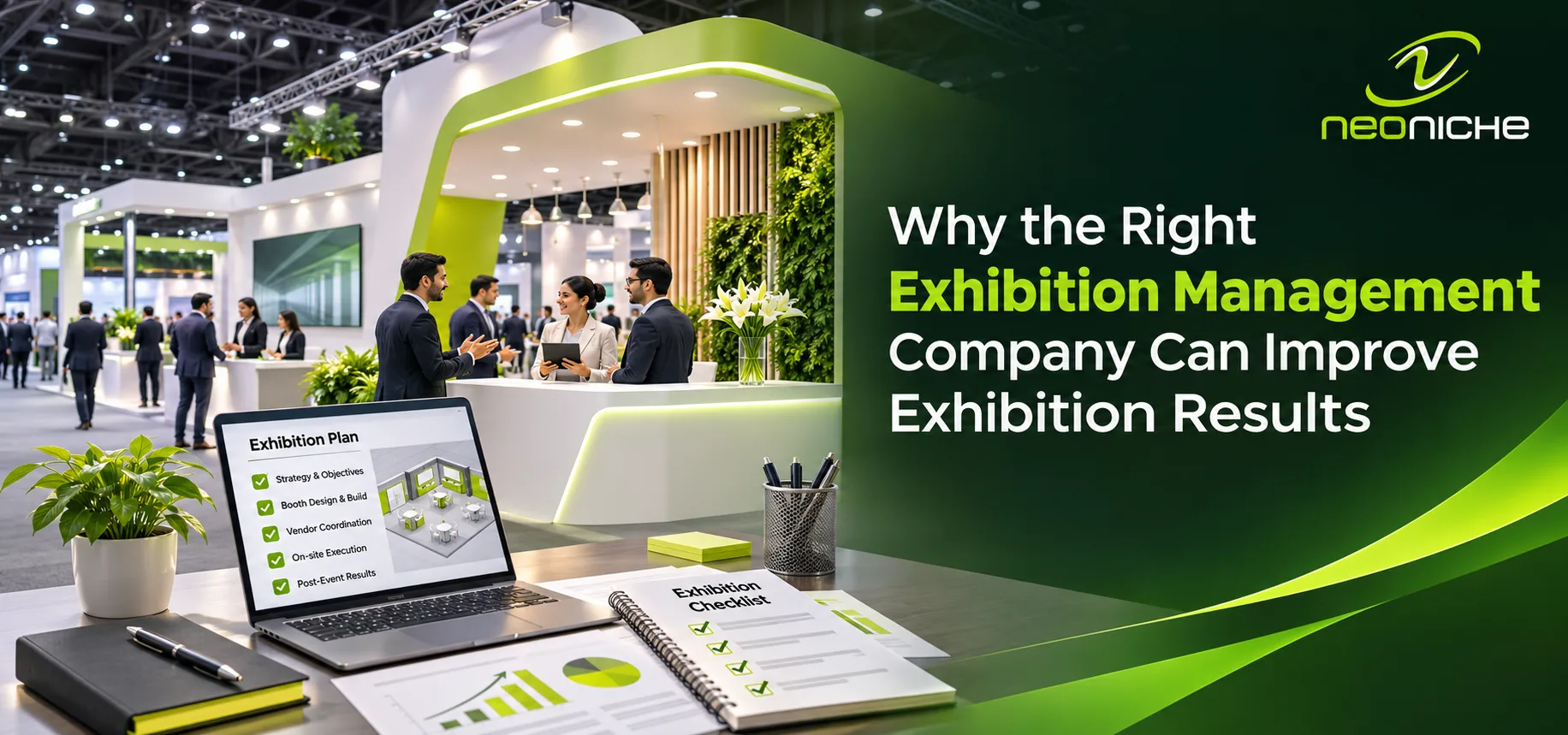
Participating in an exhibition gives businesses an opportunity to showcase their products, connect with potential customers and strengthen their presence in a competitive market. However, simply booking exhibition space and setting up an attractive stall does not guarantee meaningful business results.
Successful exhibitions require a clear strategy, thoughtful booth design, visitor engagement and coordinated execution. Every aspect of the event should contribute to a specific business objective, whether that involves generating qualified leads, introducing new products or building relationships with industry professionals.
This is why professional exhibition planning plays an important role in helping businesses turn event participation into measurable opportunities.
Why Exhibition Success Begins Before the Event
Many businesses focus heavily on how their exhibition stall will look but spend less time defining what they want to achieve.
An impressive booth may attract visitors, yet the value of that attention depends on whether it results in relevant conversations and business opportunities.
Before participating in an exhibition, organisations should identify their target audience, establish clear objectives and determine how success will be measured.
For example, a technology company introducing a new solution might prioritise product demonstrations and meetings with decision-makers. A consumer brand may focus on product experiences, audience interaction and brand awareness.
These different objectives require different exhibition strategies.
Exhibition Booth Design Should Support Business Goals
Exhibition booth design is often the first opportunity for a brand to capture attention in a crowded venue.
However, effective design involves more than attractive graphics, lighting and displays. The exhibition space should communicate the brand's message while making it easy for visitors to interact with products and representatives.
Thoughtful planning considers how visitors enter the stall, where demonstrations take place and whether meeting spaces offer sufficient privacy for business discussions.
A well-designed booth combines visual appeal with practical functionality.
Product displays, interactive installations and clear brand communication can encourage attendees to explore the space. At the same time, an organised layout helps staff engage visitors without creating unnecessary congestion.
How Professional Exhibition Management Improves Execution
Exhibitions involve multiple operational responsibilities, including venue coordination, stall fabrication, installation schedules, technical equipment, vendor communication and on-ground management.
When these activities are handled independently, delays and coordination issues can affect the overall experience.
A professional exhibition management approach connects these responsibilities through a structured execution plan.
Businesses evaluating the value of an exhibition management company should consider how the right planning partner can improve coordination, create engaging exhibition environments and support better event outcomes.
Early preparation also allows organisers to identify potential challenges involving equipment, installations, staffing and visitor movement.
Instead of responding to problems during the exhibition, teams can focus on delivering a consistent brand experience.
Creating Exhibition Experiences That Attract the Right Audience
Attracting a large crowd is useful, but reaching the right visitors is more important.
Businesses should design exhibition experiences around the interests and expectations of their intended audience.
Interactive product demonstrations, experiential installations and informative conversations can encourage visitors to spend more time understanding the brand's offerings.
For example, a manufacturing business might benefit from live equipment demonstrations, while a technology company could use interactive screens to explain complex solutions.
The objective is to create relevant interactions that help visitors understand the practical value of a product or service.
A positive experience can also make it easier for sales teams to begin meaningful conversations with potential customers.
Managing Vendors, Technology and On-Ground Operations
Even the most creative exhibition concept can be affected by operational problems.
Delayed booth installation, equipment failures, unclear vendor responsibilities and inadequate staffing can disrupt visitor engagement.
Successful exhibition execution requires coordinated communication between design teams, technical vendors, logistics providers and event personnel.
Detailed production schedules, technical checks and contingency arrangements help reduce avoidable disruptions.
Companies working with an experienced event management company in India can benefit from an integrated approach that connects creative planning, experiential marketing and event execution.
This coordination allows businesses to maintain a consistent brand presentation throughout the exhibition.
Measuring Exhibition Performance Beyond Visitor Numbers
Exhibition performance should not be measured only by the number of people who visit a stall.
Businesses need to understand whether those interactions support their commercial and marketing objectives.
Useful performance indicators include qualified leads generated, meetings conducted, product demonstrations completed, follow-up requests and potential business opportunities.
Visitor feedback can also provide insights into product interest, brand perception and customer expectations.
For businesses participating in multiple exhibitions, comparing these results can reveal which event formats and engagement strategies deliver stronger outcomes.
A structured evaluation process helps organisations make better decisions about future exhibition investments.
Why Post-Exhibition Follow-Up Matters
Exhibition success continues after the event has ended.
Businesses may collect hundreds of enquiries during an exhibition, but those contacts have limited value without a clear follow-up strategy.
Sales teams should categorise leads according to their interests, requirements and potential business value.
Visitors who request quotations or product demonstrations may require immediate attention, while other prospects may benefit from ongoing communication.
Sharing relevant product information, arranging additional meetings and responding promptly to enquiries can help convert exhibition interactions into meaningful relationships.
Planning these activities before the exhibition ensures that promising opportunities are not overlooked.
Conclusion
Exhibitions offer valuable opportunities for businesses to strengthen brand visibility, introduce products and connect with potential customers.
However, achieving meaningful results requires more than an attractive exhibition stall.
Clear business objectives, strategic booth design, relevant visitor engagement, coordinated operations and post-event evaluation all contribute to stronger exhibition performance.
By adopting a structured exhibition management approach, businesses can create experiences that attract the right audience and support long-term marketing and commercial goals.