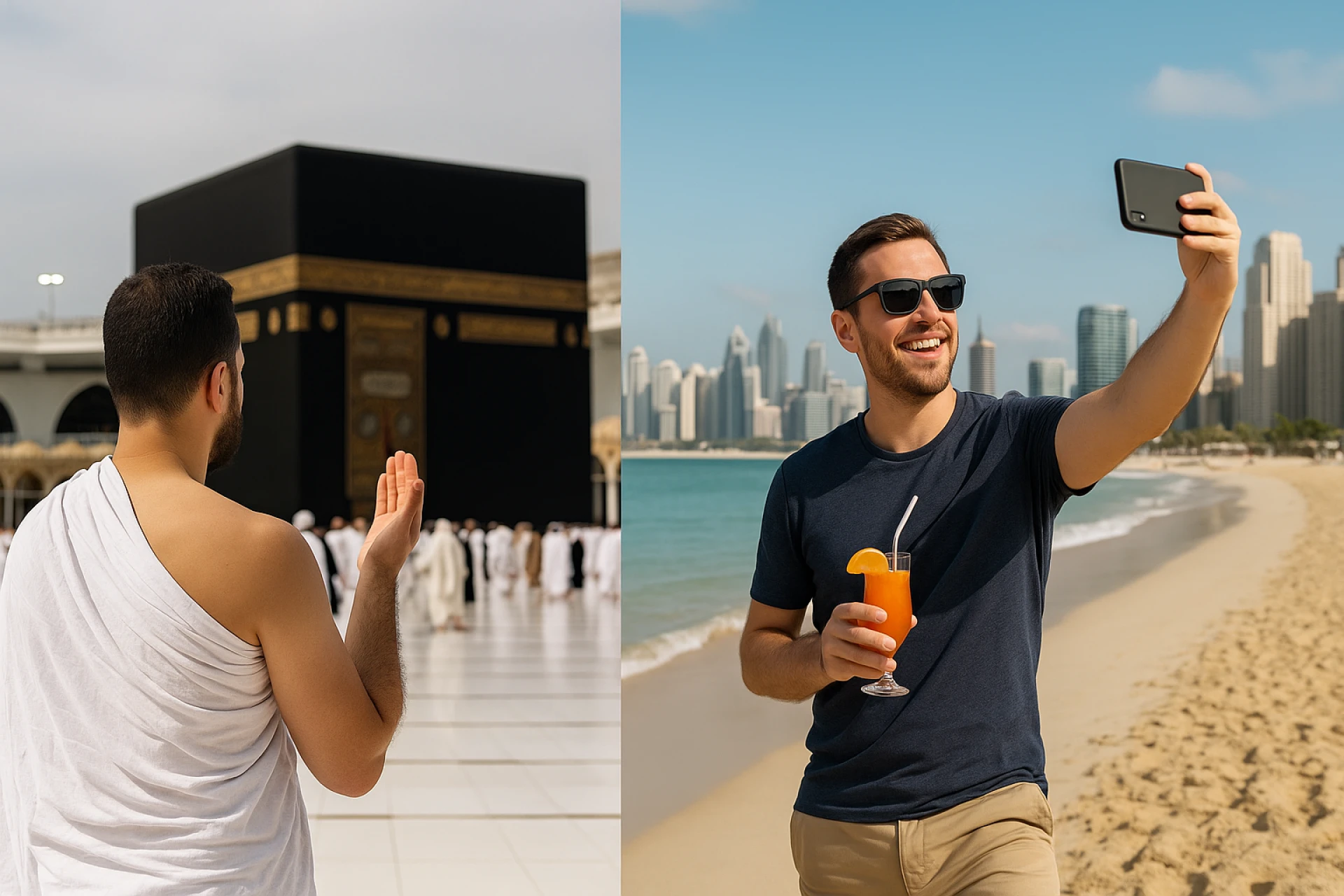
When we think of Travel, images of beautiful beaches, towering snow-capped mountains, skyscrapers, and cuisines come to mind. But for Muslims, there exists another far more profound journey, “Spiritual Pilgrimage”, whether it is the sacred Hajj and Umrah or Ziyarah to Islamic heritage.
These journeys differ from leisure travel in terms of intentions and outcomes. You embark on a leisure trip for relaxation, unwind, and to chill, but a pilgrimage is undertaken to draw closer to Allah (SWT). The experience, insights, and gains of both journeys are different. One keeps you engaged with worldly attractions while the other reminds you of the ultimate purpose, Akhirah (Hereafter).
This practical guide helps you to understand the real difference between spiritual pilgrimage and leisure travel.
1. The Foundation of Intention (Niyyah)
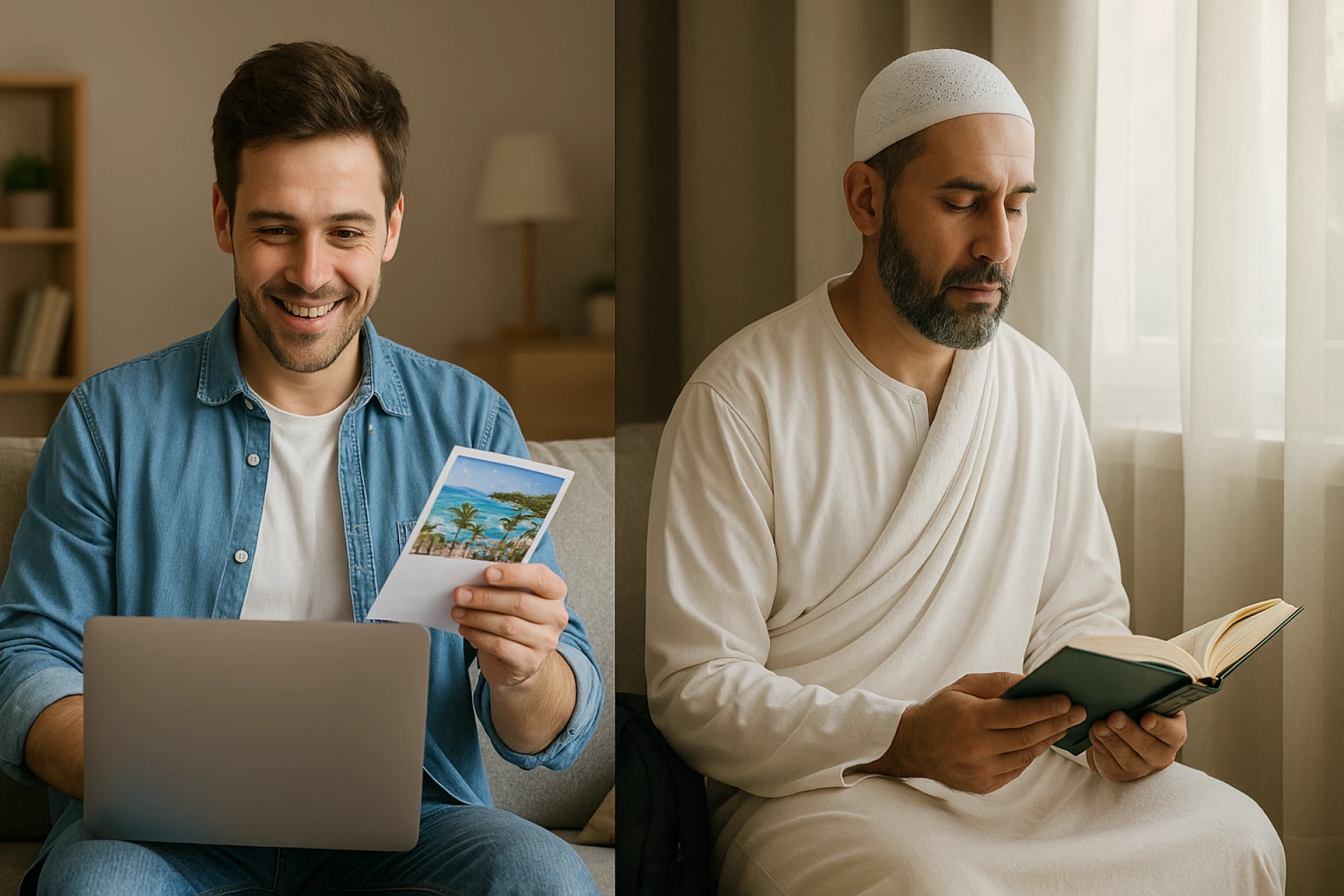
Let me ask you first, if you are planning a leisure trip, how will you begin?
I am sure your answer would be booking tickets, creating itineraries, and finding the best hotels, right? Even I would be doing the same. But Spiritual Pilgrimage is totally different; it’s a sacred journey which begins with intentions. The intention behind Umrah or Hajj is to fulfil an act of worship that dates back to Prophet Ibrahim (AS) and perfected by the Prophet Muhammad (PBUH).
The foundation of intention and the purpose of the journey immediately shifts the mindset. Leisure travellers often ask, “What will I enjoy?” while the pilgrims ask, “ What will please Allah (SWT)?
2. Sacrifice vs. Comfort
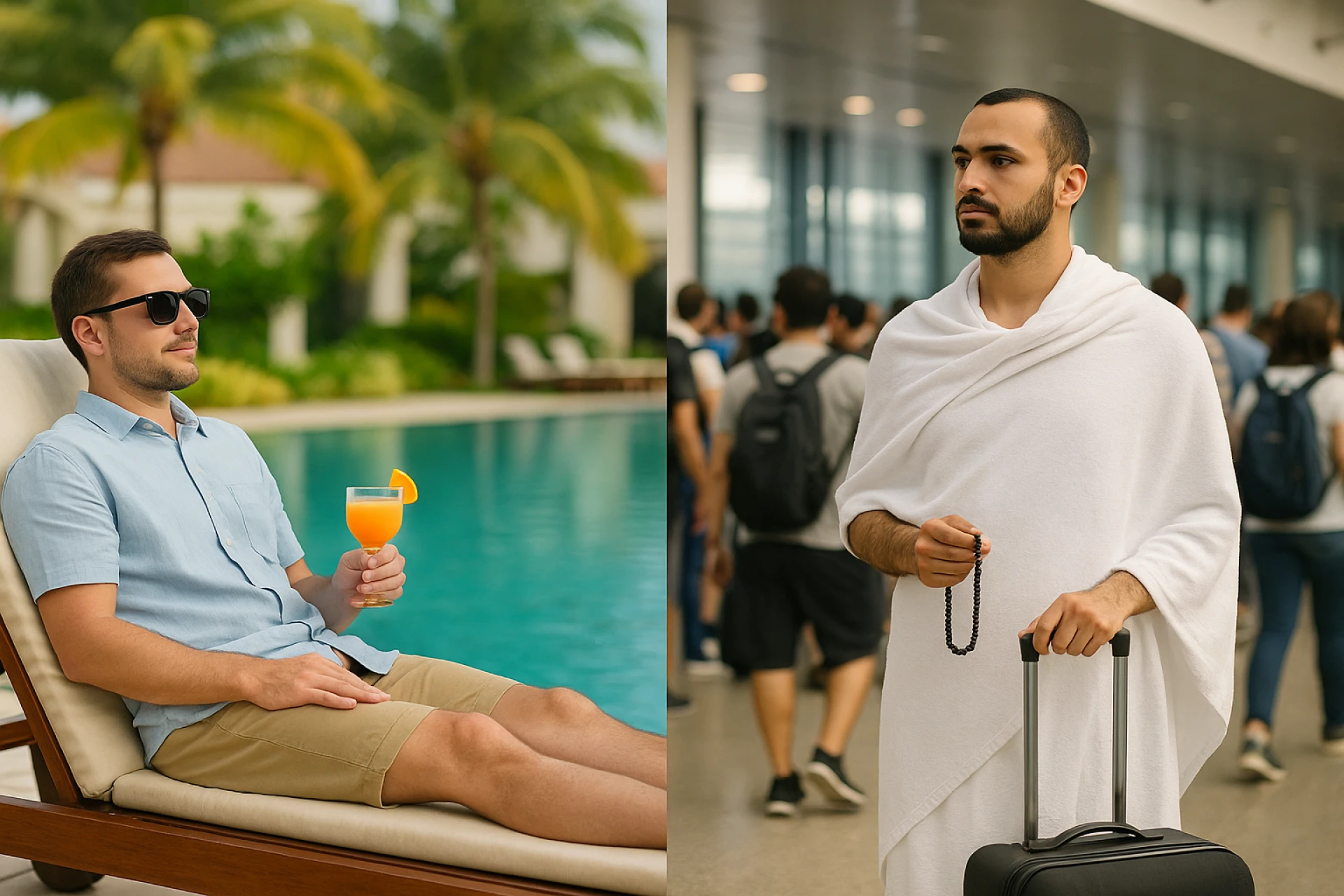
On a leisure trip, travellers expect comfort, relaxation, and entertainment, while pilgrims are aware of the fact that pilgrimage is demanding, and unexpected challenges like delays, crowds, and discomfort may arise. Long waits, huge crowds, intense heat, and fatigue are all parts of the package.
These challenges do not limit the pilgrims, but rather help them to grow spiritually. Each act of patience, each discomfort endured, and each struggle faced becomes a source of reward.
3. Time Filled with Worship
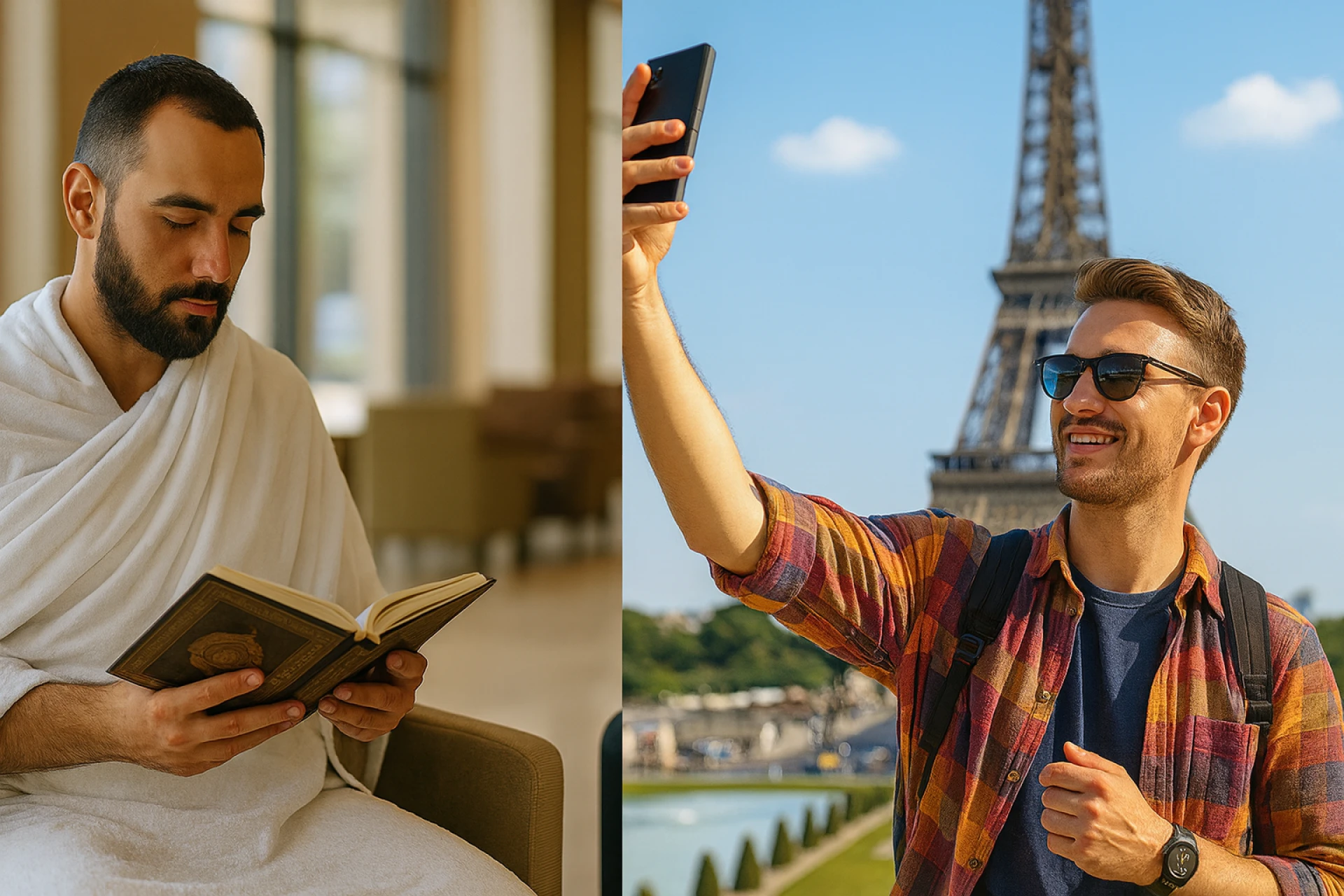
When we are on a leisure trip, our schedule revolves around exploration, interacting with locals, trying the local cuisine, sightseeing, shopping, and indulging in cultural activities. But Pilgrimage, on the other hand, is filled with salah, du’a, and dhikr. Even waiting moments like standing in queues or resting after the rituals become opportunities to earn spiritual rewards.
Pilgrims are consistent with their salah, making supplications and striving to please Allah (SWT), while leisure travellers are busy taking photos and creating content for their social media.
Note: A leisure trip can also be spiritually rewarding if it begins with a sincere intention and it does not challenge your faith. Remember Allah (SWT) throughout the journey and make your trip an act of ibadah.
4. The Symbolism of Ihram vs. Tourist Clothing
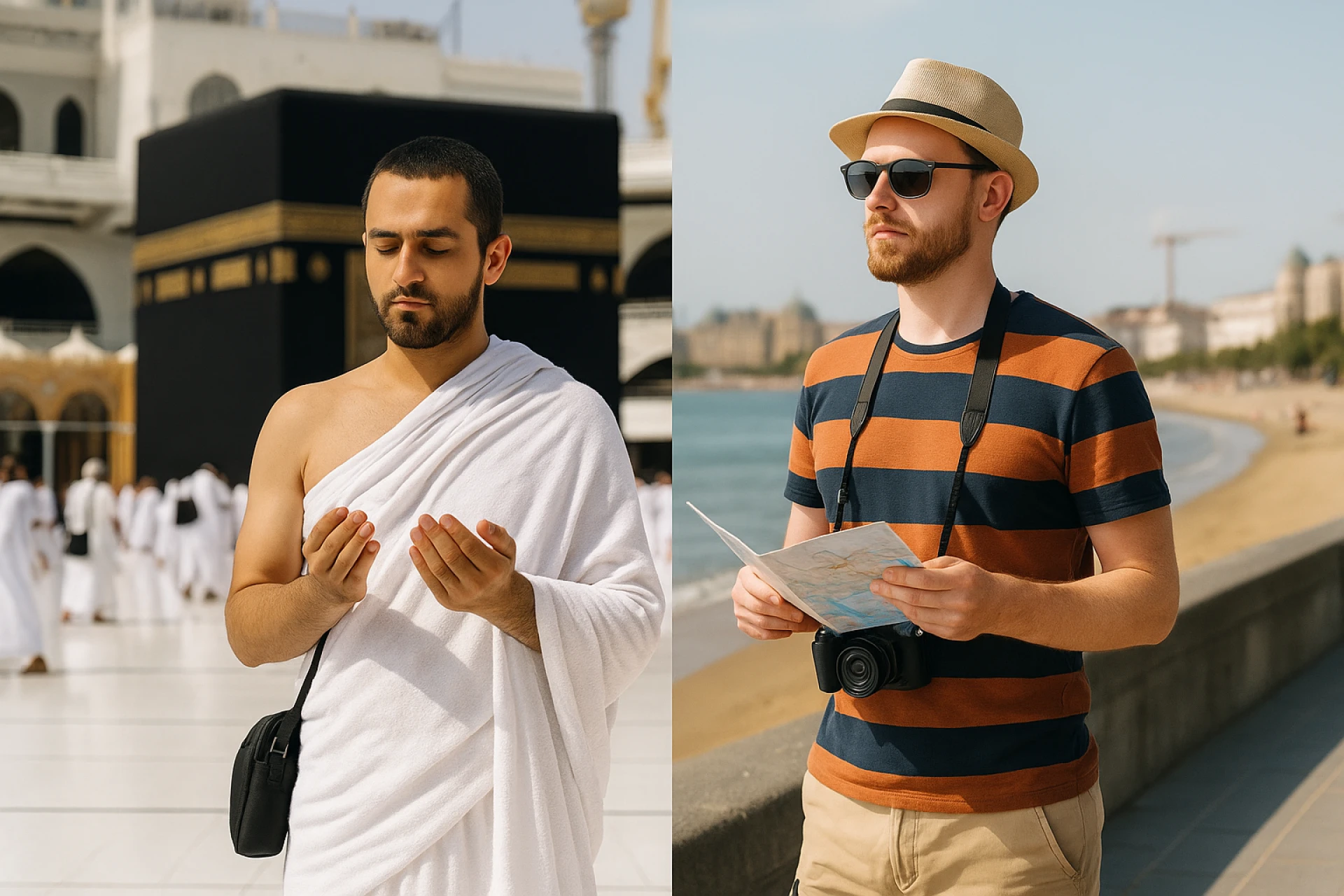
On a leisure holiday, the clothing reflects the fashion, lifestyle, and status. Travellers usually buy new and comfortable attire for their trip, mainly so their photos look good. In Hajj and Umrah, pilgrims enter into the state of Ihram and wear the Ihram clothing, which is for men two unstitched clothes and simple, loose, and modest clothing for women. Ihram emphasizes humility, reminding us that every pilgrim is equal before Allah (SWT).
This uniformity symbolizes equality, stripping away social, economic, and cultural differences. No tourist destination on earth carries such a visible reminder of our shared humanity.
5. Community over Individual Experience
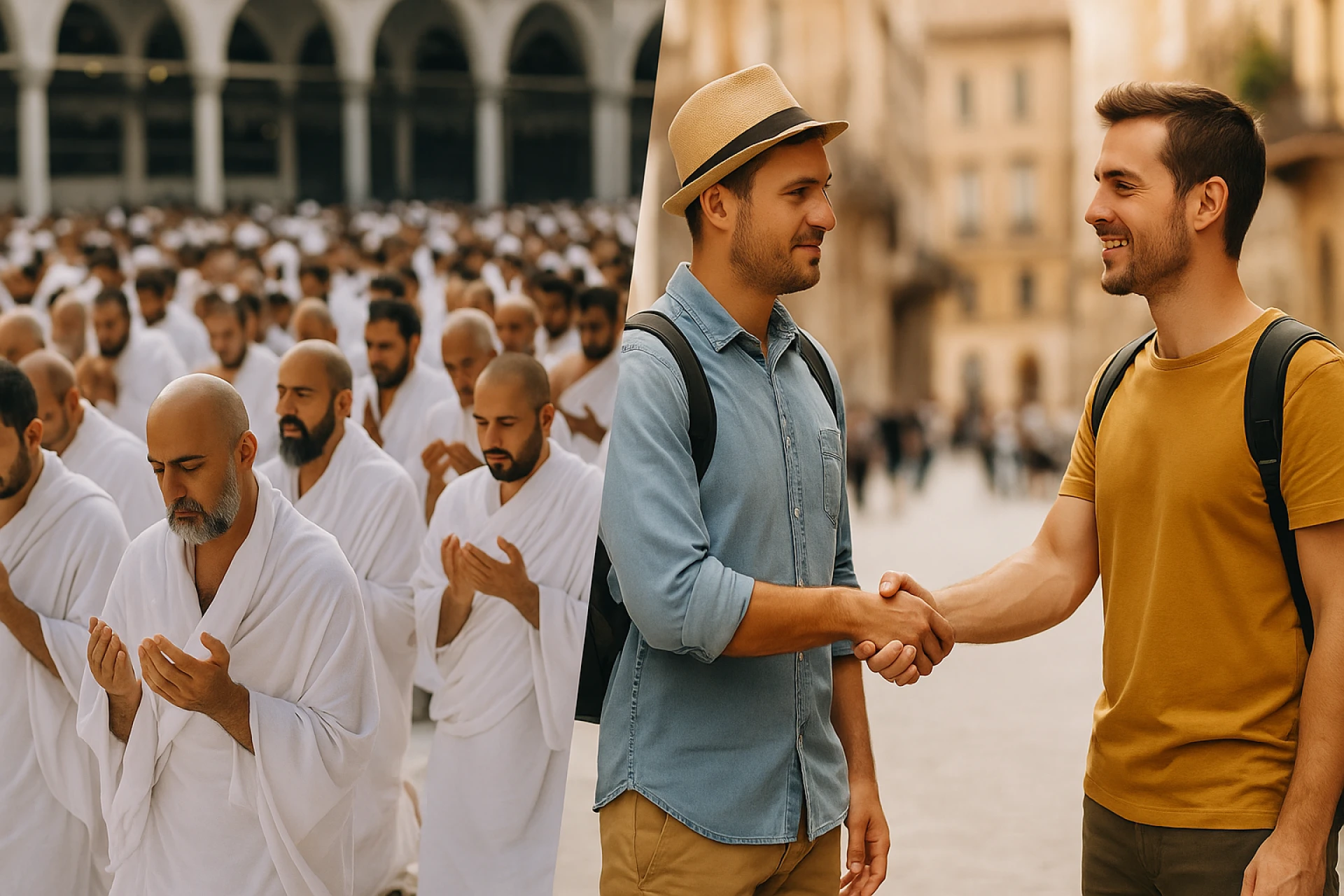
Leisure travel focuses on “Individual enjoyment,” while spiritual pilgrimage is about the “Ummah.”
There’s no doubt that a leisure trip will help you meet people of different languages and communities, but pilgrimage is about standing shoulder to shoulder with millions of people of the same faith.
Muslims come from every corner of the world, and it is the same shared faith that unites them beyond race, language, and culture. Every pilgrim becomes a reminder of our collective bond to Allah (SWT) and His Messenger (PBUH).
6. Return with Transformation

Most leisure travellers return with only photos, experiences, and memories, while pilgrimage is a transformative journey and pilgrims return with something far greater: a renewed heart.
During Hajj and Umrah, the goal is not just to experience a journey, but to emerge more humble, more patient, more God-conscious. The truest souvenir of pilgrimage is a soul reconnected to Allah (SWT).
7. A Journey That Reminds You Of The Hereafter (Akhirah)
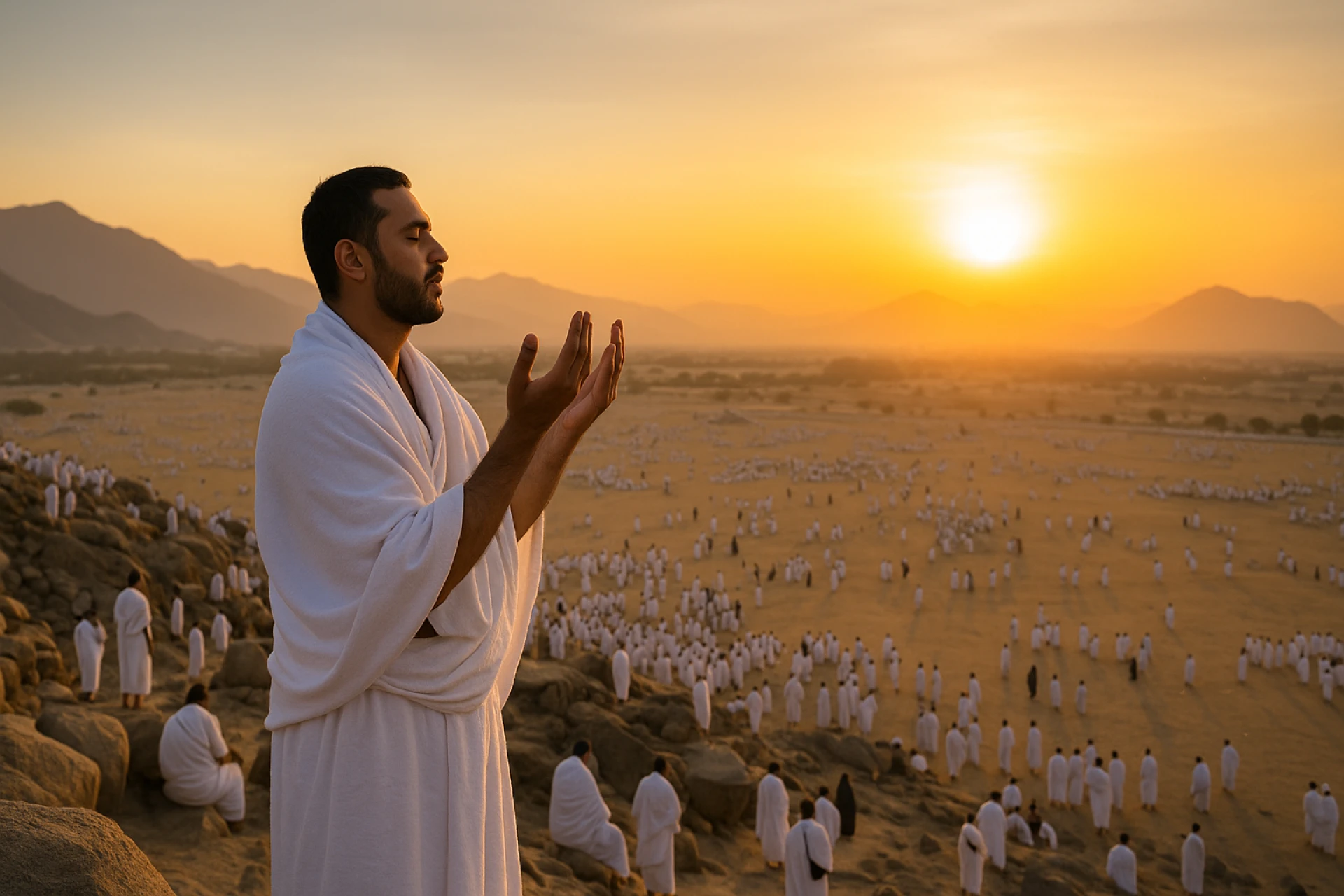
We all embark on a leisure trip to relax and escape from reality, but Pilgrimage is a sacred journey, a rehearsal for the true reality: eternal life after death. Ihram resembles the shroud in which we will be buried. Standing at Arafat reminds us of standing before Allah (SWT) on the Day of Judgment. The struggle of pilgrimage teaches us that the dunya is fleeting, and the real home is the Akhirah.
It’s not that the leisure trips are only an escape from reality; they also remind us of the greatness of Allah (SWT) and the reliance of everything on the Lord.
Final Wordings
Leisure travel can broaden the mind, refresh the body, remove all your stress, and bring joy, and Islam does not discourage all this. But pilgrimage is an unmatched, profound opportunity, because it purifies the soul, strengthens faith, transforms character, and brings you closer to Allah (SWT).
Every Muslim who has walked the marble floors of Masjid al-Haram or raised their hands in du’a at Masjid al-Nabawi knows: this is not just travel. This is worship, surrender, and rebirth.