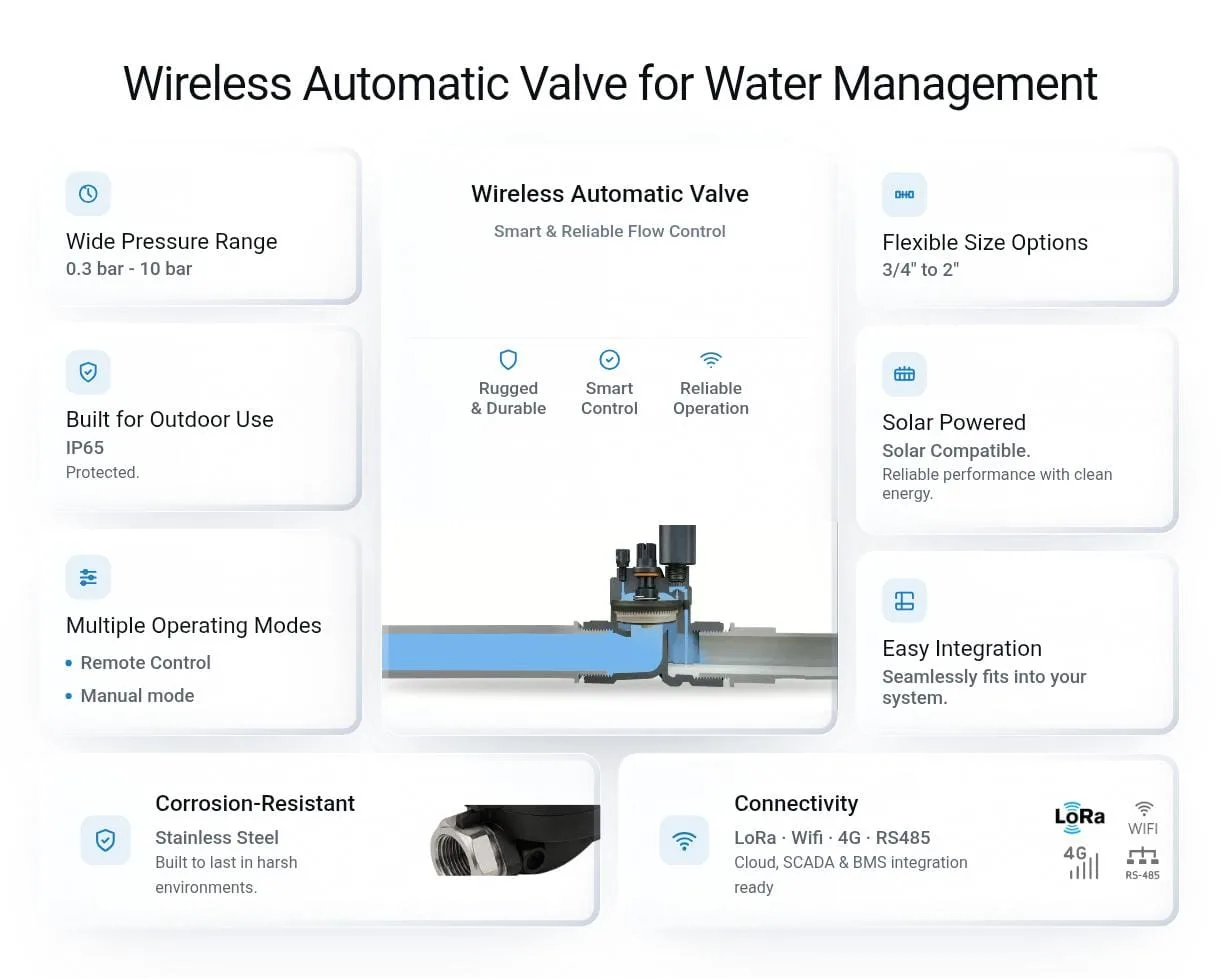
Water tank overflow is a common problem in homes, apartments, commercial buildings, and industrial facilities. When a pump continues running after a tank is full, valuable water can be wasted and the surrounding area may become wet or damaged.
A smart water level sensor provides an effective way to monitor tank levels and identify when water reaches a critical point.
What Is a Smart Water Level Sensor?
A smart water level sensor is a device designed to measure the amount of water inside a tank. Instead of requiring someone to manually check the tank, the sensor continuously monitors the water level and sends information to a connected monitoring system.
Users can receive water-level information remotely, depending on the monitoring setup.
How Does It Help Prevent Overflow?
Overflow usually happens because nobody notices that the tank has reached its maximum capacity. A smart sensor can detect changes in the water level and provide alerts when the tank approaches the full level.
This gives users an opportunity to stop the pump or activate an automated control system before water begins to overflow.
Real-Time Monitoring
One of the major advantages of smart water monitoring is real-time visibility.
Users can check:
- Current water level
- Low-level conditions
- High-level conditions
- Full-tank status
- Water filling patterns
- Tank availability
This reduces the need for frequent physical inspections.
Reducing Water Wastage
Every overflow represents wasted water. In buildings where tanks are filled multiple times a day, repeated overflow can result in considerable water loss.
By identifying high water levels quickly, smart monitoring helps users take action and improve water conservation.
Protecting Pumps and Equipment
Unnecessary pump operation can increase energy consumption and contribute to equipment wear. Monitoring tank levels helps users understand when pumping is actually required.
When integrated with suitable automation systems, water-level data can also support more efficient pump operation.
Useful for Different Applications
Smart water level sensors can be useful in many environments, including:
- Residential homes
- Apartment buildings
- Offices
- Hotels
- Schools
- Hospitals
- Commercial properties
- Industrial facilities
Whether the tank is installed underground or on a rooftop, monitoring its water level can make water management easier.
Smart Alerts for Better Management
Alerts are another important feature of modern water monitoring systems. When the water level becomes too low or too high, the system can notify the responsible person.
Instead of discovering an overflow after water has already been wasted, users can respond earlier.
Conclusion
Preventing tank overflow is not only about saving water; it can also improve pump management, reduce manual work, and make building water systems more reliable.
A smart water level monitoring system provides continuous visibility into tank conditions and helps users make faster, more informed decisions about their water supply.
As water conservation becomes increasingly important, smart monitoring technology can play an important role in creating more efficient and sustainable water management systems.