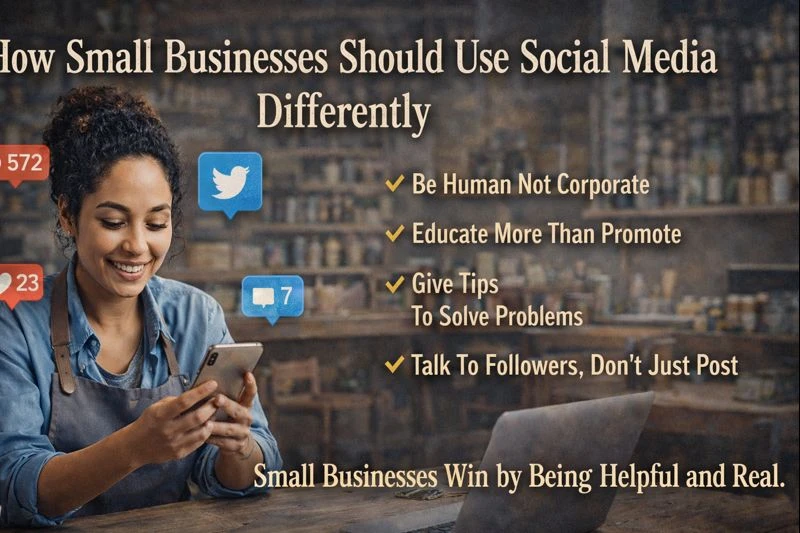
Social media advice often sounds like it’s made for big brands.
“Post every day.”
“Go viral.”
“Hire a full creative team.”
“Run ads aggressively.”
For small businesses, this advice usually creates pressure instead of results.
Limited budgets, limited time, and limited resources mean small businesses cannot play the same game as big brands. And they shouldn’t try to.
Small businesses don’t win on social media by being louder. They win by being smarter, clearer, and more human.
Let’s talk about how small businesses should actually use social media differently.
Stop Trying to Look Big
One of the biggest mistakes small businesses make is trying to appear “big” online.
Perfect branding.
Over-designed posts.
Generic captions.
Corporate language.
This often backfires.
People don’t follow small businesses expecting polish. They follow them for:
- Authenticity
- Accessibility
- Real conversations
- Honest insights
Trying to look like a large company removes the very advantage small businesses have: human connection.
Your size is not a weakness. It’s your edge.
Focus on Being Helpful, Not Impressive
Small businesses don’t need to impress everyone. They need to help the right people.
Instead of posting:
- “We are the best in the industry”
- “Top-quality services guaranteed”
Try sharing:
- Common mistakes customers make
- Simple tips related to your service
- Answers to questions people ask you daily
- Behind-the-scenes explanations of how things work
Help builds trust faster than hype.
When people feel educated by your content, they naturally feel safer choosing you.
Consistency Beats Frequency Every Time
Many small business owners think social media success means posting every day.
That’s not true.
Posting consistently is far more important than posting frequently.
One or two quality posts every week, done regularly, is better than daily posts for one month followed by silence.
Consistency creates familiarity. Familiarity creates trust.
And trust is what turns followers into customers.
Use Social Media as a Conversation, Not a Billboard
Big brands can afford to broadcast messages. Small businesses can’t.
Social media for small businesses should feel like:
- A conversation
- A discussion
- A shared learning space
Reply to comments.
Answer DMs thoughtfully.
Acknowledge questions publicly through posts.
People remember brands that respond not brands that only post.
This two-way communication is something large companies struggle with. Small businesses can do it naturally.
Don’t Chase Virality, Chase Relevance
Virality is unpredictable. Relevance is sustainable.
A post that reaches 500 people who actually care about your service is more valuable than a post that reaches 50,000 people who don’t.
Small businesses grow by:
- Solving specific problems
- Talking to a defined audience
- Addressing real pain points
Relevance keeps your content grounded and purposeful.
Your Personal Voice Matters More Than Your Logo
For small businesses, people trust people more than brands.
Founders, owners, and team members should not hide behind logos all the time.
Sharing:
- Your perspective
- Your experience
- Your learnings
- Your mistakes
makes your business relatable.
This is why service-based professionals like a freelance digital marketing analyst in kochi often grow faster by sharing personal insights instead of polished brand posts. People connect with clarity and honesty not corporate tone.
Educational Content Should Be Your Foundation
If small businesses had to pick just one content type, it should be education.
Educational content:
- Builds authority
- Reduces customer confusion
- Answers objections before sales conversations
- Positions you as a guide, not a seller
You don’t need complex tutorials. Even simple explanations work:
- “Why pricing varies”
- “What most people misunderstand about this service”
- “How to know if this solution is right for you”
Teaching earns trust quietly.
Selling Should Be Subtle, Not Aggressive
Small businesses often feel uncomfortable selling on social media and that’s okay.
Selling doesn’t have to be loud.
Instead of constant offers, use:
- Case examples
- Problem–solution stories
- Client experiences (without exaggeration)
- Process explanations
When people understand your value, selling feels natural not forced.
Your content should make the decision easier, not pushier.
Social Proof Matters But Keep It Real
Testimonials, reviews, and results matter but only when they feel genuine.
Avoid:
- Over-polished success stories
- Unrealistic claims
- Vague praise with no context
Instead, share:
- Specific outcomes
- Honest feedback
- Small wins
- Real journeys
Small businesses grow on credibility, not exaggeration.
Choose Platforms Based on Energy, Not Trends
You don’t need to be everywhere.
Choose platforms based on:
- Where your audience actually is
- Where you can show up consistently
- Where content creation feels manageable
It’s better to do one platform well than three platforms poorly.
Social media success comes from focus, not expansion.
Measure What Matters to Your Business
Likes and followers feel good but they don’t always reflect growth.
Small businesses should track:
- Inquiries
- DMs
- Website visits
- Conversations started
- Referrals generated
Social media is a relationship tool, not just a visibility tool.
If it’s starting conversations, it’s working.
Final Thoughts: Small Businesses Win by Being Human
Small businesses don’t need bigger budgets. They need better intent.
Social media is not about competing with large brands. It’s about connecting with real people who need real solutions.
Be consistent.
Be helpful.
Be human.
When small businesses use social media differently by focusing on trust instead of trends they don’t just grow online.
They grow sustainably.