
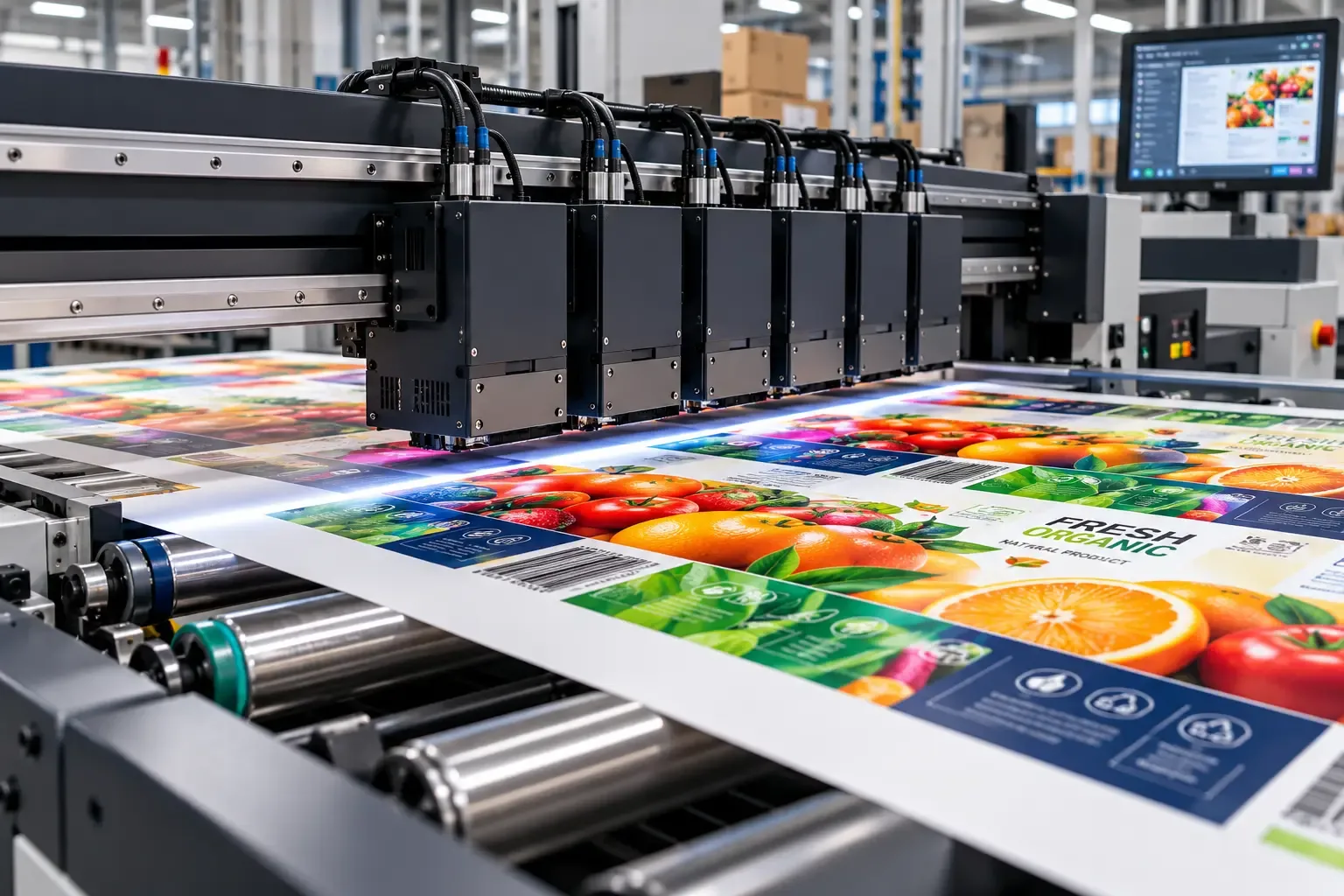
Industrial printing continues to evolve as manufacturers look for faster, more efficient, and more flexible ways to produce high-quality printed materials. Digital inkjet technology has become an important part of this transformation, particularly for businesses handling demanding production volumes.
One technology attracting increasing attention is the single-pass printer, which is designed to print an entire image across a substrate in a single pass rather than repeatedly moving the printhead across the material.
What Is Single-Pass Printing?
Traditional scanning inkjet printers generally move the printhead back and forth while the material advances through the machine. Single-pass technology takes a different approach. Printheads are positioned across the width of the printing surface, allowing the material to move continuously while the required image is produced.
This approach can significantly increase production speed while maintaining accurate and consistent print quality. It can be particularly useful in industrial environments where large quantities of printed products need to be processed efficiently.
Benefits for Modern Manufacturing
Speed is one of the most important advantages of single-pass inkjet technology. Continuous production can help businesses handle larger workloads without relying on multiple passes for each printed area.
Another advantage is flexibility. Digital printing can support variable designs, personalized content, and shorter production runs without requiring the same type of physical setup associated with some traditional printing processes.
A modern single pass printer can therefore be considered for applications where productivity, consistency, and digital workflow integration are important.
Applications Across Different Industries
Single-pass digital printing technology can be used in various industrial applications. Packaging and labeling are notable examples, where manufacturers may need high-quality graphics, product information, barcodes, and other variable content.
The technology can also be relevant to commercial printing, publishing, decorative applications, and printing on different industrial substrates. The exact capabilities depend on the printer configuration, ink technology, substrate, and production requirements.
Why Print Technology Matters
For manufacturers, choosing a printing system is not simply about achieving high resolution. Production speed, reliability, substrate compatibility, maintenance requirements, ink consumption, and integration with existing workflows can all influence the overall efficiency of a printing operation.
As businesses continue to digitize their manufacturing processes, industrial inkjet systems are becoming an increasingly important option for companies seeking scalable and automated production.
The Future of Industrial Digital Printing
Advances in printhead technology, ink development, automation, and software are continuing to expand what digital printing systems can accomplish. Single-pass printing is particularly suited to environments where continuous production and consistent output are essential.
For manufacturers exploring new printing technologies, understanding how single-pass systems work and where they provide practical advantages can help them make more informed decisions about their production workflows.