Introduction: A New Era in Semiconductor Materials
The semiconductor industry is undergoing a material revolution, and silicon carbide (SiC) is at the forefront of this transformation. In Russia, where technological self-reliance and industrial modernization are strategic priorities, SiC is emerging as a critical enabler of next-generation electronics.
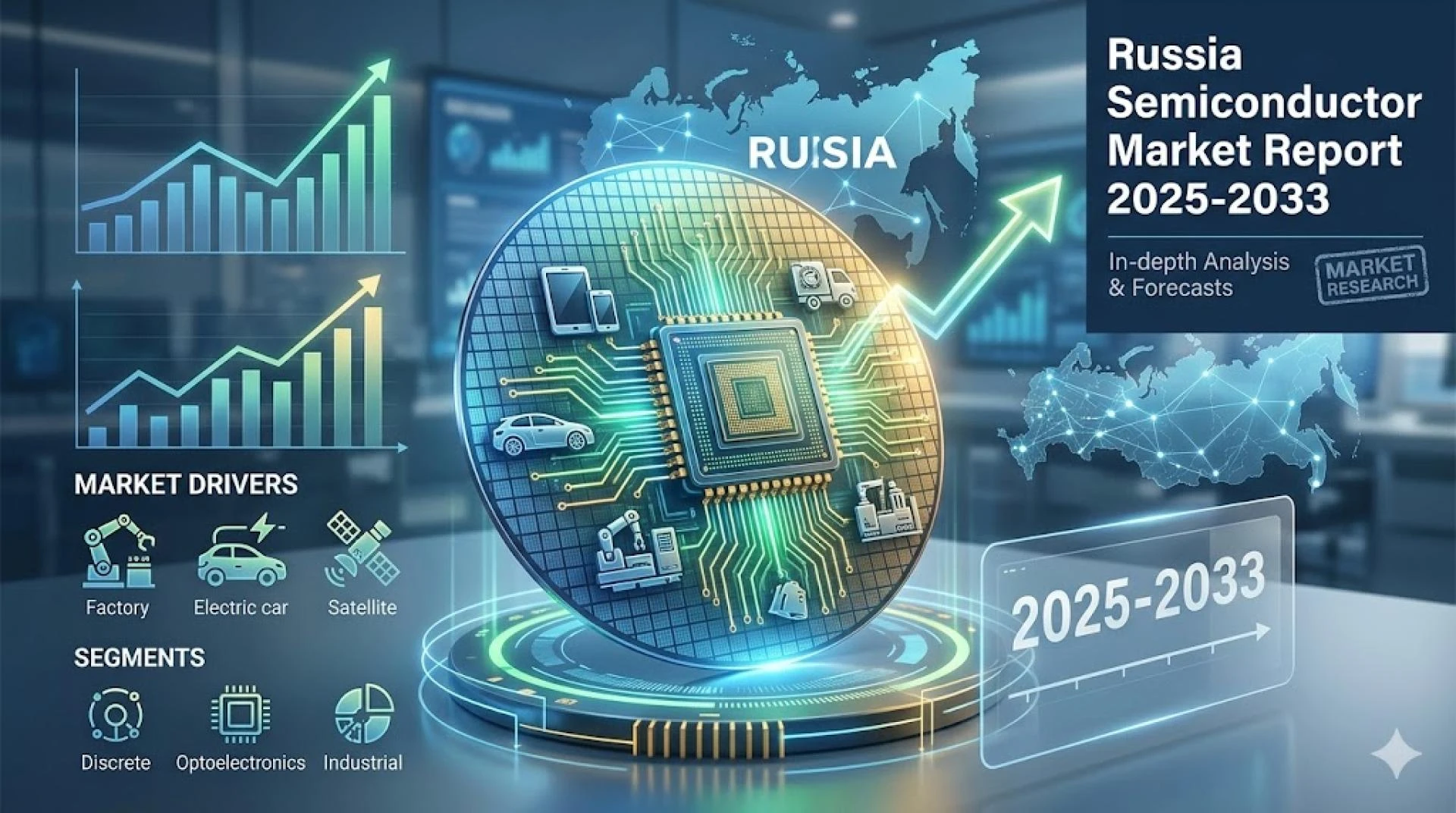
Unlike traditional silicon, silicon carbide offers superior performance in high-power, high-temperature, and high-frequency environments. As Russia Semiconductor Market accelerates investments in sectors such as automotive, energy, aerospace, and telecommunications, the adoption of SiC-based semiconductors is reshaping the country’s semiconductor landscape.
What Is Silicon Carbide and Why Does It Matter?
Silicon carbide is a wide-bandgap semiconductor material that outperforms conventional silicon in demanding applications.
Key Properties of SiC:
- Higher thermal conductivity → Better heat dissipation
- Higher breakdown voltage → Handles high-power systems efficiently
- Faster switching speeds → Improves energy efficiency
- Lower energy loss → Reduces operational costs
These properties make SiC ideal for power electronics, which are essential in modern industrial systems.
Why Russia Is Turning to Silicon Carbide
Russia semiconductor Market is increasingly focused on advanced materials to overcome technological limitations and global supply constraints.
Key Drivers in Russia:
- Energy efficiency goals across industries
- Expansion of electric mobility and renewable energy
- Demand for high-performance defense and aerospace systems
- Push for domestic semiconductor manufacturing capabilities
SiC helps Russia reduce reliance on imported technologies while improving system performance across critical sectors.
Impact on Automotive & Electric Vehicles
One of the most significant impacts of silicon carbide is in the automotive sector, especially electric vehicles (EVs).
Benefits in EV Applications:
- Improved battery efficiency → Longer driving range
- Faster charging capabilities
- Reduced system size and weight
- Enhanced thermal management
In Russia, as EV adoption gradually increases, SiC-based power devices are enabling more efficient and reliable vehicle systems.
Transforming Industrial & Energy Applications
SiC is revolutionizing industrial automation and energy infrastructure in Russia.
Key Use Cases:
- Motor drives and industrial machinery
- Renewable energy systems (solar and wind inverters)
- Smart grid and power transmission systems
Advantages:
- Higher efficiency reduces energy losses
- Increased durability lowers maintenance costs
- Compact designs improve system scalability
This aligns with Russia’s goal of modernizing its industrial base and energy systems.
Role in Telecommunications & Data Centers
As Russia expands its digital infrastructure, silicon carbide is playing a vital role in improving efficiency.
Applications:
- 5G base stations
- Data center power supplies
- High-frequency communication systems
Impact:
- Reduced energy consumption in data centers
- Improved reliability in high-load telecom networks
- Enhanced performance in high-frequency operations
SiC enables stable and energy-efficient digital ecosystems, critical for future growth.
Aerospace & Defense Advancements
Russia’s aerospace and defense sectors demand high-performance electronics that can operate in extreme conditions.
Why SiC Matters:
- Operates under high temperatures and radiation
- Improves radar and communication systems
- Enhances power systems in aircraft and satellites
SiC technology strengthens Russia’s capabilities in mission-critical applications where reliability is non-negotiable.
Manufacturing Challenges and Opportunities
Despite its advantages, silicon carbide adoption comes with challenges.
Key Challenges:
- High production costs compared to silicon
- Complex manufacturing processes
- Limited domestic production infrastructure
Opportunities:
- Investment in local semiconductor fabrication
- Development of SiC wafer production capabilities
- Collaboration between research institutes and industry players
Russia is gradually addressing these challenges through policy support and R&D initiatives.
Sustainability and Energy Efficiency Benefits
Silicon carbide is not just about performance—it’s also about sustainability.
Environmental Advantages:
- Lower energy consumption across applications
- Reduced carbon emissions in power systems
- Longer device lifespan → Less electronic waste
As global industries move toward green technologies, SiC positions Russia to align with sustainability goals.
Future Outlook: Silicon Carbide in Russia (2025–2033)
The future of silicon carbide in Russia looks promising, driven by:
- Growing demand for electric vehicles and renewable energy
- Expansion of industrial automation
- Increased focus on semiconductor self-sufficiency
- Advancements in material science and chip design