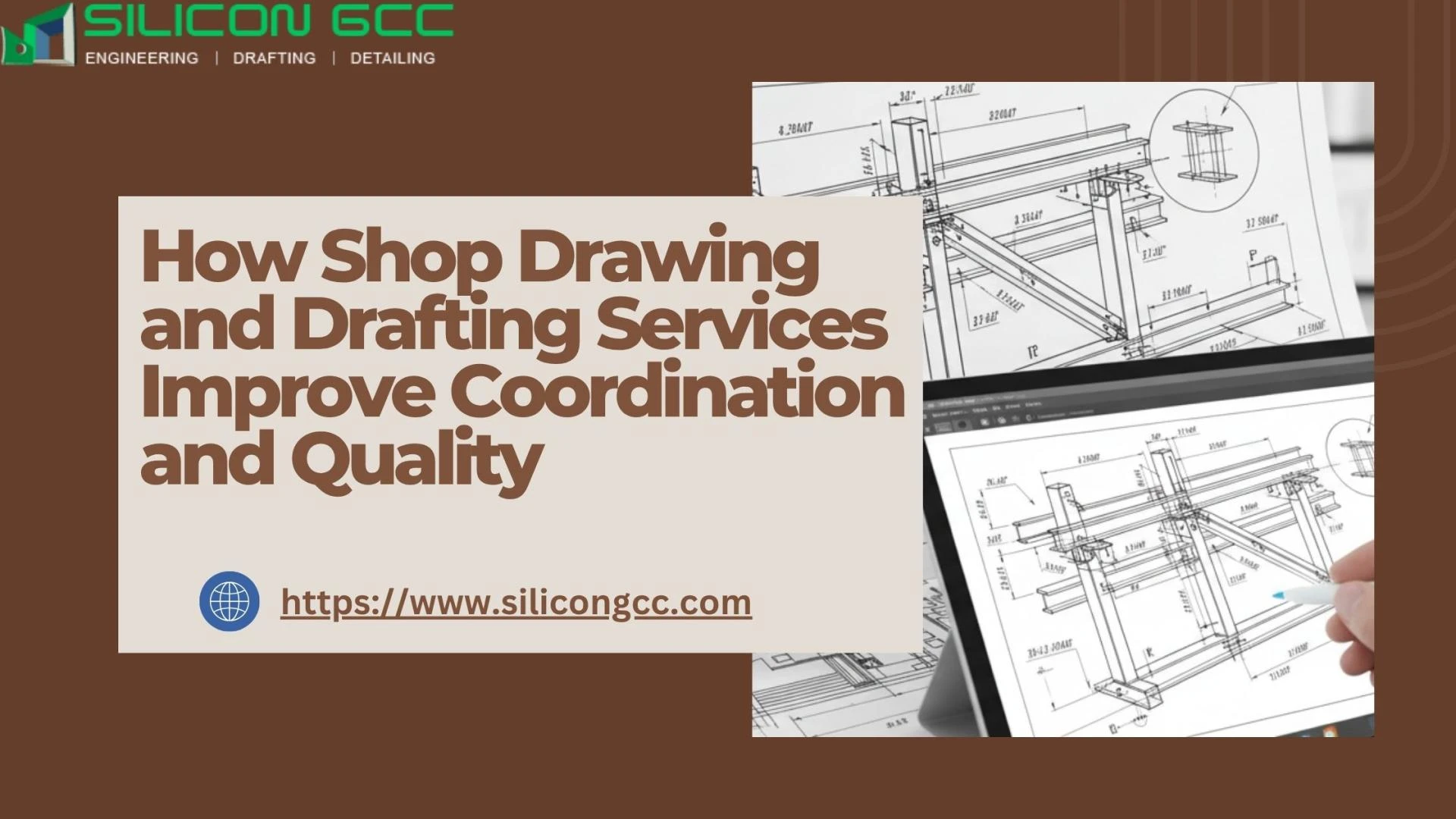
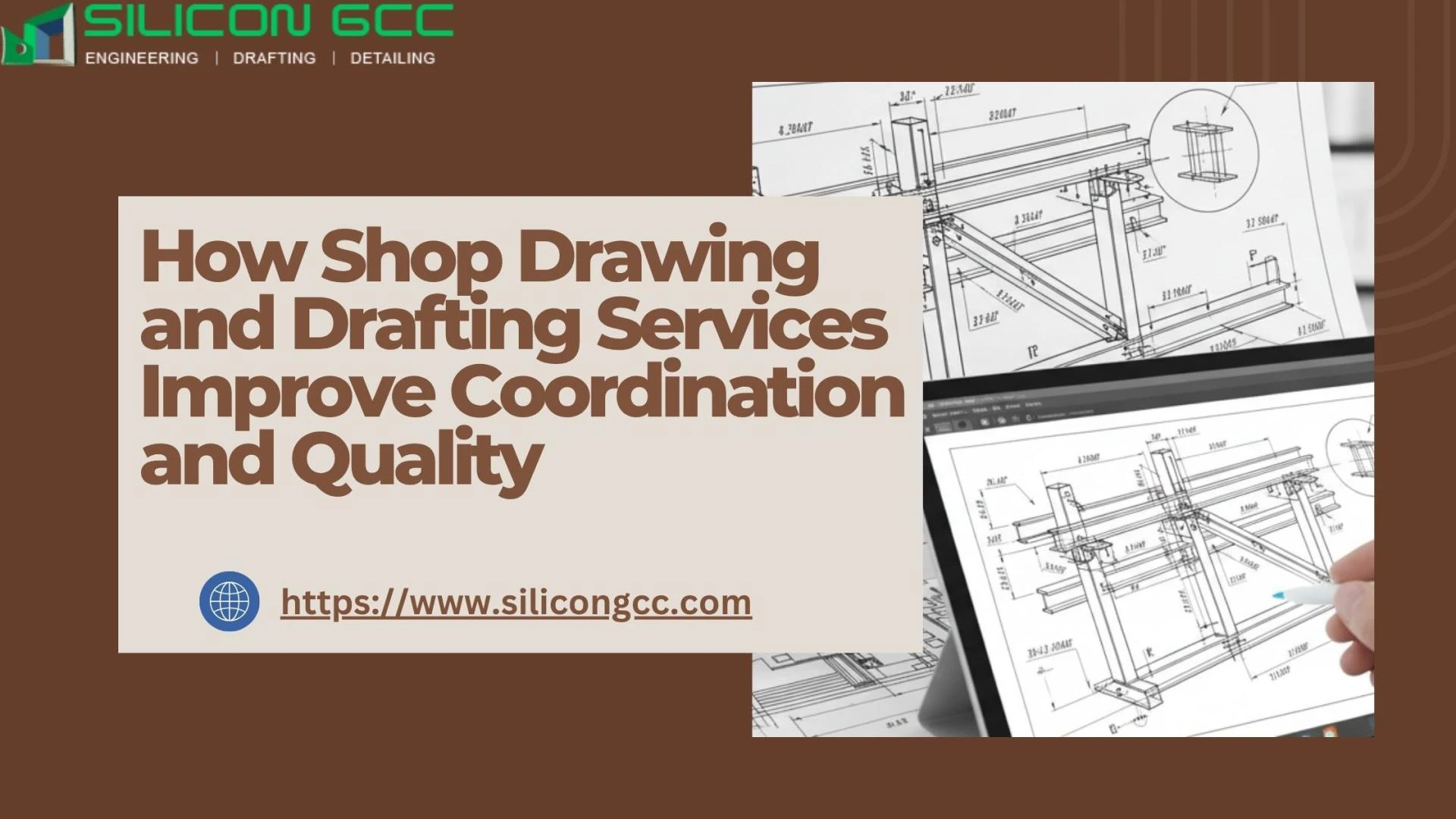
Modern construction demands clarity, precision, and a well-organized workflow across every discipline involved in a project. As structures grow more complex, teams rely on accurate documentation to maintain consistent progress and achieve dependable outcomes. Shop Drawing and Drafting Services play a central role in this process by transforming design intentions into clear, technical illustrations that guide fabrication, coordination, and structural alignment. These drawings become the foundation that supports collaboration among architects, engineers, fabricators, and contractors, ensuring every component aligns with project intent.
In today’s environment, project teams strive to reduce errors, streamline communication, and maintain a unified approach from initial planning to final execution. Shop drawings address this need by offering a level of clarity that general design drawings often cannot provide. They translate concepts into accurate, measurable details, eliminating uncertainty and allowing teams to make informed decisions quickly. With consistent documentation, the project experiences smoother transitions between stages and fewer disruptions that can affect quality.
To meet these evolving requirements, S E C D Technical Services LLC delivers structured drawing solutions that elevate precision across multiple project sectors. Their expertise ensures that each drawing is prepared with methodical attention to detail, supporting both coordination and quality throughout the project timeline. As the demand for integrated design processes continues to rise, the significance of shop drawing and drafting techniques becomes even more evident.
Shop Drawing Design and Drafting Services
These services form the backbone of technical documentation for various building systems. They capture dimensions, material specifications, component arrangements, and assembly sequences in a structured format. By breaking down each drawing into detailed views, teams can visualize how elements connect and interact with one another. This reduces misunderstandings and ensures that fabrication and execution align with the design intent. When drawings follow consistent standards, teams across different regions or specialties can reference them with confidence, strengthening collaborative efforts.
CAD Shop Drawing Services
Computer-aided drafting adds precision to every line, curve, and annotation. Digital drawings enhance consistency and allow teams to evaluate measurements with accuracy that manual drafting cannot match. CAD-based documentation supports revisions without disrupting surrounding details, providing flexibility when design adjustments occur. It also enables teams to generate layered drawings, making it easier to isolate specific systems for review. This structured clarity empowers project stakeholders to evaluate compatibility between architectural, structural, and mechanical systems.
MEP Shop Drawings
Mechanical, electrical, and plumbing systems require a high level of coordination because they interact closely within confined building spaces. MEP shop drawings depict routing paths, equipment locations, and component clearances, making it possible to identify clashes long before construction progresses. When mechanical units, electrical conduits, and plumbing lines are accurately documented, teams can maintain smooth coordination between disciplines. These drawings also support effective sequencing, preventing conflicts that may arise when systems overlap or encroach on one another. Through improved visualization, MEP drawings bring unity to diverse building functions.
Assembly Shop Drawing Services
Assembly drawings provide clear guidance for connecting individual components into a complete unit. They outline part numbers, alignment instructions, and logical sequencing that fabricators and technicians can rely on. Because assembly work requires accuracy and consistency, these drawings ensure that each piece fits as intended. They also promote repeatability, making it easier to maintain accuracy across multiple units or large-scale production. In complex structures, assembly drawings serve as the roadmap that ensures each element forms a cohesive system.
Enhancing Coordination Through Accurate Documentation
Coordination is one of the most critical challenges in construction. A single misalignment between systems can lead to extensive redesigns or rework. Shop drawings reduce this risk by providing a shared reference point for all teams involved. When every detail is represented accurately, stakeholders can detect discrepancies early and make adjustments before they influence downstream progress. This unified approach promotes clarity across disciplines and fosters smoother communication.
Additionally, shop drawings simplify the review process. Instead of relying on abstract concepts or assumptions, reviewers can examine measurable details that reflect real conditions. This improves decision-making and supports faster approvals from project authorities. When drawings comply with project specifications and industry standards, coordination efforts evolve into a streamlined, structured workflow in which every team member understands their responsibilities clearly.
Improving Quality Through Detailed Technical Documentation
Quality in construction is closely linked to precision. A project can only achieve high-level results when each component is prepared and assembled with accurate information. Shop drawings elevate quality by eliminating uncertainty and reducing the risk of technical errors. They define materials, dimensions, and methods with clarity, giving teams reliable information for fabricating and assembling components.
Detailed drawings also reinforce accountability. When every measurement and specification is documented, teams can trace deviations and address them promptly. Quality assurance processes become more effective because inspectors can reference a complete set of technical drawings that represent the true design intent. This contributes to stronger structural integrity, consistent performance, and long-term reliability.
Another dimension of quality improvement comes from the ability to visualize the project ahead of execution. By examining detailed drawings early, teams can anticipate challenges, evaluate potential adjustments, and refine system arrangements. This proactive approach strengthens the project’s overall durability and ensures that all components work together harmoniously.
Supporting Modern Construction Workflows
The construction industry is evolving rapidly, with new demands for accuracy, coordination, and efficiency. Shop drawings form a bridge between creative design and practical execution, ensuring that project goals remain achievable at every stage. Their clarity gives teams the confidence to move forward without uncertainty, while their structure supports a more organized workflow.
Digital drafting platforms further enhance these processes by integrating visual intelligence and precision. With CAD-based documentation, revisions become smoother, clash detection becomes more accurate, and multi-discipline coordination becomes more achievable. As teams transition toward more integrated digital workflows, shop drawings remain a critical part of the foundation.
Conclusion
Shop Drawing and Drafting Services continue to elevate the standards of modern construction by providing the detailed documentation required for precise execution. By strengthening coordination and enhancing quality, these drawings support smooth communication, consistent planning, and dependable project outcomes. Whether documenting architectural components, mechanical systems, or structural assemblies, shop drawings deliver the clarity needed to maintain alignment across every project stage.