
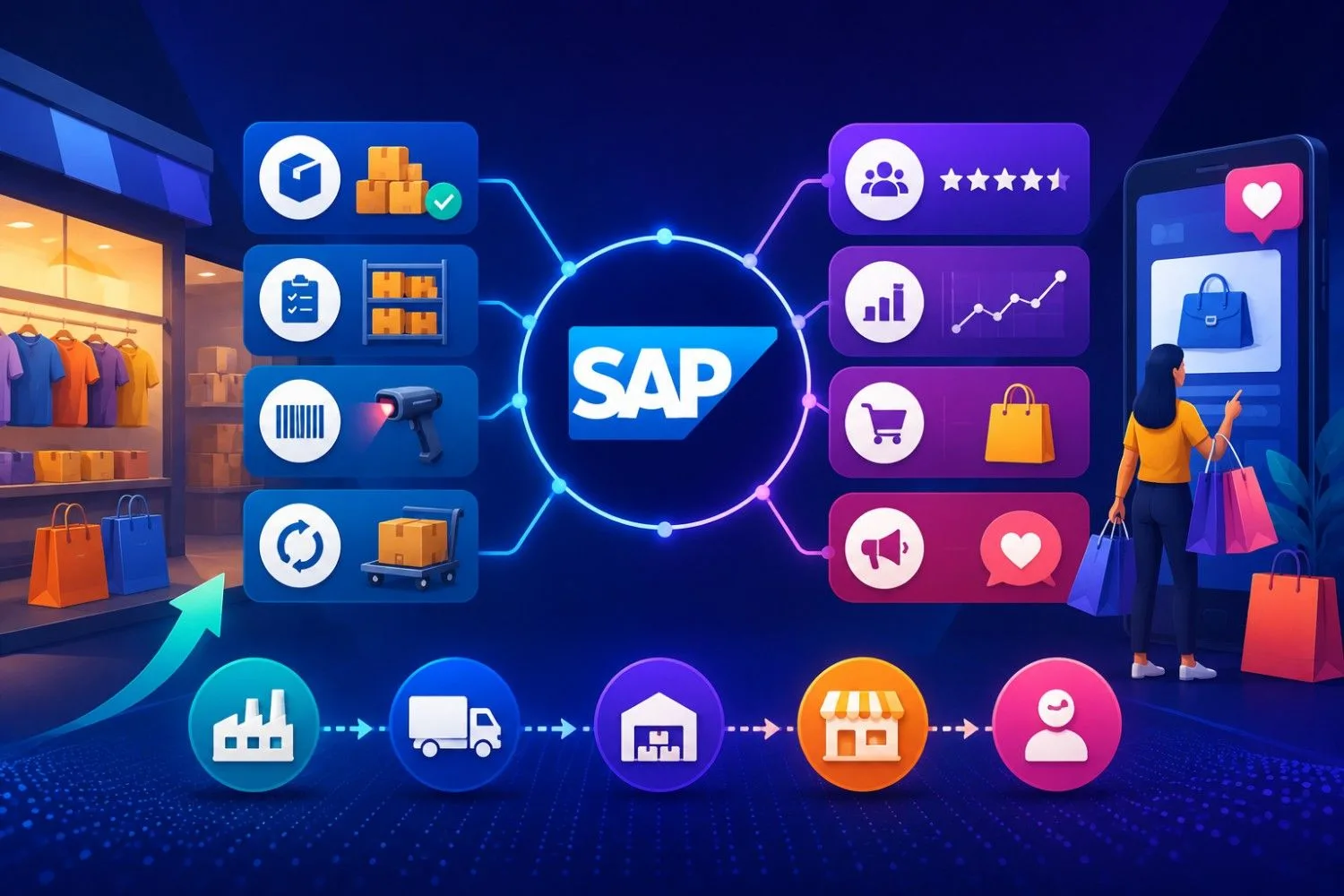
Walk into any popular retail store today, and everything feels smooth. The product you want is available, billing is fast, and online orders arrive on time. Behind this simple shopping experience, there is a powerful system working quietly in the background. That system is often SAP.
Retail companies deal with thousands of products every day. They must track stock, predict customer demand, manage warehouses, and avoid losses. Doing all this manually is almost impossible. This is why many global and Indian retail brands use SAP to handle operations smartly and efficiently.
The interesting part is that understanding these systems is no longer limited to technical people. Today, even students from non-technical backgrounds are learning SAP and digital business tools through a digital marketing course because modern businesses now combine technology, customer behavior, and marketing together.
Why Inventory Management Matters in Retail
Retail businesses survive on balance. Too much stock creates losses because products remain unsold. Too little stock disappoints customers and affects sales. A single mistake in inventory planning can impact profits badly.
Imagine a clothing store during festival season. If winter jackets arrive late or sizes are unavailable, customers simply move to another brand. Retail companies cannot afford such mistakes anymore.
SAP helps retailers track inventory in real time. It gives complete visibility of products across stores, warehouses, and online platforms. Managers can instantly see which items are selling fast and which products need restocking.
This real-time control saves money and improves customer satisfaction at the same time.
How SAP Helps Retail Companies Understand Customer Demand
Customer demand changes quickly. A product trending on social media today may disappear from the market next month. Retail companies constantly study customer behavior to stay ahead.
SAP uses data analytics and automation to predict demand patterns. It studies past sales, seasonal trends, customer preferences, and market behavior. Based on this information, businesses prepare inventory before demand increases.
For example, during summer, retailers already know cold drinks, air conditioners, and light clothing will sell more. SAP helps companies prepare inventory early so shelves never look empty.
This connection between customer demand and business strategy is one reason why students are now exploring a master in digital marketing program alongside technology-based learning. Businesses today need professionals who understand both customer psychology and business systems.
SAP Creates Better Coordination Between Departments
In many retail companies, different departments often work separately. Sales teams focus on customers, warehouse teams manage stock, and finance departments track budgets. Without coordination, confusion increases.
SAP connects every department on one platform. When sales increase, warehouse teams automatically receive updates. Finance departments can track costs instantly. Store managers can check product availability without making endless calls.
This smooth communication reduces delays and improves overall efficiency.
Retail businesses now prefer professionals who understand integrated business systems. This is why many students searching for the best computer classes near me are also choosing courses connected with ERP systems, digital marketing, and business analytics.
Online Shopping Has Increased the Need for SAP
The growth of online shopping changed retail completely. Customers now expect fast delivery, live tracking, and instant product availability. Retail companies must manage both physical stores and online platforms together.
SAP helps businesses maintain accurate stock levels across all channels. If a product sells online, inventory updates automatically in stores and warehouses. This avoids overselling and improves customer trust.
Large retailers handle millions of transactions daily. Without automated systems like SAP, managing this volume becomes extremely difficult.
At the same time, businesses also need digital promotion to attract online customers. This is why many students join a digital marketing course in Delhi to understand how online business, customer demand, and retail technology work together in real industries.
SAP Reduces Business Losses
One major challenge in retail is dead stock. These are products that remain unsold for long periods. Dead stock blocks storage space and creates financial losses.
SAP helps businesses identify slow-moving products early. Retailers can then offer discounts, launch promotions, or reduce future orders. This prevents unnecessary losses.
The system also improves supply chain planning. Companies can avoid over-purchasing and manage suppliers more efficiently. Better planning means lower operational costs and higher profits.
Modern businesses value professionals who understand both business software and customer engagement strategies. Because of this demand, many students now compare digital marketing course fees before selecting programs that provide practical industry knowledge.
SAP Improves Customer Experience
Retail success is no longer only about products. Customer experience matters equally. People expect personalized offers, fast service, and smooth shopping experiences.
SAP helps retailers collect customer insights from shopping patterns. Businesses can understand what customers buy frequently, which products they prefer, and how often they shop.
Using this information, companies create better marketing campaigns and personalized recommendations. Customers feel valued, and businesses build stronger loyalty.
This is where digital marketing becomes important too. Students learning through a digital marketing course near me often study customer behavior, analytics, and online engagement because retail businesses now depend heavily on data-driven marketing.
Retail Companies Use SAP for Faster Decision-Making
Retail markets change quickly. Managers cannot wait for weekly reports anymore. They need instant information.
SAP provides live dashboards and reports that help businesses make faster decisions. If sales drop suddenly in a region, managers can react immediately. If a product becomes popular unexpectedly, inventory can be increased quickly.
Quick decision-making gives companies a strong competitive advantage.
Many young professionals now combine technical and marketing knowledge together. This combination helps them understand both operational systems and customer expectations in modern industries.
The Growing Career Opportunities Around SAP and Digital Marketing
The retail industry is evolving rapidly. Businesses need skilled professionals who understand software systems, customer demand, online marketing, and business operations together.
This is why educational trends are also changing. Students no longer focus only on traditional degrees. Many now explore skill-based programs that offer practical industry exposure.
A digital marketing course helps students understand branding, online sales, customer targeting, and content strategy. On the other hand, SAP-related learning builds understanding of business operations and enterprise management.
Together, these skills create strong career opportunities in retail, e-commerce, logistics, and corporate management.
Many institutes offering the best digital marketing course in Delhi now include practical training, live projects, and industry tools because companies want job-ready professionals instead of only theoretical learners.
Why Even Non-Technical Students Can Understand This Industry
One common myth is that SAP and retail systems are only for technical experts. In reality, many roles involve communication, planning, analysis, and customer management more than coding.
Retail companies need people who can understand business flow and customer needs clearly. Even students from commerce, arts, or management backgrounds can build careers in these fields.
This is one reason why interest in practical learning programs is increasing across India. Students want skills that directly connect with modern business requirements.
A well-designed digital marketing course makes these concepts easier to understand because it explains how businesses attract customers, analyze behavior, and grow sales using technology.
Final Thoughts
Retail companies today cannot survive on guesswork alone. They need accurate inventory management, customer demand forecasting, and fast operational systems. SAP helps businesses achieve all of this with better efficiency and smarter planning.
At the same time, the retail industry is becoming deeply connected with digital platforms and customer-focused marketing. This shift is creating huge demand for professionals who understand both technology and business growth strategies.
Whether someone wants to work in retail management, e-commerce, customer analytics, or online branding, learning modern business skills has become extremely valuable. A practical digital marketing course combined with business technology understanding can open many career opportunities in today’s competitive market.