Running a retail business involves much more than selling products. Retailers must manage billing, process payments, track transactions, coordinate employees, and review sales performance while delivering a smooth customer experience. Handling these activities through separate tools or manual processes can slow down daily operations and increase the risk of errors.
A modern retail POS system brings essential retail activities into one connected workflow. By combining billing, payment processing, sales records, and reporting, retailers can reduce repetitive tasks, improve operational visibility, and make better business decisions.
1. Faster Billing for a Better Customer Experience
Billing is one of the most frequent activities in any retail store. During busy periods, slow checkout processes can create long queues, frustrate customers, and put additional pressure on employees.
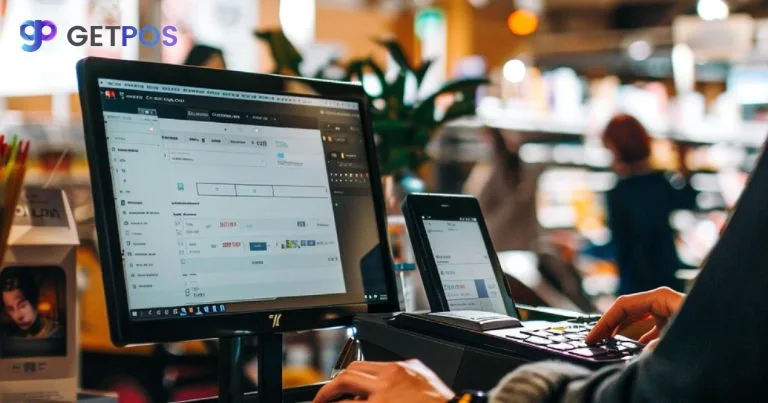
A retail POS system helps staff generate bills by selecting products or scanning barcodes, applying eligible discounts, calculating taxes, and generating the final amount. Product and pricing information can be retrieved directly from the system, reducing the need for manual calculations.
Faster billing also supports more consistent transactions. Employees can spend less time on repetitive checkout tasks and more time assisting customers. Retailers looking to understand the process in greater detail can explore how POS software works, including the connection between billing, inventory updates, payment processing, and sales reporting.
2. Simplified Payment Processing
Customers increasingly expect convenient payment options when shopping in physical stores. Depending on the retailer's setup, these may include cash, debit and credit cards, UPI, and other supported digital payment methods.
POS software helps employees record payments against the correct transactions, making it easier to maintain organized sales records and reconcile daily collections. When integrated with compatible payment terminals or gateways, the system can also support a more connected checkout experience.
Accurate payment records are important for identifying discrepancies between recorded sales and collected payments. They also help managers review transaction activity and understand the store's financial performance.
Retailers should evaluate payment integration, supported payment methods, transaction security, and reconciliation features when selecting a solution. Explore the GETPOS Retail Operating System to learn how connected retail functions can support everyday business activities.
3. Digital Receipts and Organized Transaction Records
Paper receipts can be lost, damaged, or difficult to retrieve when customers need proof of purchase. Digital receipts provide another option by allowing retailers to share transaction details electronically through supported channels, such as email or messaging.
Digital receipts can make it easier for customers to retain purchase information and help staff retrieve transaction records when handling eligible returns, exchanges, or billing queries.
They can also reduce dependence on printed receipts when customers choose electronic delivery. However, retailers should check whether their POS software supports the required delivery methods and complies with applicable invoicing and recordkeeping requirements.
By maintaining accessible transaction histories, retailers can improve customer service while keeping sales documentation organized.
4. Better Employee Workflows and Accountability
Retail employees perform several tasks throughout a shift, including billing customers, checking product availability, handling returns, and monitoring transactions. When processes are unclear or information is scattered across different systems, these activities can become difficult to coordinate.
A connected retail POS system can provide employees with role-appropriate access to product information, billing functions, and transaction histories. Depending on the platform, managers may also be able to review cashier activity, track voids and discounts, and monitor shift-level sales performance.
These capabilities help businesses establish consistent procedures and identify unusual transaction patterns for review. Retailers managing several outlets can also benefit from multi-store management, which explains how centralized oversight can support coordination across locations.
Employee permissions are particularly important. Cashiers, supervisors, and store managers may require different levels of access depending on their responsibilities. Configuring permissions appropriately helps support accountability without unnecessarily restricting routine work.
5. POS Reporting for More Informed Decisions
Retailers generate valuable information through everyday transactions. However, sales data becomes more useful when managers can turn it into meaningful reports.
POS reporting can help retailers analyze sales by product, category, employee, store, or time period, depending on the system's capabilities. These reports provide a clearer picture of purchasing patterns and business performance.
For example, a retailer may discover that certain products sell more quickly during weekends. Another report might reveal that a product category is generating lower sales than expected. Managers can use these insights to review stock availability, adjust promotions, plan employee schedules, or investigate changes in demand.
Retailers interested in making better use of transaction data can explore what retail analytics is to understand how sales trends and performance metrics can inform operational decisions.
Reports can also support comparisons across different periods, helping businesses identify recurring trends instead of relying solely on intuition.
6. Improved Retail Operations Management
Effective retail operations management requires different store activities to work together. Billing, inventory, purchasing, employee workflows, and reporting all influence how efficiently a store operates.
When these processes are connected, retailers can reduce duplicate data entry and access more consistent information across their workflows. For instance, a completed sale may update stock records automatically, while sales reports help managers identify products that require replenishment.
Retailers can strengthen this process by using inventory management software to monitor stock levels, review product movement, and improve replenishment planning.
For businesses operating multiple outlets, centralized visibility can make it easier to compare performance and monitor operations across locations, provided the software supports multi-store management.
Retailers should look for a solution that fits their business size, product catalogue, transaction volume, and expansion plans. Features such as barcode scanning, inventory tracking, purchasing tools, and integrated reporting can help reduce operational friction as the business grows.
7. Turning Daily Data Into Better Business Decisions
A POS system is not just a checkout tool. Its reporting and transaction records can help retailers understand what is happening across their stores and identify areas that need attention.
By combining sales performance with inventory information, managers can make more informed decisions about replenishment, product assortment, promotions, and staffing. Transaction histories can help investigate discrepancies, while performance reports can highlight opportunities to improve customer service.
For a closer look at stock visibility and product movement, read the GETPOS guide on barcode management and inventory tracking. Barcode-based workflows can help retailers identify products more consistently and reduce manual data-entry errors.
The quality of business decisions depends on accurate product information, consistent transaction recording, and regular review of reports. Retailers should also ensure that employees receive appropriate training and that the system is configured to reflect their actual business processes.
Conclusion
A retail POS system can improve daily operations by bringing billing, payment processing, digital receipts, employee workflows, and POS reporting into a more connected environment. These capabilities help retailers reduce manual work, maintain organized records, and gain better visibility into business performance.
GETPOS brings billing, inventory, purchasing, accounting, and analytics together through its Retail Operating System. Explore the GETPOS website to learn more about connected retail operations and request a free demo to assess its suitability for your business.