
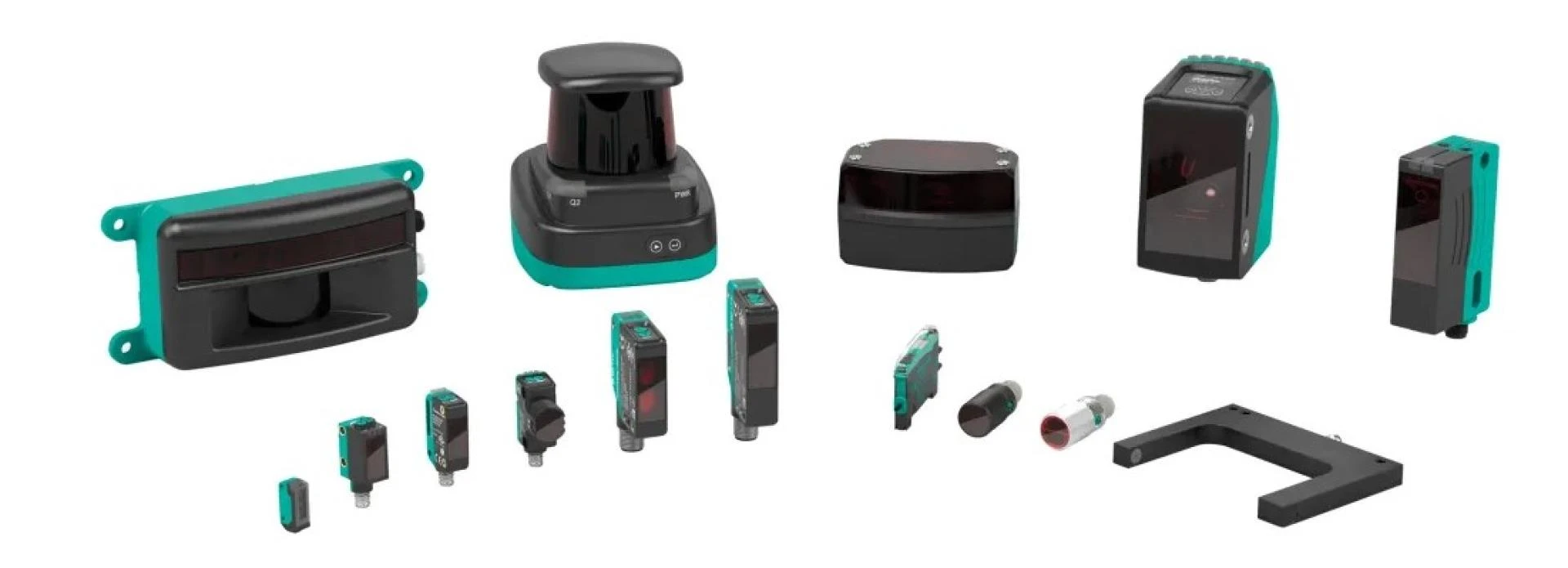

In modern manufacturing, the demand for faster, more precise, and cost-effective production continues to rise. Automated systems must perform flawlessly—and that’s where photoelectric sensors come in. These devices detect the presence or absence of objects using light, enabling seamless coordination between machines, conveyors, and robotic systems.
As industries integrate advanced automation technologies, Pepperl+Fuchs has remained at the forefront of innovation with an extensive range of photoelectric sensors built for reliability and precision. From packaging lines to automated warehouses, these sensors are essential for maintaining accuracy and productivity.
How Photoelectric Sensors Work
Photoelectric sensors function by emitting a beam of light—typically infrared or visible—that is reflected, interrupted, or absorbed by the target object. When the beam’s pattern changes, the sensor detects it and triggers an electrical output signal.
This non-contact detection method makes photoelectric sensors suitable for high-speed applications and sensitive materials where physical touch might cause damage or contamination.
Pepperl+Fuchs offers several types of photoelectric sensors designed to fit different detection scenarios:
- Thru-Beam Sensors: The emitter and receiver are positioned opposite each other. The sensor detects objects when the light beam is interrupted. Ideal for long distances and harsh conditions.
- Retroreflective Sensors: The emitter and receiver share the same housing, and a reflector bounces light back to the receiver. Simple to install, perfect for medium distances.
- Diffuse Mode Sensors: Both emitter and receiver are housed together. The sensor detects objects when light reflects off their surface, ideal for close-range, space-limited setups.
Boosting Efficiency Through Precision
In automation, even minor errors in detection can result in costly downtime or defective products. Photoelectric sensors enhance efficiency by ensuring reliable object recognition and positioning, regardless of object color, surface, or shape.
For instance, in packaging systems, sensors detect whether products are correctly aligned before sealing or labeling. In logistics operations, they monitor flow and spacing on conveyor belts, reducing jams and collisions. And in automotive assembly, photoelectric sensors verify that components are correctly placed before robotic assembly begins.
By reducing manual inspection and error rates, these sensors contribute directly to higher throughput, reduced waste, and consistent product quality.
Advanced Sensing Technologies for Industrial Demands
Pepperl+Fuchs continuously advances its technology to meet evolving industrial needs. Its photoelectric sensors incorporate Pulse Ranging Technology (PRT) and Multipixel Technology (MPT) to deliver superior performance.
- Pulse Ranging Technology (PRT) uses laser pulses to calculate distances with remarkable accuracy, unaffected by ambient light or reflections.
- Multipixel Technology (MPT) offers precise detection and distance measurement at short ranges, ideal for high-speed production lines.
These innovations allow operators to maintain consistent detection even under challenging lighting or environmental conditions—ensuring uninterrupted, efficient automation.
Flexible Solutions Across Industries
Photoelectric sensors are used across a range of industries including:
- Machine and Plant Construction: For alignment and position detection in complex machinery.
- Material Handling: For monitoring pallets, packages, and conveyors.
- Electronics and Packaging: For detecting small components with high accuracy.
- Automotive Manufacturing: For part verification and robot guidance.
This versatility demonstrates the adaptability of Pepperl+Fuchs’ sensors across different process environments.
The Future of Efficiency in Automation
As industrial automation evolves toward smart manufacturing and Industry 4.0, the role of photoelectric sensors extends beyond detection. Their integration with data-driven control systems allows for predictive maintenance, self-calibration, and continuous process optimization.
With decades of expertise in industrial sensing, Pepperl+Fuchs continues to deliver solutions that enable businesses to maximize uptime, accuracy, and efficiency.
Conclusion
Photoelectric sensors form the invisible link between mechanical movement and digital control. By combining precision, speed, and adaptability, they make modern automation more intelligent and efficient.
For manufacturers aiming to enhance productivity, Pepperl+Fuchs’ photoelectric sensors provide the reliability and innovation needed to meet future demands—one beam of light at a time.