In the rapidly evolving landscape of Indian business, organizations are turning to advanced digital solutions to foster talent, drive engagement, and secure long-term growth. Phi EDGE’s 360-degree feedback system stands out as a transformative tool, enabling companies to unlock their workforce’s full potential. This 360 degree evaluation tool is fast becoming essential for modern performance management.
What is 360 Degree Feedback
360-degree feedback is an assessment process where employees receive confidential, anonymous feedback from a variety of sources—typically including managers, peers, direct reports, and sometimes even customers or external partners. Each participant completes a structured questionnaire, rating the employee on a range of workplace competencies and providing written comments. The feedback recipient also completes self-assessment, allowing for a comprehensive comparison of self-perception and others’ perspectives. Organizations increasingly use this 360 Assessment Software in India to ensure well-rounded evaluations..
Difference Between 360-Degree Review and Traditional Review
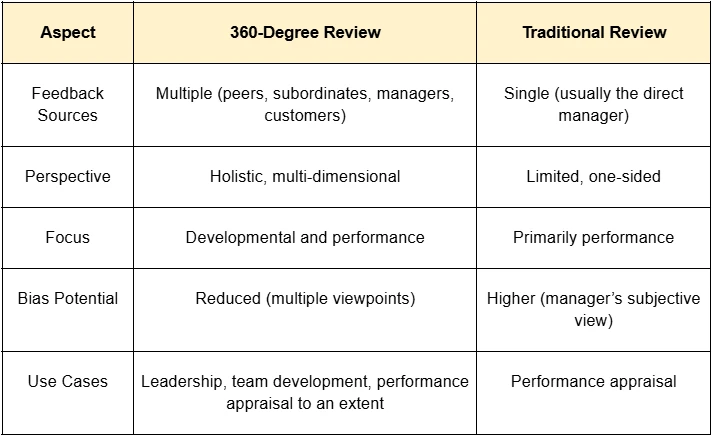
360-degree feedback offers a more comprehensive and unbiased assessment, while traditional reviews may be limited and susceptible to individual bias. Many HR leaders now prefer using 360 degree performance feedback tools for enhanced accuracy.
How Phi EDGE Is Helping Organizations
Comprehensive, Multi-Source Feedback
Phi EDGE’s 360-degree feedback system module collects input from a diverse array of stakeholders—managers, peers, subordinates, and even external customers—offering a holistic view of each employee’s skills, behaviors, and competencies. This approach goes beyond traditional reviews, ensuring that feedback is balanced, nuanced, and actionable. Its role as a 360 Appraisal Software enhances the quality and depth of evaluations.
Driving Employee Growth and Self-Awareness
By delivering detailed, anonymized reports, Phi EDGE enables employees to identify both strengths and areas for improvement. This process not only fosters self-awareness but also empowers individuals to align their development with organizational goals, leading to more targeted training and personal growth. These capabilities define a strong 360 degree performance feedback platform.
Seamless Integration and Real-Time Insights
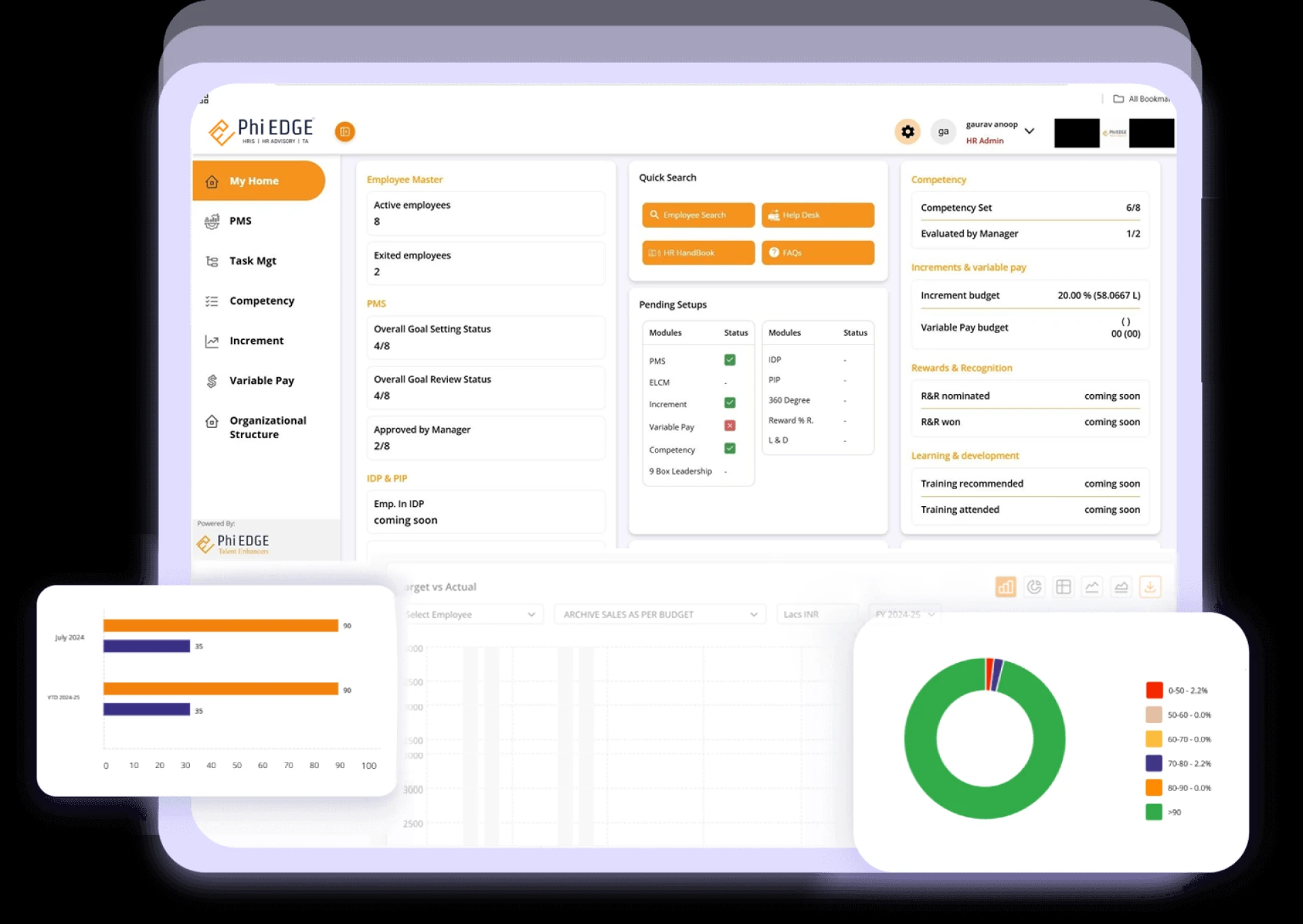
Phi EDGE’s solution integrates effortlessly with core HR Software functions like payroll, attendance, and learning management, streamlining workflows and eliminating redundancies. Real-time analytics and dashboards provide HR leaders and managers with actionable insights, enabling proactive decision-making and continuous optimization of talent strategies. With these capabilities, it stands out as one of the most effective 360 Assessment Software in India.
Enhancing Engagement, Collaboration, and Retention
The platform’s focus on transparency and accountability cultivates a culture where feedback is valued and acted upon. Organizations using Phi EDGE have reported measurable improvements in employee engagement, collaboration, and retention-one case study noted a 20% increase in retention rates following the implementation of 360-degree feedback and related talent management initiatives
Data-Driven Talent Development
With its robust analytics, Phi EDGE helps organizations map talent using frameworks like the 9-box grid, aligning performance and potential for succession planning and leadership development. This data-driven approach ensures that high performers are recognized, developed, and retained, supporting both individual career growth and organizational success
Conclusion
Phi EDGE’s 360-degree feedback system is redefining how Indian organizations approach talent development. Ever more, organisations are realising that people are our key assets and it is in the organisation's best interest to engage, retain and develop talent and leaders. By delivering comprehensive, actionable feedback and integrating it with the broader HR ecosystem, Phi EDGE empowers businesses with a powerful 360 degree evaluation tool to build high-performing, engaged, and future-ready workforces. In a competitive talent landscape, this holistic approach is not just an advantage—it’s a necessity for sustained organizational growth.