
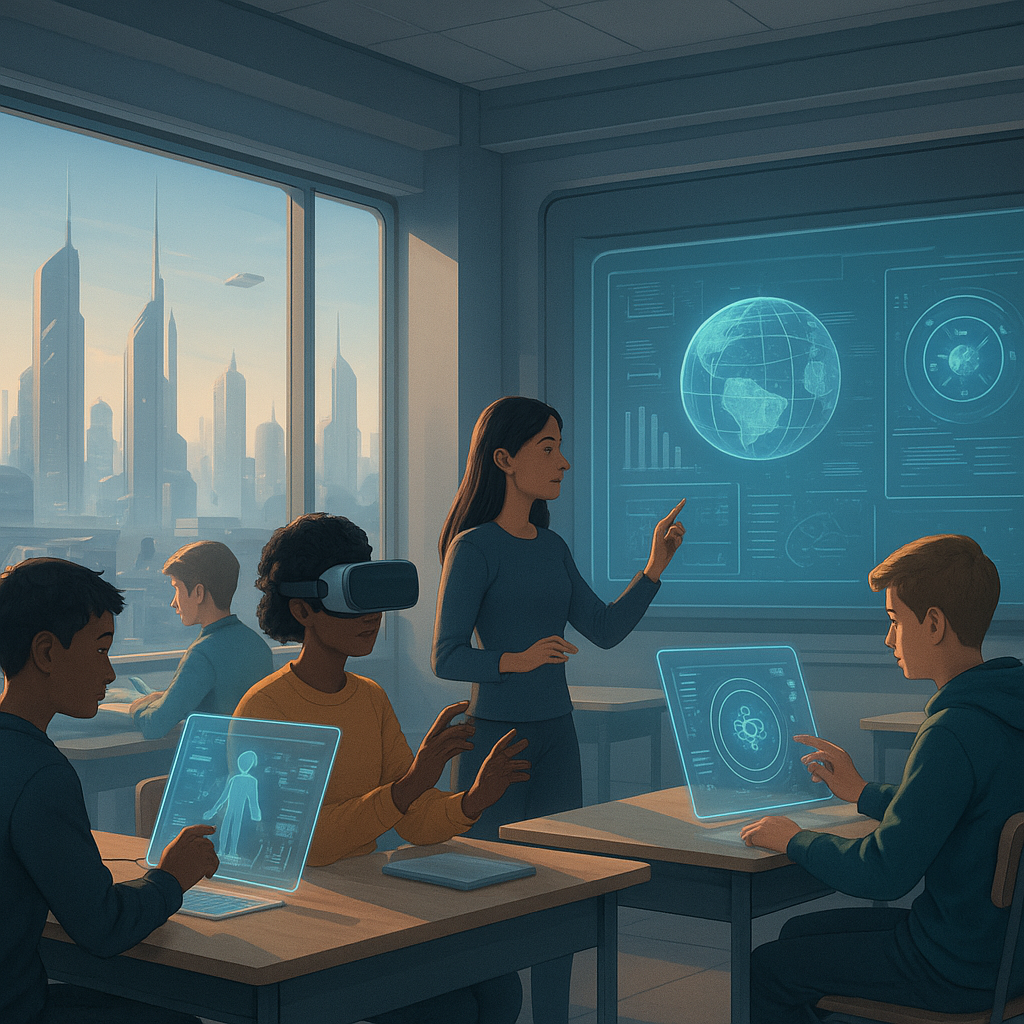
Opening the Digital Gateway: A Classroom Without Walls
On a crisp morning in March 2026, a 16-year-old student in rural Kenya logged into a virtual classroom hosted by a top-tier university in Europe. Her learning environment? A solar-powered tablet connected through a satellite internet system. Across the globe, thousands of learners like her are part of a sweeping educational transformation that has radically redefined access, pedagogy, and outcomes. This scene encapsulates the enduring promise and evolving realities of online learning, a sector that surged during the early 2020s and now stands as a pillar of global education.
Recent data from UNESCO highlights that nearly 65% of secondary school students worldwide have engaged in some form of online learning by 2025, a figure that continues to climb. The shift is not merely about technology but represents a profound change in how knowledge is disseminated, absorbed, and evaluated. As traditional brick-and-mortar institutions adapt or integrate digital platforms, the contours of education are morphing into a hybrid, personalized, and increasingly global enterprise.
"Online learning has transitioned from an emergency response to a strategic imperative in education systems worldwide," notes Dr. Elena Martínez, an education technology expert at the Global Education Forum.
From Correspondence to Immersive Virtual Classrooms: Tracing Online Learning’s Evolution
Online education traces its roots back to the correspondence courses of the 19th century, but the internet’s arrival in the late 20th century set the stage for exponential growth. The 2000s saw the rise of MOOCs (Massive Open Online Courses), spearheaded by platforms such as Coursera and edX, democratizing access to courses from elite institutions. However, early MOOCs suffered from low completion rates and engagement challenges.
By the 2010s, improved bandwidth, mobile device proliferation, and advancements in interactive content began to address engagement gaps. The COVID-19 pandemic in 2020 accelerated this shift dramatically, forcing schools and universities worldwide to adopt remote learning almost overnight. This period revealed both the potential and the pitfalls of online education, highlighting infrastructural inequalities and the need for pedagogical innovation.
Fast forward to 2026, and online learning ecosystems have matured into integrated platforms combining AI-driven personalized instruction, virtual and augmented reality experiences, and real-time analytics to support learners and educators alike. The shift from a supplementary tool to a core modality reflects a broader cultural and technological transformation in education.
The Data Behind the Digital Classroom: Trends, Efficacy, and Equity
Analyzing the latest figures uncovers nuanced insights into online learning’s impact. According to the International Association of Online Education's 2026 report, global enrollment in online courses increased by 27% between 2023 and 2025, with Asia-Pacific and Sub-Saharan Africa showing the fastest growth rates. Notably, hybrid models—combining in-person and online instruction—now constitute over 50% of secondary and post-secondary education offerings worldwide.
Effectiveness metrics reveal that when well-designed, online learning can match or exceed traditional classroom outcomes, particularly in STEM subjects and language acquisition. Adaptive learning technologies personalize content delivery based on real-time learner data, increasing retention and engagement. For example, a 2025 study by the Education Data Initiative found that students using AI-enabled platforms scored on average 15% higher on standardized tests than peers in conventional settings.
Yet challenges persist. The digital divide remains a critical barrier, with approximately 20% of students in low-income regions lacking reliable internet or devices, according to the World Bank. Additionally, disparities in digital literacy hamper equitable participation. These gaps underscore the need for continued investment in infrastructure and teacher training.
"The promise of online education lies in inclusivity, but realizing this requires coordinated global efforts to bridge access and skill gaps," asserts Professor Samuel Kwame, a specialist in educational equity.
Key Data Points on Online Learning in 2026
- Global online course enrollment: 1.5 billion annually
- Hybrid learning prevalence: 52% of educational institutions
- AI-adaptive learning impact: 15% increase in test scores
- Digital access gap: 20% of students in low-income regions
- Institutions offering VR/AR learning: 30% worldwide
Current Innovations and Developments in 2026’s Online Learning Landscape
2026 marks a year of significant technological breakthroughs and pedagogical refinements in online education. Virtual Reality (VR) and Augmented Reality (AR) have moved beyond niche applications to mainstream adoption, offering immersive, experiential learning environments. For instance, medical students now routinely practice surgeries in VR simulations before entering operating rooms, improving skills and patient outcomes.
Artificial Intelligence (AI) continues to be a transformative force. Platforms like EduNexus and LearnSphere deploy AI tutors capable of real-time feedback and dynamic curriculum adjustments tailored to individual learning styles and paces. These intelligent systems reduce dropout rates by identifying disengagement signals early and providing targeted interventions.
Moreover, blockchain technology has been widely adopted for credentialing and academic records, ensuring secure, verifiable certifications that transcend institutional boundaries. This interoperability facilitates lifelong learning and workforce mobility.
Policy frameworks are also evolving. Governments are increasingly recognizing online learning’s legitimacy; for example, the European Union’s Digital Education Action Plan 3.0, launched in 2025, funds cross-border digital education initiatives and standardizes quality assurance measures.
2026 Highlights in Online Learning Technology
- VR/AR platforms adopted by 30% of universities globally
- AI-driven adaptive learning platforms reduce dropout by 18%
- Blockchain-based digital diplomas issued to over 10 million learners
- Cross-border online degree programs increase by 40%
- Government investments in digital infrastructure rise by 22%
These developments reflect a concerted move toward integrating technology, pedagogy, and policy to create resilient, accessible, and effective online learning environments.
Expert Perspectives: The Changing Role of Educators and Institutions
Leading educators emphasize that the online learning revolution does not replace teachers but redefines their roles. Dr. Amina Rashid, Dean of Education at Global Tech University, explains, "Teachers are evolving into facilitators, mentors, and curators of content, empowering students to take ownership of their learning journeys." This shift demands new skill sets, including digital literacy, data interpretation, and emotional intelligence to support virtual engagement.
Institutions face strategic decisions balancing investment in technology with pedagogy and student support. Many traditional universities have restructured into hybrid models offering flexible pathways, while entirely digital-native institutions like OpenLearn Global continue to innovate rapidly.
Industry experts also point to the economic implications. Online learning expands workforce development opportunities, enabling upskilling and reskilling at scale. Corporations increasingly partner with educational platforms to deliver tailored training, reflecting a blurring of lines between formal education and lifelong learning.
However, challenges remain around quality assurance, academic integrity, and learner motivation. Dr. Rashid cautions, "Sustainability hinges on embedding robust assessment methods and fostering community within virtual spaces." This is echoed in TheOmniBuzz’s recent exploration of education’s broader transformations, underscoring that technology alone cannot drive success but must be coupled with thoughtful human-centered design (Education in 2026: Transformations, Challenges, and the Road Ahead).
Looking Ahead: The Future Trajectory of Online Learning
As we progress deeper into the decade, several trends are poised to shape online education’s future. Personalized learning powered by AI will become increasingly sophisticated, integrating biometric data and neurofeedback to optimize cognitive engagement. Ethical frameworks around data privacy and AI transparency will be paramount.
The convergence of online learning with other sectors—such as virtual workspaces, social media, and gaming—will create immersive, socially rich educational ecosystems. These hybrid communities will foster peer collaboration and mentorship beyond geographic limitations.
Moreover, global initiatives aimed at closing the digital divide continue to gain momentum, with multilateral organizations and private-public partnerships driving infrastructure and skills development in underserved regions.
"The next frontier is not just access, but meaningful, equitable participation in digital learning ecosystems," emphasizes Dr. Kwame.
Policymakers and educators must also grapple with evolving accreditation models and labor market alignment to ensure online learning translates into tangible economic and social mobility.
Online learning’s trajectory is intertwined with advances in machine learning, as detailed in TheOmniBuzz’s coverage of AI’s impact across industries (How Machine Learning Is Redefining Intelligence and Industry in 2026). This synergy suggests that education will not only adapt to technology but help shape its ethical and practical contours.
For learners, educators, and institutions alike, the imperative is clear: embrace innovation while safeguarding inclusivity, quality, and human connection to unlock education’s full potential in a digitally mediated world.