
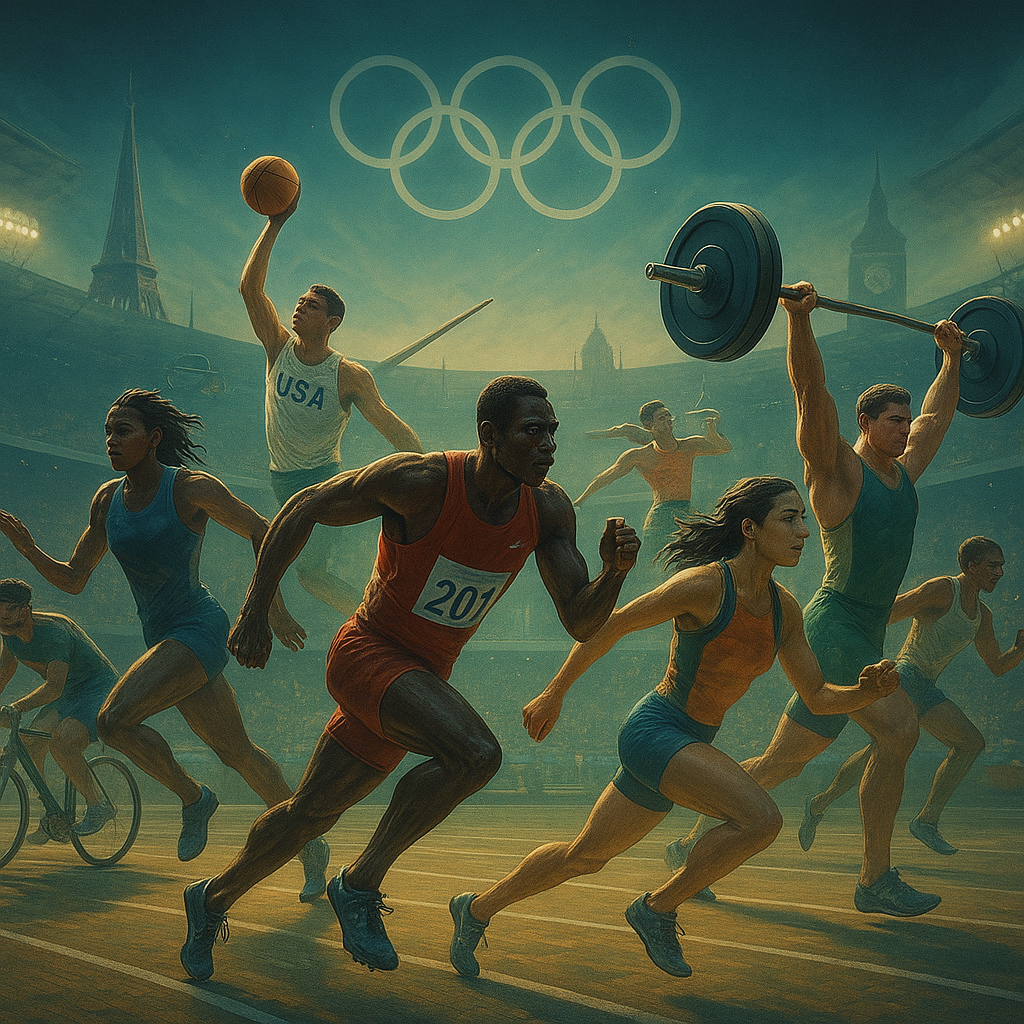
Opening Moments: The Olympics as a Global Stage of Unity and Competition
On a crisp evening in February 2026, the opening ceremony of the Winter Olympics in Florence, Italy, dazzled millions worldwide. The sight of athletes from 92 countries parading beneath a tapestry of laser-lit stars was a vivid reminder of the Olympic movement's unparalleled power to unite diverse nations. Yet, beyond the pageantry lies a complex narrative: a story of evolving sports culture, geopolitical undercurrents, technological innovation, and the ever-growing ambitions and challenges inherent in hosting the Games.
The Olympics remain the most prestigious international sporting event, attracting over 3 billion viewers globally. This scale of engagement speaks not only to the universal appeal of athletic excellence but also to the enduring role the Olympics play in shaping cultural dialogues, economic policies, and even diplomatic relations.
“The Olympics are a mirror reflecting both the best of human achievement and the ongoing challenges of our world,” notes Dr. Helena Vasquez, a leading sports sociologist.
From Revival to Revolution: Tracing the Olympics’ Historical and Cultural Journey
The modern Olympics began in 1896 in Athens, inspired by the ancient Greek tradition but adapted to a rapidly modernizing world. Baron Pierre de Coubertin envisioned a global festival promoting peace through sportsmanship. Since then, the Games have evolved dramatically, expanding from 14 nations and 241 athletes to over 200 countries and 10,500 athletes in recent Summer editions.
Key milestones include the inclusion of women’s events, the introduction of the Winter Games in 1924, and the gradual addition of new sports reflecting global trends and youth interests. Political moments have punctuated the Olympic timeline—most notably the boycotts during the Cold War and the symbolic gestures against racial and social injustice.
Importantly, the Olympics have consistently mirrored broader societal shifts. The integration of professional athletes, such as NBA players in the 1992 Barcelona Games, marked a new era of competition. Similarly, the increasing emphasis on gender equality and sustainability reflects contemporary global values.
Data-Driven Insights: The Olympic Movement’s Impact on Sports and Economies
Analyzing the Olympics through data reveals their multifaceted influence. Financially, hosting the Games is a massive undertaking. The 2024 Paris Olympics had an estimated budget of $8.3 billion, with significant investments in infrastructure and technology, aiming for a legacy beyond the event itself. Conversely, some hosts have faced economic strain, sparking debates over cost-benefit ratios.
On the sports front, the Olympics drive innovation and participation worldwide. According to the International Olympic Committee (IOC), sports introduced at the Olympics often see a surge in grassroots participation. For example, skateboarding’s debut in Tokyo 2020 led to a 35% increase in youth enrollment globally.
Technological integration has also transformed the Games. From biometric athlete monitoring to AI-based judging systems, these advances aim to enhance fairness and performance analysis. The 2026 Winter Olympics featured an unprecedented use of augmented reality to engage fans and provide real-time data overlays during broadcasts.
- Economic Impact: Average GDP growth in host cities can range from 0.5% to 1.5% in the Olympic year.
- Participation Growth: New Olympic sports typically see a 20-40% rise in global amateur participation within two years.
- Media Reach: Over 3 billion viewers tuned in to the Tokyo 2020 Olympics, with a growing share via digital platforms.
“The Olympics push the boundaries of what sports and technology can achieve together,” explains Mark Chen, CTO of a leading sports analytics firm.
2026 and Beyond: Current Trends Reshaping the Olympic Experience
The 2026 Olympic cycle has been marked by significant transformations. The Florence Winter Games introduced a more compact, eco-friendly model, with 80% of venues reused or temporary, aligning with the IOC’s sustainability agenda. This shift addresses past criticisms about environmental and financial excesses.
Inclusivity continues to expand. The 2026 program emphasized gender parity, with women comprising 49.7% of athletes—the closest yet to equal representation. Additionally, new events such as mixed-gender team competitions have been embraced to promote collaboration and equality.
Technology’s role has deepened. Fan engagement has moved beyond traditional broadcasts, incorporating interactive VR experiences and AI-driven personalized content. This trend is transforming how audiences connect with the Games, especially younger demographics.
Meanwhile, geopolitical tensions have subtly influenced participation and diplomacy at the Olympics. Efforts to maintain the Olympic spirit amid global challenges underscore the Games’ delicate balance between sport and politics.
- Florence 2026 featured 109 events across 15 sports.
- Over 1,000 hours of Olympic content streamed globally via digital platforms.
- Record-breaking female athlete participation at nearly 50%.
Voices from the Field: Expert Perspectives on the Olympics’ Role and Future
Experts across sports management, economics, and international relations offer nuanced views on the Olympics’ trajectory. Professor Laura Kim, a sports economist, highlights the need for fiscal prudence: “Sustainable hosting models are critical to preserving the Olympics’ future. Overambitious projects risk alienating public support.”
From a cultural standpoint, Dr. Samuel Ortega, an anthropologist, emphasizes the Games’ power to foster intercultural dialogue: “The Olympics remain one of the few truly global events where diverse cultures converge peacefully, offering opportunities for mutual understanding.”
Meanwhile, athletes and coaches advocate for continued innovation in fairness and inclusivity. The recent adoption of AI in judging, while controversial, is seen as a step toward minimizing human bias.
“The Olympics challenge us to constantly rethink the meaning of competition and community,” reflects multiple-time Olympic medalist Amina El-Sayed.
Looking Forward: What the Future Holds for the Olympics
As the Olympic movement faces its second century, key themes will shape its evolution. Sustainability will remain front and center, with future hosts expected to prioritize legacy and minimal environmental footprint. Digital innovation will continue to redefine fan experiences, potentially integrating metaverse elements and more immersive athlete storytelling.
Moreover, expanding athlete representation and new sports will keep the Olympics relevant to younger generations. The IOC’s ongoing dialogue about reducing costs and leveraging existing infrastructure suggests a more pragmatic approach to hosting.
Geopolitical dynamics will also influence the Games’ diplomatic role. The Olympics may increasingly serve as a platform for soft power and international cooperation amid global uncertainties.
For sports enthusiasts and global citizens alike, the Olympics will continue to be a powerful symbol of human potential and shared values.
- Next Summer Olympics slated for Los Angeles 2028, emphasizing sustainable urban reuse.
- Potential new sports include e-sports and urban climbing under IOC review.
- Projected increase in digital viewership by 20% over the next two Olympic cycles.
For those interested in the broader dynamics of global sports transformations, you might enjoy our feature on How Football’s Global Transformation Is Shaping the Future of Sport and the insights on basketball evolution in How the NBA’s New Era is Redefining Basketball’s Global Pulse.