
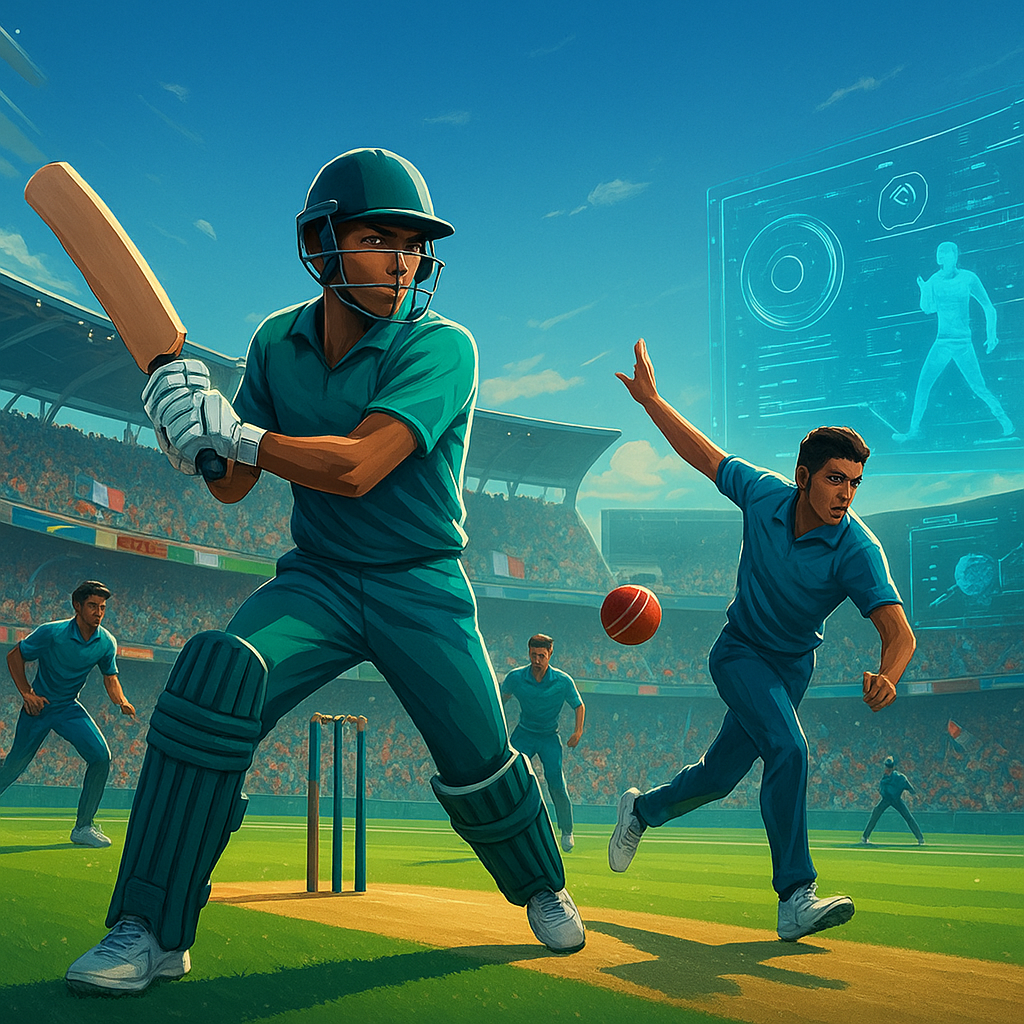
Opening Scene: The Roar of the Crowd at the 2026 ICC World Test Championship Final
On May 15, 2026, a packed stadium in Ahmedabad, India, witnessed one of the most thrilling moments in modern cricket history. The ICC World Test Championship Final capped off a season that many experts have described as transformative for the sport. The final featured India and Australia, two titans of cricket, battling over five days in front of over 120,000 fans — a record attendance for a Test match. The atmosphere was electric, not just because of the fierce competition but due to the palpable sense that cricket is evolving rapidly. The intense crowd cheers, the strategic nuances displayed by captains Virat Kohli and Pat Cummins, and the emergence of young prodigies like India's Arjun Singh and Australia's Liam O'Connor encapsulated the sport's vibrant present and promising future.
“Cricket in 2026 is no longer just a game of tradition; it is a blend of innovation, athleticism, and global appeal.” – Ravi Shastri, cricket analyst
This moment epitomizes the broader changes observed across cricket worldwide as the sport balances its rich heritage with new formats, technologies, and a diverse talent pool. This article explores how May 2026 marks a pivotal moment in cricket’s growth trajectory, reviewing historical context, key data and figures, current developments, expert insights, and the road ahead.
Tracing Cricket’s Evolution: From Colonial Roots to a Global Sporting Powerhouse
Understanding cricket’s current standing requires revisiting its journey. Originating in 16th-century England, cricket was long associated with British colonial culture. Its expansion to countries like India, Australia, South Africa, Pakistan, and the West Indies laid the foundation for its global reach. By the mid-20th century, cricket had established itself as a major sport in these regions, though it was largely confined to traditional formats such as Test matches and One Day Internationals (ODIs).
The introduction of Twenty20 (T20) cricket in the early 2000s catalyzed a seismic shift. The shorter, fast-paced format brought cricket to new audiences, especially younger demographics, and commercialized the sport through leagues like the Indian Premier League (IPL). This growth was accompanied by technological innovations such as Decision Review System (DRS) and advanced analytics, which enhanced fairness and strategy.
Notably, the ICC’s establishment of the World Test Championship in 2019 reinstated Test cricket’s prestige, offering a structured competition to crown the best Test nation. Simultaneously, women’s cricket gained unprecedented visibility, with the ICC Women's T20 World Cup 2023 setting attendance and viewership records worldwide.
- 1900s–1950s: Cricket’s colonial expansion and establishment of Test cricket.
- 2003: Launch of the first T20 international match.
- 2008: Inaugural IPL season revolutionizes cricket’s commercial landscape.
- 2019: ICC World Test Championship begins, revitalizing Test cricket.
- 2023: Women’s cricket reaches new global milestones.
These milestones set the stage for a highly dynamic cricket environment in 2026, characterized by integration of formats and audience diversification.
Data-Driven Analysis: The State of Cricket in 2026
Concrete data reveals the sport’s remarkable growth and transformation. According to the International Cricket Council’s 2026 annual report, global cricket viewership has surged by 35% since 2023, fueled by new markets in the United States, China, and Africa. The IPL remains the wealthiest cricket league, generating $1.85 billion in revenue this year alone, while the Big Bash League (Australia) and Caribbean Premier League continue to expand their international reach.
On the participation front, grassroots cricket programs have expanded dramatically. A 2025 study by the Global Sports Development Institute estimates over 125 million active cricket players worldwide, a 20% increase from 2023, with significant growth in youth and women’s participation. This surge is supported by the ICC’s strategic investment in emerging cricket nations like Nepal, the UAE, and the USA.
The competitive landscape also showcases a shift. Traditional powerhouses such as India, Australia, England, and South Africa remain dominant but face stiff competition from rising teams like Afghanistan and Ireland. The World Test Championship 2025–26 cycle saw India clinch the title with a blend of experienced stalwarts and breakthrough talents, while Pakistan’s resurgence in limited-overs cricket has been notable.
- Global Viewership Growth: 35% increase since 2023.
- Player Base Expansion: 125 million active players worldwide.
- Revenue Generation: IPL leads with $1.85 billion.
- Competitive Diversity: New entrants challenging established teams.
“The data demonstrates cricket’s successful globalization and diversification, with emerging markets driving fresh enthusiasm.” – Anjali Menon, ICC Senior Analyst
These figures underline cricket’s solid commercial footing and its evolving competitive fabric in 2026.
Current Developments in May 2026: Innovations and Challenges
May 2026 is a month packed with pivotal developments in cricket. Key among these is the rollout of the ICC’s latest technological initiative: the AI-powered Umpire Assistant System (AI-UAS), implemented in select international matches. AI-UAS integrates machine learning to assist umpires in real-time decision making, improving accuracy and reducing game delays. Early adoption in the ongoing Asia Cup has led to a 15% reduction in disputed calls, according to ICC technical reports.
On the league front, the expansion of the Global T20 League to include teams from the USA and China marks a historic push into untapped cricket markets. This move is complemented by strategic media partnerships expanding live streaming to over 150 countries, significantly enhancing accessibility.
However, cricket also grapples with challenges. Player workload management remains critical amid congested calendars. The Board of Control for Cricket in India (BCCI) and Cricket Australia have introduced mandatory rest periods, but debates persist regarding balancing commercial interests and athlete welfare.
The women’s game continues to gain prominence with the announcement of a standalone Women’s World Cup in late 2026, promising enhanced prize money and global coverage, reflecting the sport’s commitment to gender parity.
- AI-UAS Technology: Enhances umpiring accuracy.
- Global T20 Expansion: Inclusion of USA and China teams.
- Player Welfare Initiatives: Mandatory rest protocols implemented.
- Women’s Cricket Growth: Upcoming Women’s World Cup with increased investment.
These developments highlight cricket’s dual focus on innovation and inclusivity, balancing tradition with modern demands.
Expert Perspectives: Voices Shaping Cricket’s New Era
Leading voices in cricket offer valuable insights into the sport’s trajectory. Rahul Dravid, respected former Indian captain and current coach, emphasizes the importance of nurturing young talent in this period of change. “Our focus must be on developing players who can adapt across formats and thrive under evolving conditions,” he said in a recent interview.
Meanwhile, Lisa Sthalekar, former Australian captain and prominent commentator, highlights the rise of women’s cricket as a transformative force. “The momentum behind women’s cricket is not just about equality; it’s about expanding the sport’s heartbeat globally,” she remarked during the ICC Women’s T20 Championship coverage.
From a commercial perspective, Haroon Lakhani, CEO of a leading sports agency, underscores the critical role of digital platforms. “Engagement through virtual reality experiences and personalized content is revolutionizing fan interaction. The future of cricket lies in seamless integration of technology and storytelling.”
“Adapting our coaching philosophies to the multi-format demands is essential to stay competitive.” – Rahul Dravid
“Women’s cricket is rewriting the narrative and opening new markets.” – Lisa Sthalekar
The collective wisdom of these experts affirms that cricket’s evolution in 2026 is multifaceted, blending player development, gender inclusivity, and technological innovation.
Future Outlook: What to Watch Beyond 2026
Looking ahead, several trends promise to shape cricket’s next decade. The ICC’s strategic roadmap envisions cricket becoming a truly global sport by 2030, with plans to introduce cricket in the Olympics. Efforts to standardize playing conditions and promote sustainable practices are underway to safeguard the sport’s integrity and environmental impact.
Technological integration will deepen, with augmented reality (AR) broadcasts and AI-driven analytics becoming standard. Fans can expect hyper-personalized viewing experiences tailored to their preferences, revolutionizing engagement. Additionally, the rise of franchise cricket will continue, but with a renewed emphasis on preserving international cricket’s stature.
Moreover, the talent pipeline will diversify further. Countries like the Netherlands and the USA are investing heavily in youth academies, promising a more competitive international landscape. Women’s cricket is projected to rival men’s cricket in popularity and revenue streams, reshaping the sport’s business model.
- Olympic Inclusion: Potential debut by 2030.
- Advanced Broadcast Technologies: AR and AI integration.
- Environmental Sustainability: Green initiatives in cricket venues.
- Diverse Talent Development: Expansion beyond traditional strongholds.
These prospects will require cricket’s stakeholders to remain agile and collaborative, ensuring the sport’s enduring global appeal.
For a broader perspective on May 2026’s significance in global culture and sports, readers may find relevant insights in Why May 2026 Marks a Turning Point for Global Travel and From Scandals to Stardom: What’s Driving Celebrity Buzz This May. These articles contextualize the dynamic environment in which cricket thrives today.