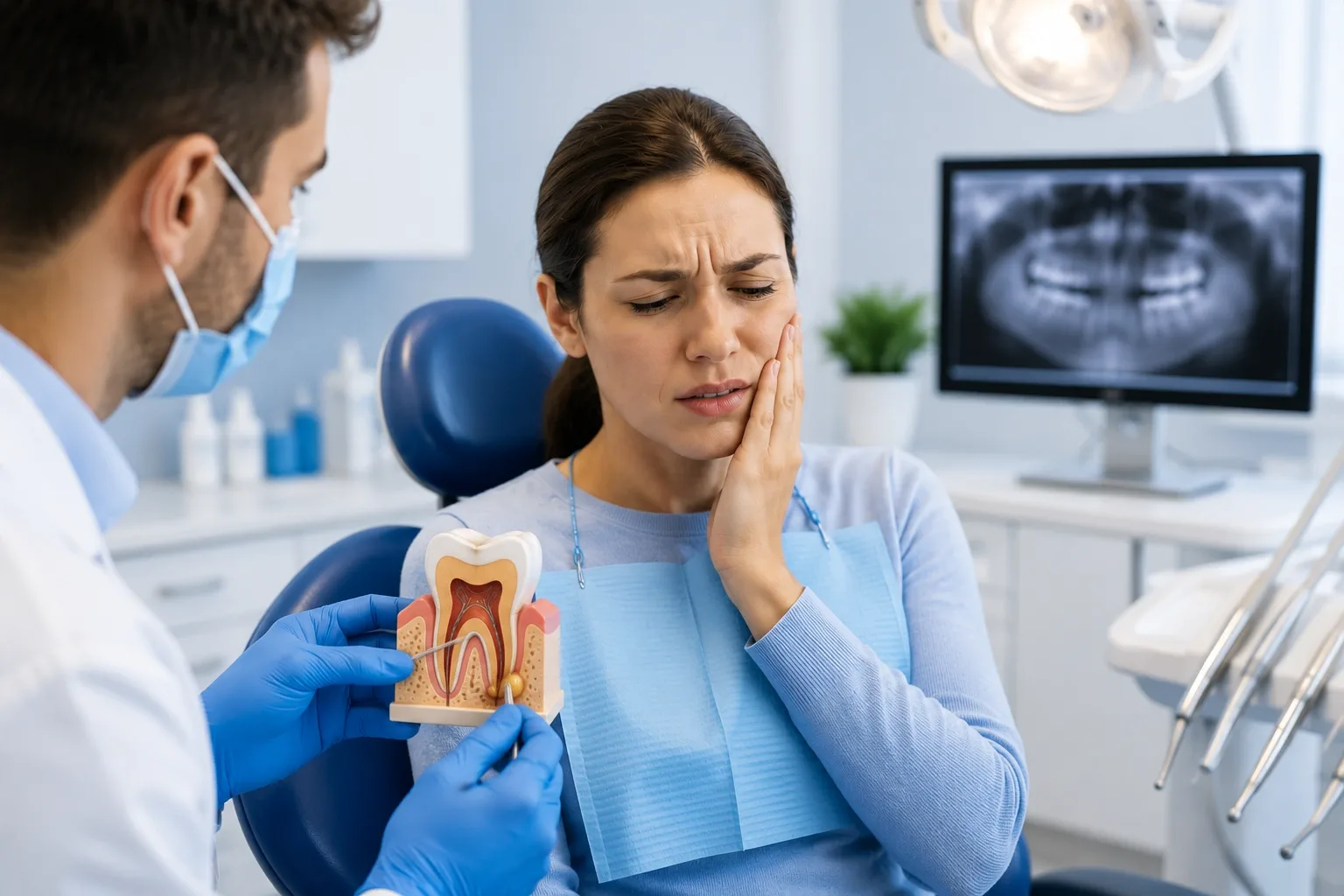
Most Australians have heard the "twice a year" rule. It is repeated on packaging, in waiting rooms, and by well-meaning relatives. But where did it come from, and is it actually right for everyone? The answer is more individual than the rule suggests and understanding why can make a meaningful difference to your long-term oral health.
This article breaks down what the evidence says about dental visit frequency, which factors change the calculation, and what happens when check-ups are skipped for too long.
Where the "Twice a Year" Rule Comes From
The twice-yearly recommendation has been in circulation since the mid-twentieth century. Its origins owe more to marketing than to clinical evidence American toothpaste companies promoted the idea in advertising campaigns, and it gradually became absorbed into mainstream dental guidance.
That is not to say six-monthly check-ups are wrong. For a large proportion of patients particularly those with a history of decay, gum disease, or restorative work attending every six months is genuinely appropriate and clinically sound. But it was never intended as a universal prescription. Current clinical thinking frames visit frequency as something that should be tailored to the individual patient rather than applied uniformly.
What the Right Frequency Actually Depends On
Your history of tooth decay. Patients who have experienced repeated decay are at higher ongoing risk and benefit from more frequent professional monitoring and cleaning. Early detection at three or four-monthly intervals can prevent fillings from becoming root canals, and root canals from becoming extractions.
Gum health and periodontal status. Periodontal disease is one of the most significant drivers of adult tooth loss in Australia. Patients who have been treated for gum disease typically require three to four-monthly maintenance visits to keep the condition stable, since the bacteria responsible re-colonise the pockets around teeth within weeks of a professional clean.
Your home care routine. A patient who flosses daily, brushes twice daily with correct technique, and has a clean dental history may require professional attention less frequently than someone with a more inconsistent routine. A thorough oral health assessment helps your dentist determine the right interval based on the actual condition of your mouth not a blanket schedule.
Age and life stage. Children's teeth are developing and changing rapidly, which warrants regular monitoring, typically every six months. Older patients face increased risks from dry mouth, root decay as gums recede, and restorative work that ages over time. Pregnant women experience elevated risk of gingivitis due to hormonal changes and are often recommended to attend more frequently during pregnancy.
Medical Conditions That Change the Calculation
Type 2 diabetes has a well-documented bidirectional relationship with gum disease each condition worsens the other, and patients with diabetes benefit from closer monitoring of their gum health throughout the year.
Certain medications cause dry mouth, which removes saliva's natural protective effect and raises decay risk considerably. Immunocompromised patients and those undergoing chemotherapy all require tailored monitoring schedules that go beyond the standard twice-yearly model.
Smoking elevates the risk of gum disease, oral cancer, and tooth loss substantially. Smoking also suppresses the bleeding response that typically signals gum disease masking symptoms until the condition is well advanced. More frequent professional assessment is warranted for current and recent smokers.
For Campbelltown residents managing any of these conditions, finding a dental clinic in Campbelltown that takes a thorough medical history at the first appointment and factors it into your ongoing care schedule is one of the most important things you can do for your long-term oral health. Bradbury Dental Surgery takes this approach with every patient, building a personalised maintenance plan that reflects actual clinical need rather than a one-size-fits-all interval.
What Happens When Check-Ups Are Skipped
Dental disease is largely silent in its early stages. Decay does not hurt until it reaches the nerve. Gum disease progresses without pain through its early and middle stages. Oral cancer is most successfully treated when detected early and early detection depends on regular clinical examination, not on symptoms appearing.
The practical consequence of skipping check-ups is not simply that small problems persist it is that small problems become large ones, often without any warning. A cavity that requires a straightforward filling at one appointment can progress to a root canal over eighteen months of delay. Bone loss from undetected gum disease is irreversible. These are not hypothetical risks they are the most common patterns seen in dental practices across the Macarthur region every week.
There is also a financial dimension. Preventive dental care consistently costs far less than restorative treatment for problems that were not caught early. Skipping appointments to save money is one of the most reliable ways to spend more on dentistry over time, not less. This is true whether you attend a dental centre in Campbelltown close to home, or travel further afield the cost of delay is the same.
What a Routine Check-Up Actually Involves
Many patients are uncertain about what happens during a standard check-up, which can contribute to avoidance. A thorough appointment at any reputable dental surgery typically includes:
- Visual examination of all teeth, gum tissue, and soft tissues including the tongue, cheeks, and floor of the mouth
- Oral cancer screening a brief but clinically important check that is easy to overlook without professional assessment
- Periodontal assessment, including measurement of gum pocket depths around each tooth
- X-rays at appropriate intervals based on individual risk, not necessarily at every visit
- A scale and clean to remove plaque and calculus that home brushing and flossing cannot address
- A clear summary of anything observed and recommendations for any treatment needed
The appointment typically takes between thirty and sixty minutes and, for patients with a stable oral health baseline, involves minimal discomfort.
How to Work Out the Right Schedule for You
The most accurate answer to how often you personally should attend comes from a dentist who has examined your mouth and reviewed your full history. A comprehensive new patient examination is the starting point for building a maintenance schedule that is genuinely suited to your risk profile.
If you are still in the process of finding the right practice, the guide on how to choose the right dentist in Campbelltown — what to actually look for covers accreditation, emergency access, fee transparency, and what to assess on a first visit. It is a practical starting point for anyone new to the area or looking to make a change.
Finding the Right Local Practice
For many people, the barrier to regular dental care is not motivation it is simply not having an established relationship with a practice nearby. Searching for a dentist near me or a local dental clinic is often the first step, but the result that appears first is not always the best fit for your needs. Location matters, but so does scope of services, accreditation, and whether the practice can provide continuity of care across your whole family over time.
The best dental care is the kind you actually attend. That means choosing a dental surgery that is convenient enough to visit consistently, communicates clearly, and has the clinical capability to handle your needs as they evolve from routine preventive care through to restorative and cosmetic treatment if required.
The twice-a-year rule is a reasonable starting point for many patients, but it was never the whole story. The patients who maintain the best oral health over decades attend at intervals suited to their own risk profile guided by a dentist who knows their history and monitors their progress over time. That kind of relationship begins with a single appointment, and the sooner it starts, the more it pays off.