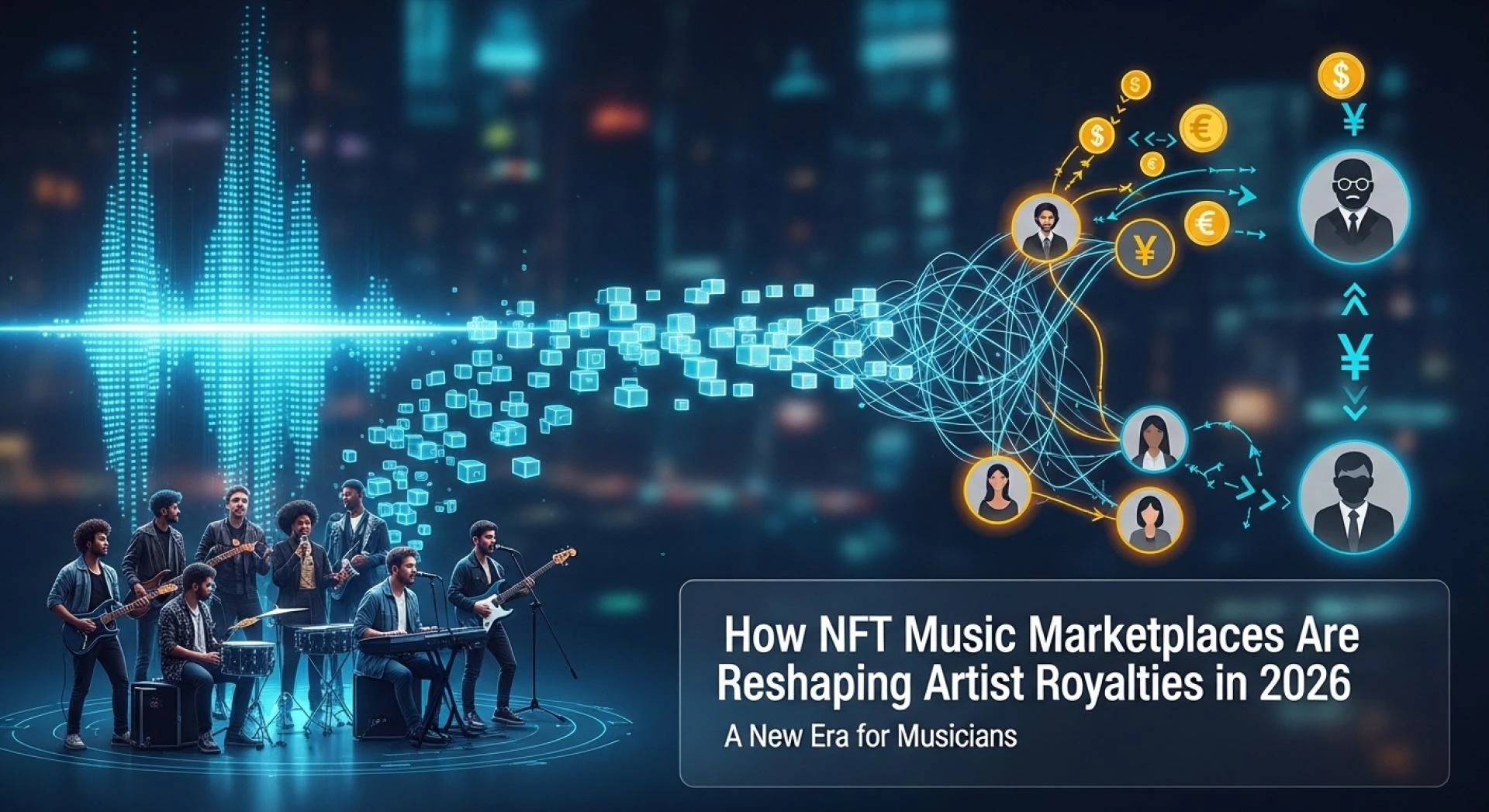
The music industry in 2026 stands at a decisive turning point where creators are no longer content with opaque royalty systems and delayed compensation. Artists now seek ownership structures that reward creativity fairly while fostering long-term relationships with their audiences. NFT-powered platforms have emerged as a practical response to these demands, offering programmable royalty models, transparent accounting, and direct-to-fan economics. As nft music marketplace development advances, it is becoming a foundational layer for sustainable music monetization rather than a niche innovation. This evolution reflects a broader industry shift toward accountability, decentralization, and trust-driven value exchange.
The Royalty Problem in Traditional Music Distribution
For decades, artist compensation has been shaped by systems designed for centralized control rather than creator equity. Traditional music distribution models rely on multiple intermediaries, each extracting value before revenue reaches the artist. While these structures enabled global reach, they also introduced inefficiencies, delayed payouts, and financial opacity. Many musicians in 2026 continue to face challenges verifying earnings or understanding how their work generates revenue. This structural imbalance explains why NFT music marketplace development is increasingly viewed as a corrective framework rather than a disruptive threat. As a result, many creators and industry stakeholders are actively evaluating solutions centered on NFT music marketplace development, where transparent royalty logic and decentralized ownership models address the limitations of legacy distribution frameworks
- Opaque payment structures: Royalty calculations often pass through several reporting layers, making them difficult to audit. Artists receive summaries rather than verifiable data, limiting financial clarity and strategic planning.
- Low per-stream payouts: Revenue models based on fractional cents per stream favor scale over artistic value. Independent musicians struggle to achieve sustainability despite consistent listener engagement.
- Loss of ownership rights: Many contracts require artists to surrender master or publishing rights. These agreements reduce long-term earning potential and limit future monetization opportunities.
- Delayed royalty cycles: Payment timelines stretching across months disrupt cash flow. This delay affects touring decisions, production planning, and overall career stability.
What Defines an NFT Music Marketplace in 2026
NFT music marketplaces in 2026 are sophisticated digital ecosystems rather than experimental platforms. They combine blockchain infrastructure with intuitive interfaces that allow artists to tokenize music assets, define royalty logic, and engage audiences directly. These marketplaces are designed to support scalability, compliance, and interoperability while prioritizing creator ownership. As nft music marketplace development matures, the focus has shifted toward long-term usability, sustainable economics, and seamless integration with existing music workflows.
- Tokenized music assets: Songs, albums, and exclusive content are minted as NFTs, creating verifiable digital ownership. Scarcity and authenticity are enforced at the protocol level.
- Smart contract royalty automation: Royalty rules are embedded into contracts that execute automatically. This eliminates manual tracking and ensures consistent, timely payments.
- Built-in fan engagement layers: Marketplaces include gated access, collectible tiers, and community utilities. These features strengthen artist–fan relationships beyond transactional listening.
- Cross-platform functionality: Modern platforms allow NFTs to move across wallets, virtual environments, and external applications without ecosystem lock-in.
How Blockchain Transparency Reshapes Royalty Trust
Trust has historically been one of the most fragile elements in the music economy. Artists often rely on third parties to report earnings without direct verification. Blockchain technology introduces a structural shift by making every transaction publicly auditable and tamper-resistant. This transparency addresses long-standing concerns around underreporting and delayed payments. As NFT music marketplace development incorporates transparent ledger systems, trust is no longer based on promises but on verifiable data.
- Immutable transaction records: Each sale or license is recorded permanently on-chain. Artists can track income streams without waiting for consolidated reports.
- Clear rights attribution: Ownership and contribution details are embedded within NFT metadata. This clarity reduces disputes in collaborative projects.
- Visible royalty logic: Smart contracts expose royalty percentages upfront. All stakeholders understand the terms before participating.
- Reduced reliance on intermediaries: Direct transactions lower administrative overhead while reinforcing accountability across the value chain.
New Royalty Models Enabled by NFT Music Marketplaces
NFT music marketplaces enable royalty structures that align compensation with real-world value creation. These models move beyond one-time payments and introduce programmable income streams that evolve with demand. By leveraging smart contracts, artists gain flexibility without renegotiating traditional agreements. Nft music marketplace development supports revenue experimentation while maintaining enforceable terms, making royalties adaptive rather than static.
- Perpetual resale royalties: Artists earn a percentage each time an NFT changes hands. Long-term value appreciation benefits creators directly.
- Fractional ownership structures: Music assets can be divided into shares, allowing fans to participate financially while artists retain control.
- Usage-based licensing payouts: Royalties trigger automatically when music is used in digital experiences, games, or virtual events.
- Performance-linked royalty logic: Contracts can adjust payouts based on engagement metrics, rewarding success transparently.
The Role of Decentralization in Artist Independence
Decentralization reshapes how artists manage careers, audiences, and income. Rather than relying on centralized platforms to dictate access and monetization, creators retain direct control over distribution and pricing. This autonomy strengthens creative freedom while reducing platform dependency. As nft music marketplace development emphasizes decentralized architecture, independence becomes operational rather than aspirational.
- Direct-to-fan monetization: Artists sell music and experiences without third-party gatekeeping, strengthening economic sovereignty.
- Global accessibility: Blockchain payments bypass regional barriers, enabling worldwide reach and faster settlements.
- Platform resilience: Decentralized storage reduces the risk of content removal or demonetization.
- Community-driven growth: NFT holders often become advocates, organically amplifying artist visibility.
Fan Participation and Shared Economic Value
NFT music marketplaces redefine audience relationships by aligning financial and emotional investment. Fans are no longer passive consumers but active participants in an artist’s ecosystem. This shared-value model fosters loyalty and long-term engagement. Nft music marketplace development emphasizes utility-driven ownership rather than speculation, strengthening trust between creators and supporters.
- Collectible-based loyalty systems: Limited editions and exclusive access deepen fan commitment.
- Revenue-sharing mechanisms: Some NFTs distribute future royalties, aligning fan success with artist growth.
- Transparent value exchange: Buyers understand ownership rights, access privileges, and resale conditions clearly.
- Sustained community ecosystems: Long-term engagement replaces short-term hype-driven sales cycles.
Integration with Existing Music Ecosystems
NFT music marketplaces increasingly complement traditional platforms rather than replacing them. Artists combine streaming reach with blockchain-based ownership layers to diversify income. This hybrid approach reduces risk while expanding monetization options. As nft music marketplace development prioritizes interoperability, integration becomes seamless rather than disruptive.
- Streaming coexistence: Artists continue releasing music on platforms like Spotify while offering NFTs as premium assets.
- Blockchain infrastructure support: Networks such as Ethereum provide scalable smart contract execution.
- Unified analytics insights: On-chain and off-chain data together inform strategic decisions.
- Rights management alignment: Blockchain records increasingly align with traditional copyright systems.
Strategic Implications for Artists and Industry Stakeholders
The rise of NFT music marketplaces reshapes industry roles and incentives. Labels, managers, and distributors adapt by offering services rather than controlling rights. Data-driven strategies replace intuition-based decisions. NFT music marketplace development signals a broader transition toward transparent, creator-centric economics.
- Evolving label functions: Labels focus on marketing and infrastructure support.
- Real-time data utilization: On-chain metrics inform touring and release planning.
- Revenue diversification: Artists reduce reliance on a single income source.
- Reputation-based valuation: Community trust influences long-term asset value.
Conclusion
By 2026, NFT music marketplaces represent a mature response to long-standing royalty challenges. Through transparency, programmable economics, and decentralized ownership, they offer artists sustainable alternatives to traditional compensation systems. NFT music marketplace development continues to refine how value flows between creators and audiences, reinforcing trust and accountability. While challenges persist, the shift toward fairer, data-driven royalties positions NFT music marketplaces as a defining force in the future of the music industry.