
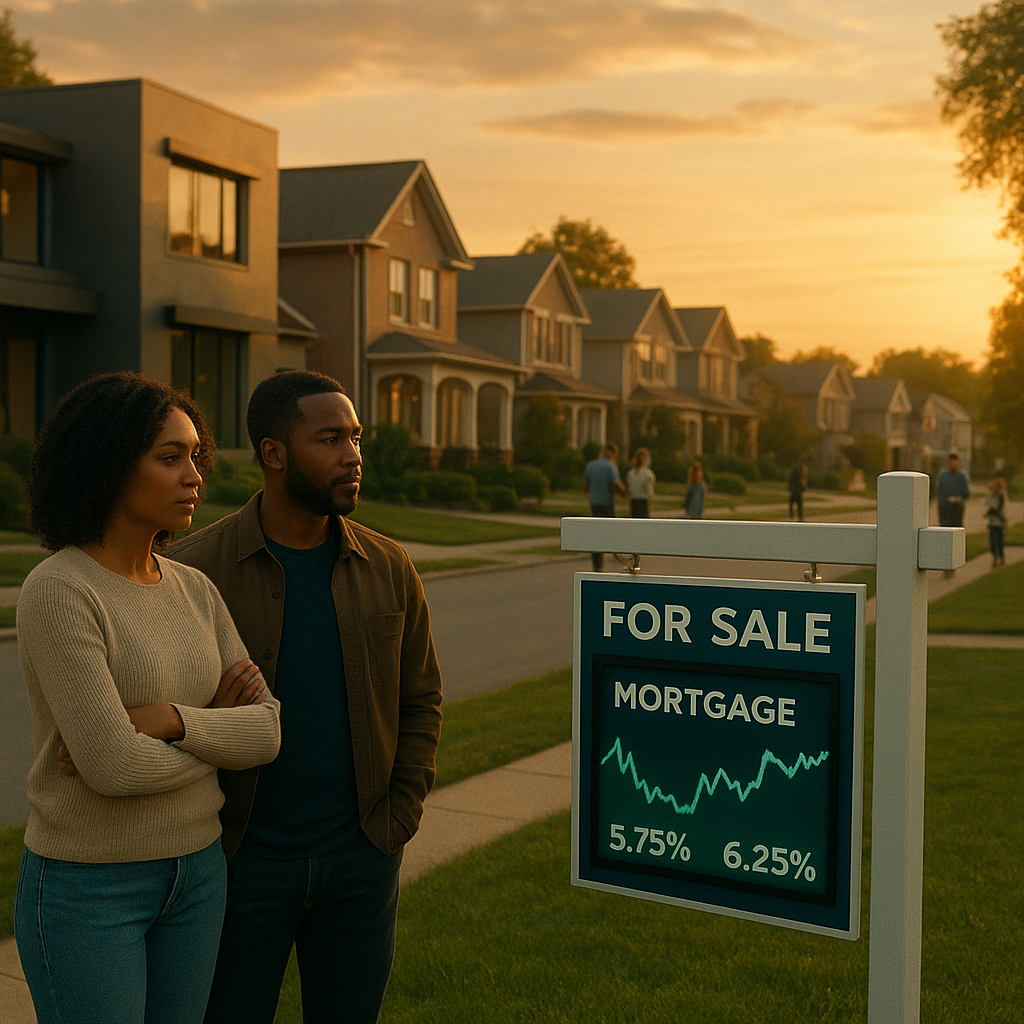
Opening the Door: A Snapshot of Mortgage Rates in Early 2026
In the spring of 2026, the U.S. housing market finds itself at a pivotal moment. After years of fluctuating mortgage rates driven by economic uncertainty and shifting Federal Reserve policies, homebuyers and lenders alike face a new normal. The average 30-year fixed mortgage rate, once hovering near historic lows in the early 2020s, has settled in a range between 6.5% and 7.0% according to recent data from Freddie Mac. While this may seem steep compared to the 2–3% rates seen a few years ago, it represents a stabilization following sharp hikes in 2024 and 2025. This rate environment is reshaping the calculus of homeownership, influencing affordability, and redefining buyer behavior.
Consider the case of a typical first-time buyer in Chicago. With a $350,000 home purchase, a 7% mortgage rate translates to a monthly principal and interest payment roughly $400 higher than a 4.5% rate would have, significantly affecting budgeting and loan qualification. This reality is echoed nationwide, where mortgage rates have become a decisive factor in market activity. The question many are asking is: What are the forces driving these rates, and how will they evolve in the coming months?
“Mortgage rates in 2026 reflect a delicate balance between inflation control and economic growth, forcing buyers to rethink strategies and lenders to innovate.” – Senior Analyst, Housing Finance Institute
Tracing the Roots: How We Arrived at Today’s Mortgage Rates
To grasp the current mortgage rate landscape, one must look back over the last five years. The early 2020s were marked by unprecedented low interest rates, driven by Federal Reserve policies aimed at supporting economic recovery post-pandemic. From 2020 through 2022, 30-year fixed mortgage rates hovered around 3% or lower, fueling a surge in homebuying and refinancing. However, this rapid demand contributed to overheated home prices and rising inflation.
By mid-2023, inflationary pressures forced the Federal Reserve to aggressively increase the federal funds rate. These hikes, alongside global economic uncertainties and supply chain disruptions, pushed mortgage rates upward. The 30-year fixed rate climbed steadily, peaking near 8% in late 2024. The housing market responded with cooling sales and price adjustments, marking a shift from the frenzied buying of earlier years.
In 2025, gradual easing of inflation and cautious Fed actions led to a modest decline in mortgage rates. Investors’ appetite for mortgage-backed securities grew, improving liquidity and slightly lowering borrowing costs. However, rates have remained elevated compared to the decade prior, reflecting a new baseline influenced by persistent inflation expectations, geopolitical considerations, and changing monetary policy frameworks.
“The transition from ultra-low to moderate mortgage rates is a structural shift, not just a cyclical blip.” – Economist, National Association of Realtors
Inside the Numbers: Current Data and Market Comparisons
As of April 2026, the average 30-year fixed mortgage rate stands at approximately 6.8%, while 15-year fixed loans hover near 6.1%. Adjustable-rate mortgages (ARMs) have gained slight traction, with 5/1 ARMs averaging 5.9%, as buyers seek to hedge against long-term rate risk. The spread between mortgage rates and the 10-year Treasury yield, a key benchmark, has narrowed to around 1.5 percentage points, indicating tightened mortgage market conditions.
Several key data points illustrate the evolving mortgage landscape:
- Mortgage originations: Down roughly 20% compared to 2023 levels, reflecting more cautious lending and borrower sensitivity to rates.
- Refinancing activity: At a multi-year low, as fewer homeowners benefit from rate reductions.
- Home affordability index: Declined to its lowest point since 2012, driven primarily by higher borrowing costs.
Regionally, mortgage rates vary modestly due to local economic conditions and lender competition. For example, competitive markets like Texas and Florida have seen slightly lower average rates, while high-demand urban centers such as San Francisco and New York report rates at or above the national average.
The contrast with previous years is stark. In 2021, the 30-year fixed rate averaged 2.8%, and the refinancing boom reached record heights. Today’s environment demands a recalibration from buyers, sellers, and lenders alike.
2026 Developments: Innovations and Policy Impact
Recent months have witnessed notable shifts in both policy and mortgage product offerings. The Federal Reserve’s more transparent communication strategy has helped stabilize market expectations around interest rates. Meanwhile, government initiatives aimed at expanding affordable housing supply indirectly influence mortgage dynamics by addressing supply constraints.
Lenders have responded by innovating products to attract qualified buyers despite higher rates. Hybrid ARMs, interest-only loans with caps, and expanded down payment assistance programs are gaining attention. Digital mortgage platforms leveraging AI and blockchain technologies have reduced processing times and underwriting costs, partially offsetting rate-related affordability challenges.
Additionally, environmental, social, and governance (ESG) considerations are increasingly integrated into mortgage underwriting. Green mortgages offering lower rates for energy-efficient homes are beginning to carve out a niche, appealing to eco-conscious buyers and supporting sustainability goals within the real estate sector.
“Technological advances and policy support are vital in keeping homeownership accessible amid rising rates.” – CEO, National Mortgage Lenders Association
Expert Perspectives on the 2026 Mortgage Rate Environment
Industry experts emphasize that while mortgage rates have risen, the market is adapting. Mortgage brokers highlight a growing emphasis on financial literacy and customized loan solutions. Real estate agents report that buyers are more deliberate, often opting for smaller homes or different neighborhoods to manage monthly costs.
Financial planners recommend locking rates early in volatile periods and exploring ARMs cautiously. Economists caution that inflation remains a wildcard, with potential to push rates higher if supply-side shocks or geopolitical tensions intensify.
For investors, the higher rate environment changes the calculation for rental property acquisitions, with cap rates adjusting accordingly. Multifamily housing demand remains robust as some prospective buyers opt to rent longer due to affordability constraints.
- Mortgage industry adaptation includes:
- Enhanced borrower education on rate impacts
- Greater use of AI-driven risk assessments
- Expansion of niche lending products
These trends underscore the complexity of navigating mortgage rates in 2026, where strategic flexibility is paramount.
Looking Ahead: What Buyers and Lenders Should Monitor
With the economy in flux, several factors merit close observation:
- Inflation trajectory: Sustained inflation above the Fed’s 2% target could trigger further rate hikes.
- Fed policy signals: Upcoming meetings will clarify the central bank’s approach amid mixed economic data.
- Housing supply improvements: Increased inventory could ease price pressures, partially mitigating rate impact.
- Technological adoption: Continued innovation may lower transaction costs and improve loan accessibility.
- Geopolitical events: Global instability could influence capital markets and risk premiums.
Homebuyers should evaluate their financial resilience, consider locking rates where possible, and explore alternative financing options. Lenders must balance risk with competitive offerings while maintaining regulatory compliance. Policymakers face the challenge of promoting affordability without compromising financial stability.
For a deeper understanding of mortgage rates’ influence on homeownership, readers can explore Why Mortgage Rates Are Shaping the Future of Homeownership and Avoiding Costly Pitfalls: Common Mistakes in Understanding Mortgage Rates on TheOmniBuzz.
Case in Point: Navigating Mortgage Decisions Amid Rising Rates
Consider Sarah and Mike, a young couple in Denver looking to buy their first home in 2026. Initially hopeful for a traditional 30-year fixed loan, they quickly realized that at current rates, their budget was stretched thin. After consulting a mortgage advisor, they explored a 5/1 ARM with a lower initial rate, combined with a down payment assistance program targeted at first-time buyers.
This strategic adjustment allowed them to afford a modest home without compromising savings goals. Their case reflects broader trends where flexibility and informed decision-making are key to overcoming affordability hurdles.
Similarly, lenders like Horizon Bank have launched educational webinars and personalized loan products to support buyers navigating the new rate environment. These efforts highlight the importance of collaboration across the housing ecosystem.
“Buyers who adapt their financing strategies in 2026 will find opportunities despite higher rates.” – Mortgage Advisor, Horizon Bank
Conclusion: Embracing Change in Mortgage Markets
Mortgage rates in 2026 are no longer a background factor but a central element shaping housing market dynamics. Their evolution reflects a complex interplay of macroeconomic forces, policy decisions, and technological innovation. Buyers, lenders, and policymakers must remain vigilant and adaptable to thrive in this environment.
While challenges persist, emerging tools, informed strategies, and evolving products offer pathways to homeownership and investment. Understanding the nuances of mortgage rates today is essential to making sound real estate decisions tomorrow.