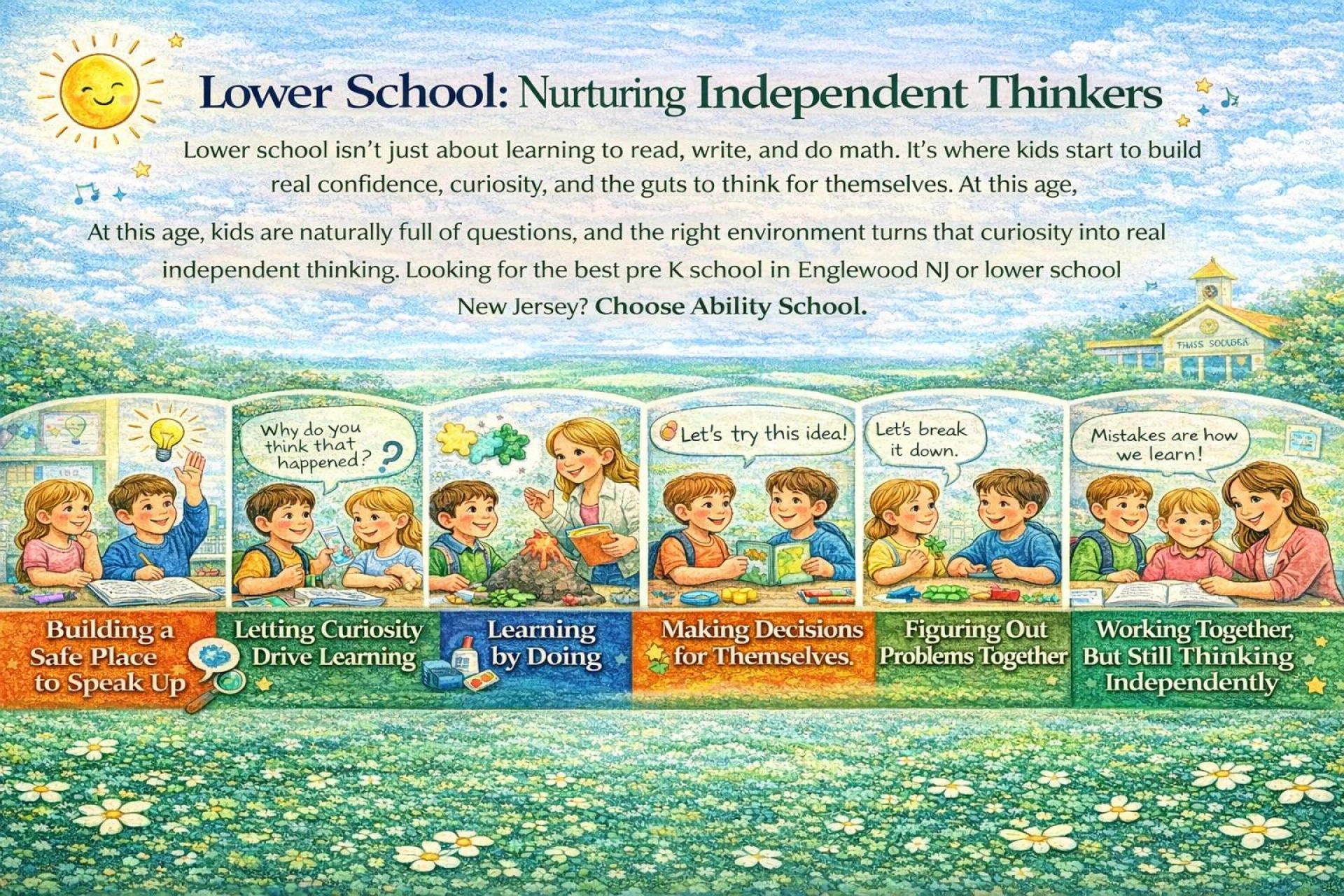
Lower school isn’t just about learning to read, write, and do math. It’s where kids start to build real confidence, curiosity, and the guts to think for themselves. At this age, kids are naturally full of questions, and the right environment turns that curiosity into real independent thinking. When schools give kids chances to explore, talk things through, and actually reflect on what they’re learning, you see them forming opinions, solving problems in new ways, and really owning their learning. Looking for the best pre k school in englewood nj or lower school in New Jersey? Choose Ability School.
Building a Safe Place to Speak Up
Independent thinking can’t happen if kids are scared to share what’s on their minds. In a good lower school classroom, teachers make it clear that it’s okay to speak up—even if you’re not sure you’re right. When kids feel heard, they’re more likely to ask questions, push back against ideas, and share their own take on things. That kind of support builds real confidence and shows them that school isn’t just about memorizing the “right” answer—it’s about looking for possibilities.
Letting Curiosity Drive Learning
Kids at this age are naturally curious, and great lower school teachers make the most of that. They don’t just give out answers; they ask open-ended questions that get kids thinking. Stuff like “Why do you think that happened?” or “What would you do instead?” These questions make kids analyze, reflect, and come up with their own conclusions. Over time, questioning becomes a habit, and that’s how critical thinking starts to stick.
Learning by Doing
Hands-on learning matters. When kids get to experiment, work on projects, write stories, or solve problems together, they’re actively exploring instead of just listening. They try things, make mistakes, try again—and realize that independent thinking means messing up, figuring things out, and not giving up. These moments help them get creative and feel more capable every day.
Making Decisions for Themselves
Lower school teachers give kids real choices—what book to read, what topic to research, how to share their work. These choices might seem small, but they teach kids responsibility. Deciding for themselves helps them weigh options, think through outcomes, and stand behind what they pick. It’s how they start learning to make thoughtful decisions without someone always telling them what to do.
Figuring Out Problems Together
Problem-solving sits right at the center of independent thinking. Whether it’s a tricky math puzzle or a group project, kids are encouraged to look for answers themselves. Teachers guide them—helping them figure out what the problem actually is, brainstorm ideas, and see which solutions work. This process teaches kids that every challenge is a chance to think for themselves and get creative.
Taking Time to Reflect
Reflection is big, too. When kids stop and think about what worked, what didn’t, and what they’d do differently next time, they start to really understand their own thinking. It’s not just about doing the work—it’s about looking back and learning from it. Self-assessment helps them see what they’re good at and where they can grow, and that’s how they start to take charge of their own learning.
Working Together, But Still Thinking Independently
Teamwork matters, and lower school is full of group activities. But working together doesn’t mean everyone thinks the same way. When kids listen to each other and share their own ideas, they start to see different perspectives and sharpen their own thinking. That balance—being part of a group but still holding onto your own voice—builds both confidence and independence.
Growing Confidence and Resilience
Kids need to believe in themselves to think independently. Lower school teachers play a huge role here—they cheer on effort, celebrate every bit of progress, and help kids bounce back from mistakes. When kids understand that messing up is just part of growing, they’re more willing to try new things and stick with tough challenges. Confidence and resilience give them the freedom to be bold, creative, and true to themselves.
Setting the Stage for Lifelong Learning
The independent thinking skills kids pick up in lower school go way beyond these early years. Kids who learn to question, reflect, and analyze end up as lifelong learners. They grow into people who can make smart decisions, handle change, and tackle problems with energy and creativity.
Bottom line: lower school is where independent thinking really begins. With supportive teachers and hands-on learning, kids start planting the seeds for a lifetime of curiosity and confidence.