If you've spent any time researching power setups for your caravan or camper trailer, you've probably heard a lot about lithium batteries. Everyone seems to be making the switch, and for good reason. But how do they actually work? And are they really worth the upgrade over a traditional AGM or lead-acid setup?
Let's break it all down in plain English so you can make a confident decision for your next adventure.
What Makes a Lithium Battery Different?
At its core, a lithium battery for caravan use is built around lithium iron phosphate chemistry — often written as LiFePO4. This is different from the old-school lead-acid or AGM batteries that most Aussie caravanners have been using for decades.
The biggest difference comes down to energy density and usable capacity. A standard AGM battery can only be safely discharged to about 50% of its rated capacity before you risk damaging it. A lithium battery, on the other hand, can be discharged to around 80–90% without any harm to the cells. That means a 100Ah lithium battery effectively gives you more usable power than a 100Ah AGM — sometimes nearly double, in real-world terms.
For anyone spending nights off-grid, that extra capacity makes a genuine difference.
How Do Lithium Batteries Actually Work?
Lithium iron phosphate batteries work by moving lithium ions between a positive cathode and a negative anode during charging and discharging. When you draw power from the battery — say, to run your fridge, lights, or 12V appliances — lithium ions move from the anode to the cathode. When you charge it back up via solar, mains power, or your tow vehicle's alternator, those ions move back.
What makes this chemistry stand out is its stability. LiFePO4 is one of the safest lithium chemistries available because it doesn't overheat or go into thermal runaway the way older lithium-ion types can. That's a big deal when you're parked out in the Australian sun.
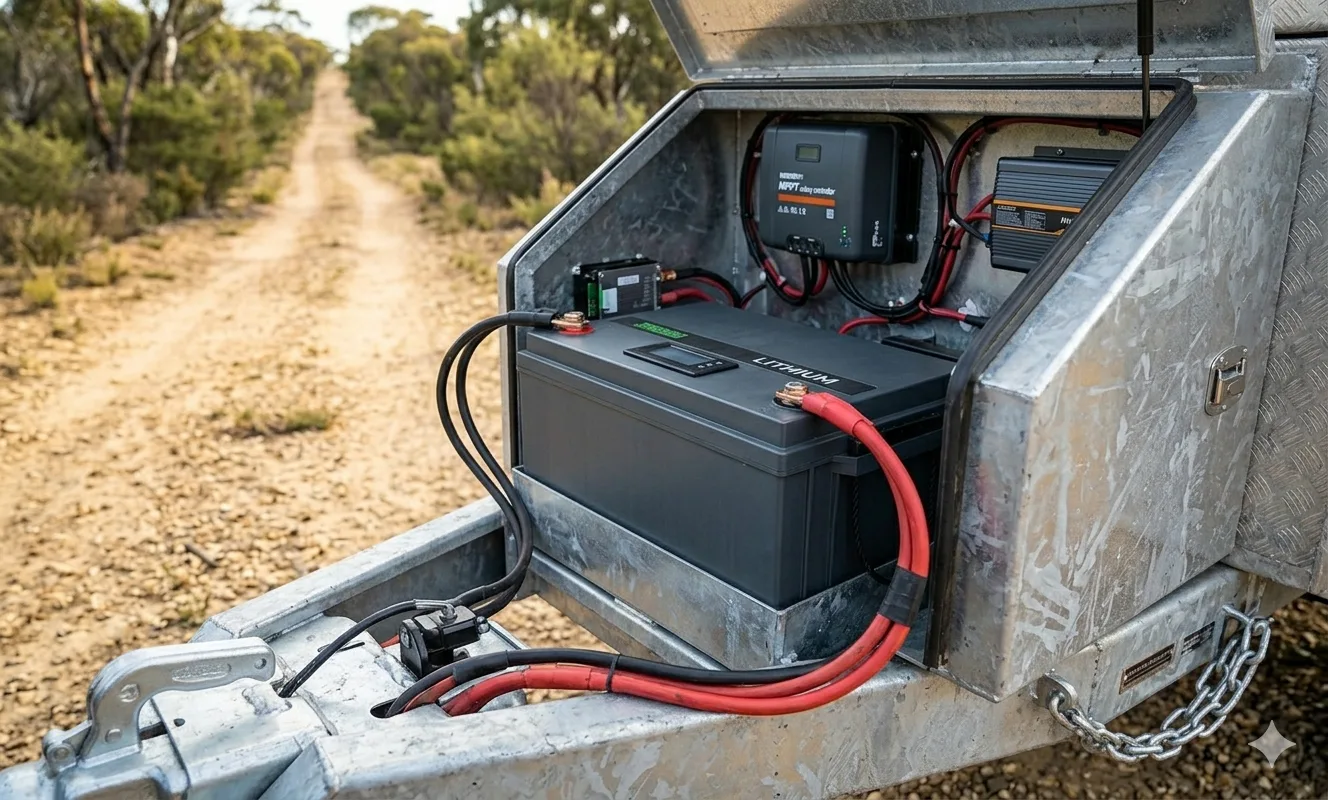
Every quality lithium battery for camper trailer or caravan use also includes a Battery Management System, or BMS. This small but critical piece of technology monitors cell voltage, temperature, and current in real time. If something goes wrong — like overcharging, excessive discharge, or a short circuit — the BMS steps in and protects the battery automatically. Think of it as the brain of the whole system.
How Lithium Batteries Integrate Into a Caravan Power System
A lithium battery doesn't work in isolation. It's part of a broader 12V system that includes your charging sources, your loads (appliances), and sometimes an inverter for 240V power. Understanding how these pieces connect is key to getting the most out of your setup.
Charging from solar is one of the most popular options for off-grid travellers. Solar panels on the roof feed power into a solar charge controller (MPPT or PWM), which then charges the battery. Lithium batteries charge faster and more efficiently than AGM, and they accept a higher charge current, which means your solar panels spend less time topping them up and more time filling the bank.
Charging from your vehicle is also common, especially on the move. A DC-DC charger — also called a battery-to-battery charger — is the right way to do this with lithium batteries. Older setups used simple isolators, but lithium's higher charge acceptance means a DC-DC charger is necessary to charge properly and protect your vehicle's alternator from being overloaded.
Mains charging via a 240V charger or an AC-to-DC converter is also an option when you're on a powered site. Again, you'll want a charger that's specifically rated for lithium chemistry, as the charging profile is different from AGM.
The Real-World Benefits for Caravan and Camper Trailer Owners
There's a reason so many people are choosing lithium batteries for caravans these days. The practical advantages add up quickly.
Lithium batteries are significantly lighter than their AGM equivalents. A 100Ah AGM battery can weigh anywhere from 25–30kg, while a lithium equivalent might come in at 10–13kg. For caravan and camper trailer owners watching their tow weight carefully, that saving matters a lot.
They also last much longer. A quality LiFePO4 battery is typically rated for 2,000 to 3,000 charge cycles or more, compared to around 300–500 for a lead-acid battery. When you spread that cost over the years, lithium often works out cheaper in the long run, even though the upfront price is higher.
Flat discharge performance is another area where lithium wins. AGM batteries drop in voltage as they discharge, which means your 12V fridge or compressor starts working harder as the day goes on. A lithium battery holds a much steadier voltage all the way down, which is better for your appliances and more efficient overall.
And there's almost zero maintenance. No checking electrolyte levels, no equalisation charges — just plug it in, use it, and let the BMS do its job.
Things to Consider Before You Buy
Switching to a caravan lithium battery isn't as simple as just swapping out your old battery for a new one. There are a few things worth thinking through first.
Your charger needs to be lithium-compatible. A standard AGM charger might not deliver the correct charge profile for lithium cells, which can reduce performance or cause long-term issues. Check your solar charge controller, DC-DC charger, and mains charger to make sure they all support LiFePO4.
You'll also want to consider your total power requirements. Lithium batteries are an investment, so it's worth sizing your system properly from the start. Think about how many nights you spend off-grid, what appliances you're running, and how much solar you have available. Getting this balance right means you won't be left short on a long trip.
Temperature is another factor. While LiFePO4 is more tolerant than other lithium types, most batteries have a recommended temperature range for charging. Some premium models include low-temperature protection built into the BMS, which prevents charging in very cold conditions that could damage the cells.
Choosing the Right Lithium Battery for Your Setup
Not all lithium batteries are created equal. The market has grown fast, and there's a big difference between a quality, well-supported product and a cheap alternative that might let you down in the middle of nowhere.
Look for batteries that include a proper BMS with built-in protections, a solid cycle life rating, and a warranty that backs up the manufacturer's claims. Bluetooth monitoring is a handy feature on many modern lithium batteries, letting you check state of charge, voltage, and temperature from your phone without lifting a panel.
If you're ready to explore quality lithium battery options for your caravan or camper trailer, Trailer Camper Australia stocks a range of reliable lithium batteries suited to Australian conditions. Whether you're setting up a simple weekender or a fully off-grid touring rig, having the right battery is the foundation of a system that'll actually work when you need it.
Final Thoughts
Lithium batteries have genuinely changed what's possible for off-grid travel in Australia. More usable capacity, faster charging, longer lifespan, and less weight — it's a compelling package for anyone serious about time away from the powered sites.
Understanding how they work and how they fit into your overall power system helps you buy smarter and get more out of every trip. Whether you're upgrading an existing setup or building a new one from scratch, a quality lithium battery for camper trailer or caravan use is one of the best investments you can make in your rig.