
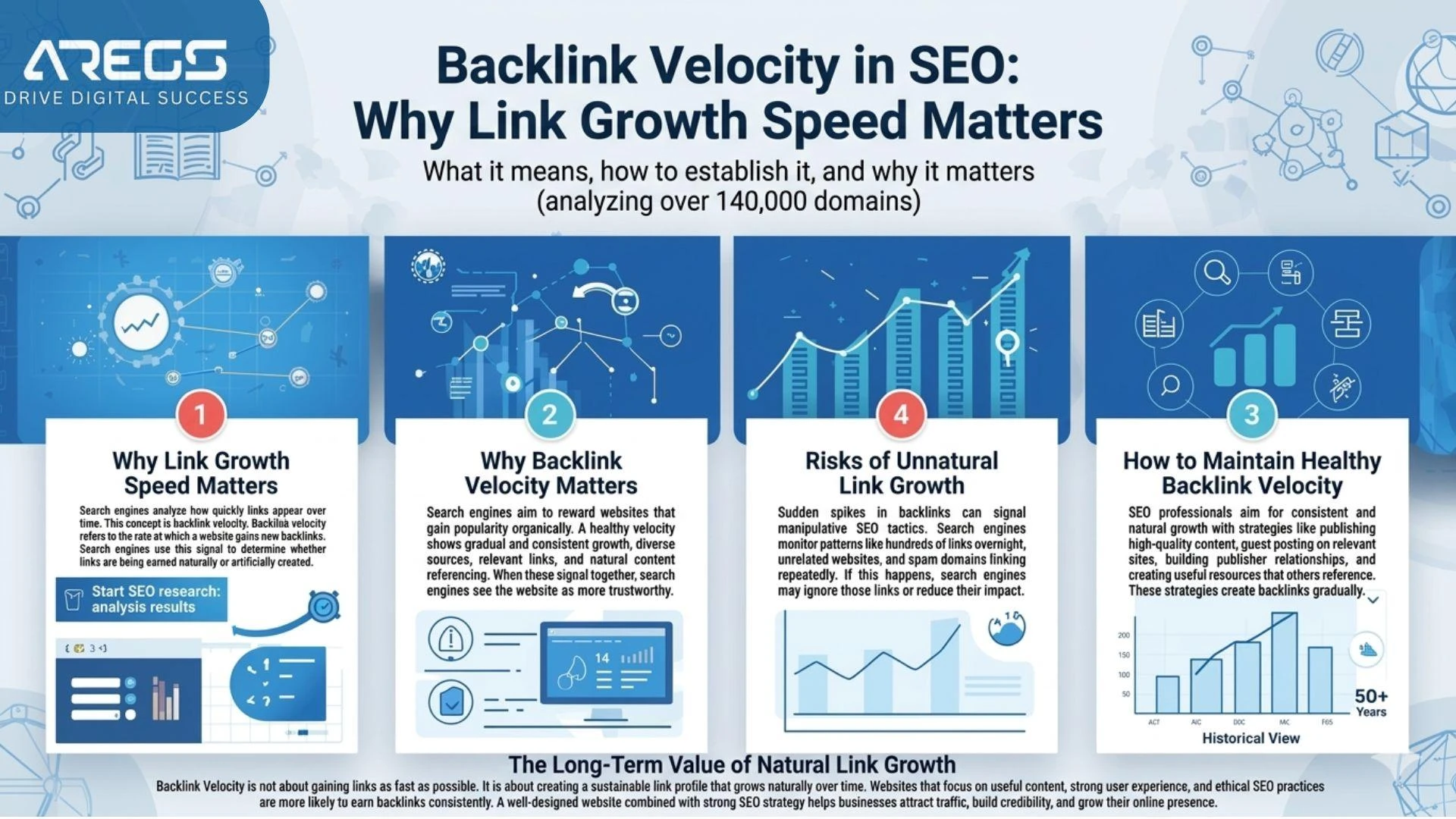
Why Link Growth Matters in SEO: Understanding Backlink Velocity
Backlinks remain one of the most important signals used by search engines to evaluate a website’s credibility. However, SEO today is not just about the number of backlinks a website has. Search engines also pay attention to how quickly those backlinks are acquired, a concept known as backlink velocity.
Backlink velocity refers to the rate at which a website gains new backlinks over time. A natural link growth pattern helps search engines understand that the website is gaining attention organically.
What Is Backlink Velocity?
Backlink velocity measures how fast a website gains new backlinks during a specific period. For example, if a website consistently earns links from blogs, articles, and industry websites, it shows steady growth.
Search engines analyze link patterns to determine whether the backlinks appear natural or artificially created.
Why Backlink Velocity Matters for SEO
A healthy backlink velocity can significantly influence a website’s long-term SEO performance.
Key reasons why it matters include:
• Search engine trust – Gradual link growth signals credibility and authority.
• Improved rankings – High-quality backlinks help websites rank better in search results.
• Natural link profile – Consistent link acquisition appears more authentic to search engines.
• Long-term SEO stability – Natural backlink growth reduces the risk of penalties.
Signs of Healthy Backlink Growth
A strong backlink strategy focuses on quality and consistency rather than speed.
Some characteristics of healthy backlink velocity include:
- Backlinks coming from relevant and authoritative websites
- Links gained steadily over time instead of sudden spikes
- A diverse range of linking domains
- Content that naturally attracts references from other websites
Risks of Unnatural Backlink Velocity
Sudden spikes in backlinks can sometimes raise concerns for search engines. This may happen when websites rely on aggressive or automated link-building tactics.
Common risky practices include:
• Buying large volumes of backlinks
• Using automated link-building tools
• Getting links from irrelevant or spam websites
• Building hundreds of links within a short time
These patterns may cause search engines to ignore the links or reduce their SEO value.
How Businesses Can Maintain Healthy Backlink Velocity
Instead of focusing on fast link acquisition, businesses should focus on sustainable link-building strategies.
Some effective approaches include:
- Publishing high-quality and informative content
- Guest posting on relevant industry websites
- Building relationships with bloggers and publishers
- Promoting content through digital marketing and social media
These strategies help create backlinks naturally and support long-term SEO growth.
Final Thoughts
Backlink velocity helps search engines understand how naturally a website is gaining authority online. Instead of focusing on acquiring a large number of backlinks in a short time, businesses should aim for steady and consistent link growth.
A strong backlink strategy should focus on:
• Building links from relevant and trustworthy websites
• Publishing valuable content that naturally attracts backlinks
• Maintaining consistent link growth over time
• Prioritizing quality over quantity in link building
• Avoiding spammy or automated backlink techniques
When backlinks grow naturally, search engines are more likely to view the website as credible and authoritative. Over time, this approach helps improve rankings, strengthen domain authority, and support long-term SEO success.