
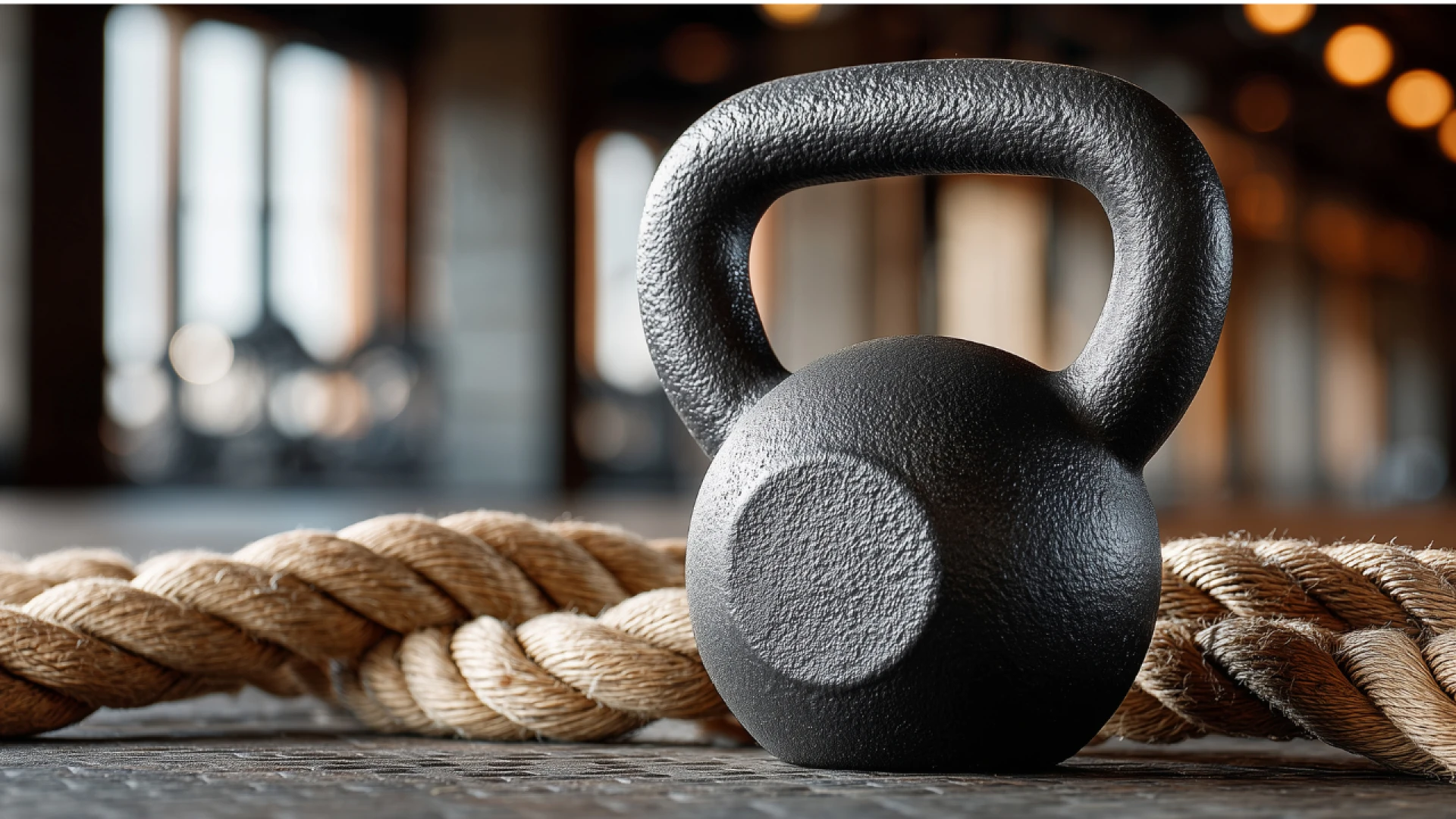
In the pursuit of functional fitness, few tools are as versatile as the kettlebell. Its unique design—a cast-iron or steel weight with a handle—offers more than just resistance training. Kettlebells challenge the body in multiple planes of motion, demanding coordination, stability, and controlled strength. This combination makes them particularly effective for improving both muscular strength and balance, essential components of overall physical health.
Unlike traditional weightlifting, which often isolates specific muscle groups, kettlebell exercises integrate the whole body. Movements such as swings, cleans, and Turkish get-ups recruit the core, legs, back, and shoulders simultaneously. This not only builds strength but also enhances neuromuscular coordination, allowing the body to stabilize under dynamic conditions.
Scientific studies and practical experience show that incorporating these tools into regular workouts can improve posture, functional mobility, and proprioception—the awareness of the body’s position in space. For individuals seeking more than just muscle growth, kettlebell training presents a compelling way to enhance strength and balance concurrently.
The Mechanics of Kettlebell Training
Kettlebell movements differ fundamentally from traditional dumbbell or barbell exercises. The offset center of mass requires continuous engagement of stabilizing muscles. Even a simple swing involves coordinated action between the hips, core, and shoulders to control the momentum safely.
Core Engagement and Stability
The core plays a central role in maintaining balance and generating power during kettlebell exercises. As the weight moves through different trajectories, muscles in the abdomen and lower back activate to stabilize the spine. Over time, this consistent engagement strengthens the deep stabilizing muscles, which are critical for balance and injury prevention.
Dynamic Strength Development
Unlike static lifts, many kettlebell exercises involve acceleration and deceleration phases, challenging both concentric and eccentric muscle contractions. For instance, the downward phase of a swing requires controlled braking of the weight, which strengthens posterior chain muscles and improves overall muscular coordination. This dynamic element contributes to functional strength applicable in daily activities and sports.
Enhancing Balance Through Movement
Balance is not solely about standing on one leg; it encompasses the ability to maintain control during movement. Kettlebell exercises challenge proprioception, requiring constant micro-adjustments to remain stable. The swinging motion, rotational lifts, and single-leg exercises activate stabilizers in the hips, ankles, and core simultaneously.
Unilateral Exercises for Symmetry
Single-arm or single-leg variations of traditional kettlebell moves encourage unilateral strength development. By working one side of the body at a time, these exercises help identify and correct muscular imbalances, which are often hidden during bilateral movements. Improved symmetry not only enhances aesthetic muscle balance but also reduces the risk of falls and injury.
Proprioceptive Training
Certain kettlebell exercises, like the Turkish get-up, demand sequential control from lying down to standing while holding a weight overhead. This complex movement develops proprioceptive awareness, teaching the nervous system to coordinate multiple joints under load. Over time, this translates to better body control in athletic settings and everyday activities.
Cardiovascular and Muscular Synergy
While often viewed as a strength tool, kettlebells also offer cardiovascular benefits. Continuous, rhythmic movements such as swings or snatches elevate heart rate while simultaneously engaging multiple muscle groups. This dual demand improves endurance and stamina, making the body more resilient and capable of maintaining balance under prolonged activity.
Integrated Fitness Approach
By combining strength, balance, and cardiovascular conditioning, kettlebell training aligns closely with the principles of functional fitness. Functional strength emphasizes the ability to perform real-world tasks safely and efficiently. For example, the explosive hip drive in a swing mirrors movements like lifting a heavy object from the ground, while stabilizing overhead holds mimic reaching or carrying activities.
Injury Prevention and Postural Benefits
Improved balance and strength contribute directly to reduced injury risk. Strong stabilizers and proper movement patterns help maintain joint integrity and prevent compensatory strains. Kettlebell training often emphasizes hip hinge mechanics, which support lower back health, and shoulder stability, which protects the rotator cuff during overhead movements.
Additionally, the postural engagement required to control weight through different planes of motion encourages upright posture and spinal alignment. Over time, these adaptations can reduce the incidence of chronic musculoskeletal discomfort, particularly in sedentary populations.
Conclusion
Kettlebell training offers a distinctive combination of strength development and balance enhancement. Its dynamic, full-body movements engage stabilizing muscles, improve proprioception, and foster functional fitness. Beyond the aesthetic or performance benefits, this training modality encourages safer movement patterns and better control over the body in everyday life. For individuals seeking a holistic approach to physical development, integrating kettlebell exercises provides measurable improvements in both power and stability.
FAQs
How often should I train with kettlebells for optimal results?
Training 2–4 times per week is generally effective for strength and balance improvement, allowing adequate recovery between sessions.
Are kettlebell exercises suitable for beginners?
Yes, beginners can start with light weights and basic movements, gradually progressing to more complex exercises as strength and coordination improve.
Can kettlebell training improve balance in older adults?
Absolutely. The focus on stabilizers and proprioception makes kettlebell exercises highly beneficial for maintaining mobility and reducing fall risk in aging populations.
Do I need a gym to use kettlebells effectively?
No. Many kettlebell exercises can be performed at home with minimal space, requiring only a suitable weight and safe flooring.
Is kettlebell training better than traditional weightlifting?
It depends on goals. While traditional weightlifting excels at maximal strength, kettlebell training offers functional strength, endurance, and balance benefits simultaneously, complementing other forms of training.