The hiring process is evolving as artificial intelligence becomes more accessible to both recruiters and job applicants. HR teams are using digital tools to manage applications, organize candidate information, and improve recruitment workflows. At the same time, candidates can use AI to write resumes, prepare application answers, and practice interview responses.
This creates new opportunities for hiring teams, but it also introduces an important challenge: how can recruiters identify candidates who genuinely possess the skills required for a role?
In 2026, AI in recruitment is not just about making hiring faster. It is also about improving the quality of candidate evaluation, verifying practical abilities, and supporting fair, evidence-based hiring decisions.
1. AI Is Changing How Recruiters Evaluate Candidates
Traditional recruitment often begins with reviewing resumes and comparing candidates' qualifications, experience, and skills. However, AI writing tools can now help applicants create polished resumes and tailor their applications to specific job descriptions.
Although a well-written resume can communicate experience effectively, presentation alone may not provide enough evidence of a candidate's actual ability.
Recruiters increasingly need ways to evaluate what applicants can do rather than relying exclusively on how well they describe their skills. Job-relevant assessments, practical exercises, and structured interviews can help provide additional evidence.
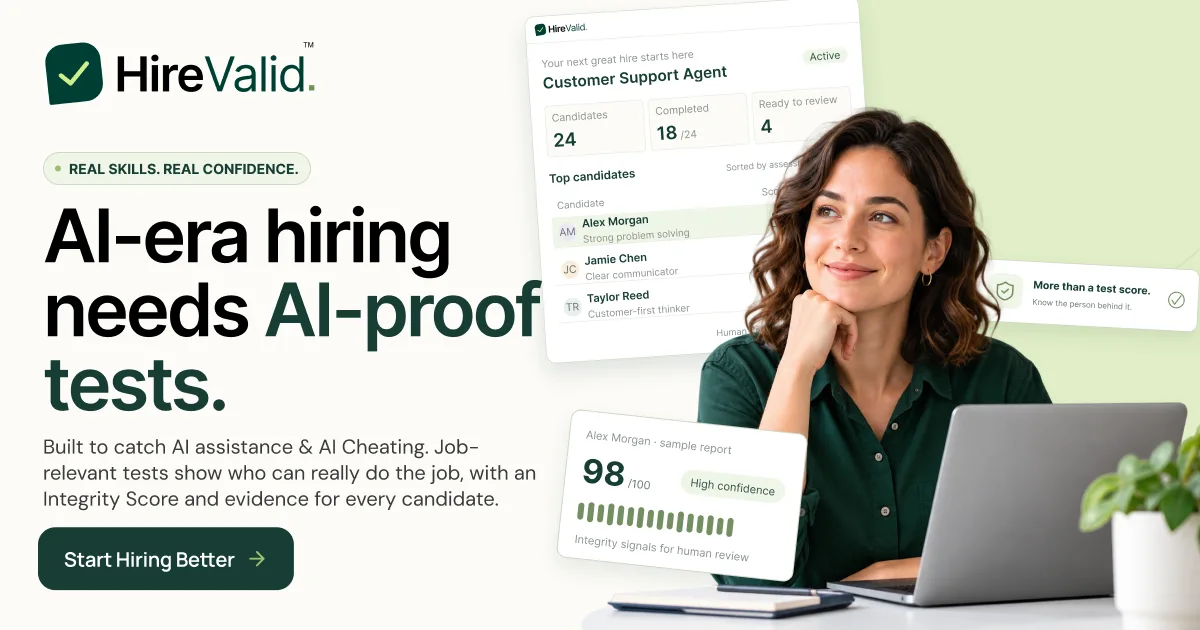
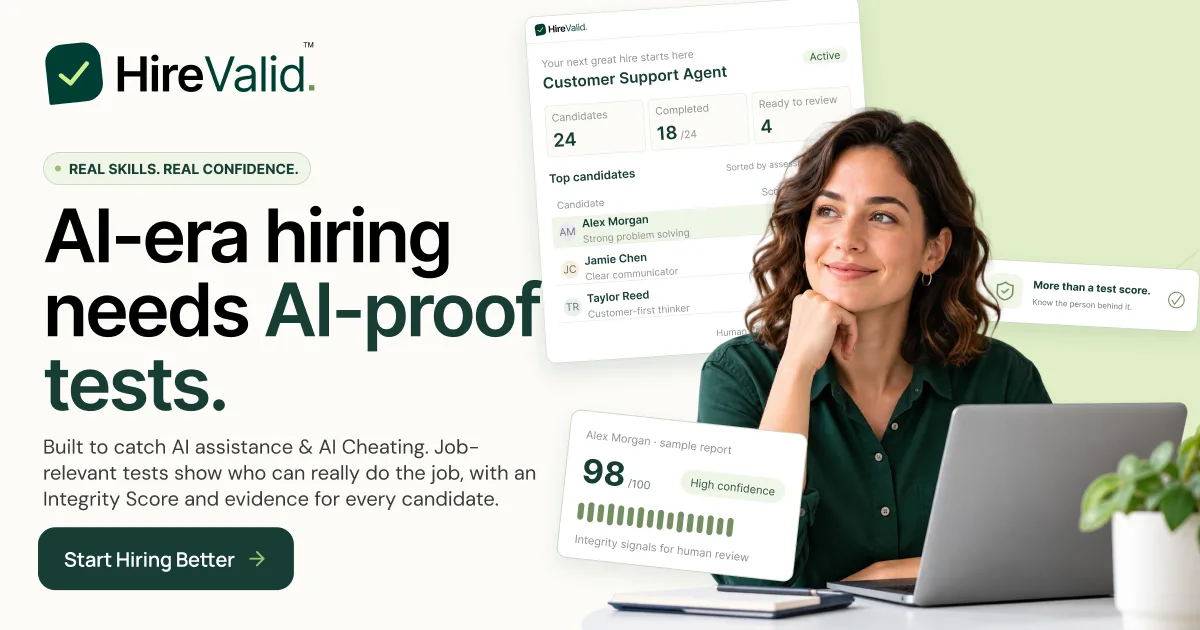
HireValid addresses this challenge by offering skills assessments designed to help hiring teams evaluate candidates beyond their resumes. Its approach combines assessment results with integrity evidence to support a more informed review.
2. Skills-Based Hiring Is Becoming More Important
One important development in modern recruitment is the emphasis on practical skills. Employers need candidates who can solve problems, communicate effectively, make sound decisions, and perform the responsibilities associated with a role.
A resume may indicate that someone has experience with spreadsheets, customer service, programming, or analytical tasks. However, an assessment can provide a more direct indication of how well the candidate understands those skills.
For HR professionals, this means designing recruitment processes around the requirements of each position.
For example, a customer support role may require communication and situational judgment, while a technical position may require programming knowledge or problem-solving ability.
HireValid provides different assessment options, including cognitive, practical, technical, and language tests. Recruiters can use relevant assessments to gather additional evidence before progressing candidates to interviews.
3. AI-Generated Answers Create New Hiring Challenges
AI tools can help applicants prepare for interviews, generate written responses, and complete take-home assignments. These tools are not automatically a problem. Many employees use AI responsibly in their everyday work, and some employers actively seek candidates who can use it effectively.
The challenge arises when candidates use unauthorized assistance during an assessment intended to measure their independent ability.
For example, a candidate might submit an AI-generated answer during a test that is supposed to evaluate their own reasoning. This can make it harder for recruiters to distinguish genuine expertise from externally generated responses.
HireValid approaches this challenge through assessment design and integrity checks. Its methods include randomized questions, timed assessments, restrictions on copying, and signals such as unusual answer timing or pasted text.
These measures can make unauthorized assistance more difficult and provide context for further review. However, no assessment system can guarantee that every instance of AI assistance will be detected.
4. Why Assessment Integrity Matters in AI-Assisted Recruitment
When multiple candidates submit polished applications, recruiters need consistent ways to compare their abilities. Assessment integrity helps protect the value of that comparison.
A reliable process should establish clear rules before candidates begin. Applicants should know which tools are permitted, what the assessment measures, and how their results will be evaluated.
HireValid provides an approach that combines job-related tests with an Integrity Score and supporting evidence. This can help recruiters review potential concerns, such as unexpected interruptions, unusual answer timing, or large amounts of pasted text.
Importantly, an integrity signal is not proof of cheating. Browser interruptions can have innocent explanations, and technical or accessibility issues may affect a candidate's test experience.
HR professionals should therefore review the available evidence, ask appropriate follow-up questions, and make decisions using the full context rather than relying on a single score.
5. Faster Shortlisting Without Ignoring Candidate Quality
Recruiters often manage multiple vacancies and large numbers of applications. Manually reviewing every application in detail can consume valuable time, especially when hiring teams need to compare candidates across several skill requirements.
Structured assessments can help organize candidate results and identify applicants who demonstrate relevant abilities. This gives recruiters additional information to consider when preparing a shortlist.
HireValid supports this process with role-relevant assessments and ranked results, helping hiring teams review candidates more efficiently.
Nevertheless, speed should not become the only recruitment objective. A strong hiring process also considers relevant experience, communication, motivation, accessibility, and the candidate's potential to succeed in the role.
Assessment results should inform the decision rather than automatically determine who gets hired.
6. Human Judgment Remains Essential
Although AI can support recruitment workflows, hiring decisions have consequences for both employers and candidates. Recruiters still need to understand the job requirements, assess individual circumstances, and evaluate evidence fairly.
A candidate's assessment score may highlight strengths or areas that require further investigation, but it cannot necessarily explain every aspect of their performance.
HireValid's approach places human review at the center of assessment integrity. Recruiters can examine results and supporting signals before deciding whether to invite a candidate to an interview or request clarification.
This approach helps HR teams use technology as a decision-support tool instead of treating an automated result as a final verdict.
7. Building a Fairer and More Transparent Hiring Process
Modern recruitment should balance efficiency with fairness and respect for candidates. AI-related concerns should not lead employers to assume that every applicant uses unauthorized tools.
HR teams can strengthen their processes by following several practical steps:
- Define permitted AI use: Explain which tools candidates may use during each recruitment stage.
- Use relevant assessments: Test skills that directly relate to the responsibilities of the position.
- Apply consistent criteria: Use comparable assessment conditions and clear scoring standards.
- Review integrity signals carefully: Investigate concerns before drawing conclusions about a candidate.
- Provide reasonable accommodations: Give candidates an appropriate way to communicate accessibility needs.
- Protect candidate information: Explain monitoring practices and handle personal data responsibly.
- Combine multiple forms of evidence: Consider assessments, interviews, experience, and relevant work samples together.
These practices help recruiters create a process that evaluates candidates more consistently without overlooking individual circumstances.
8. The Future of AI in Recruitment
AI will likely remain an important part of recruitment as employers explore better ways to organize hiring workflows and evaluate candidates. The most effective approach will not necessarily involve automating every decision. Instead, it will involve choosing tools that solve specific hiring problems while keeping people accountable for the final outcome.
For HR professionals, the priority is to understand both the benefits and limitations of AI-enabled recruitment. Faster processes are useful, but they must still produce meaningful evidence of candidate ability.
HireValid supports this goal by combining job-related assessments with integrity evidence, helping recruiters look beyond polished applications and make better-informed hiring decisions.
Conclusion
AI is changing how candidates prepare for applications and how recruiters evaluate potential employees. While these developments can improve efficiency, they also make it more important to verify practical skills and establish clear expectations around AI use.
A thoughtful approach to AI in recruitment combines relevant assessments, transparent rules, careful review, and human judgment. By using tools such as HireValid to gather additional evidence of candidate ability, HR professionals can build a more structured hiring process that prioritizes skills, fairness, and informed decisions.
The goal is not to remove technology from recruitment or assume that AI use is always misconduct. It is to use technology responsibly while ensuring that hiring decisions reflect the abilities and potential of the people being considered.