A gas pressure reduction station in the Midlands shut down for 12 hours last year because an engineer couldn't prove a valve fault without entering a hazardous control room. That delay cost the operator £180,000 and triggered an HSE investigation into inspection protocols. Today, UK gas distribution networks are deploying handheld intrinsically safe camera units that let engineers document compliance walks, capture fault evidence, and share real-time imagery from outside hazardous zones. This shift isn't just about convenience—it's a fundamental rewrite of safety inspection workflows under DSEAR and the ATEX Directive.

The Field Inspection Challenge at Gas Pressure Stations
Gas pressure reduction stations and pipeline networks present unique hazards. Methane leakage creates explosive atmospheres in Zone 1 areas, where ignition sources must be eliminated. Traditional inspection workflows require engineers to enter control rooms or hazardous zones with standard smartphones or cameras, risking arc generation from internal electronics. This violates DSEAR requirements and exposes your team to catastrophic failure.
Your engineers need to document valve positions, corrosion levels, and pressure gauge readings without compromising safety. Standard devices fail this test because their batteries, connectors, and circuit boards can spark during normal operation.
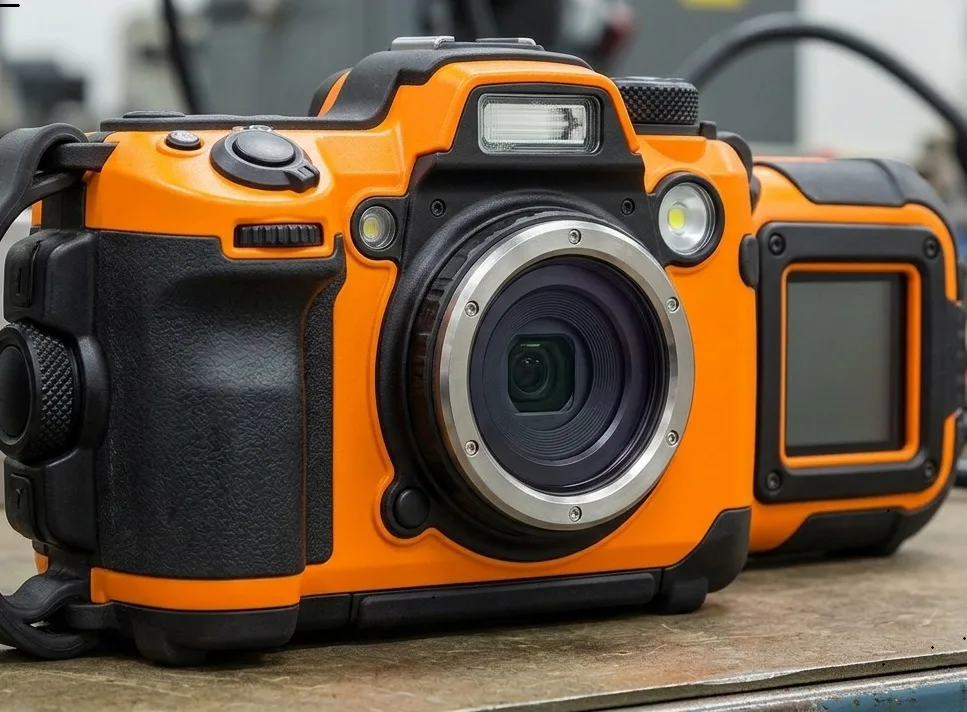
An explosion proof digital camera solves this by containing internal energy below ignition thresholds. It allows your team to capture high-resolution evidence from the edge of hazardous zones, eliminating the need to enter dangerous areas for routine documentation. This reduces exposure time, accelerates fault reporting, and keeps your network compliant with HSE workplace safety standards.
Rewriting Compliance Walk Protocols with IS Technology
Compliance walks are mandatory under UK gas safety regulations. Engineers must inspect pipelines, valves, and pressure controls periodically, documenting findings for audit trails. Old protocols required manual note-taking, followed by later photo documentation inside control rooms—a process that doubles exposure time and creates data gaps.
Intrinsically safe handheld cameras transform this workflow. Your engineer carries a single device that captures photos, videos, and annotated notes in real time. The camera's IS design ensures no spark can occur during operation, even if the battery is damaged. This means you can document compliance walks entirely from outside Zone 1 boundaries. Key benefits include:
- Real-time image sharing with control room teams for immediate fault assessment
- Automatic timestamp and GPS tagging for audit-ready documentation
- Reduced exposure time by eliminating entry into hazardous zones
- Seamless integration with digital inspection software for faster reporting
By adopting an atex camera for compliance walks, you align your inspection process with the MHRA-style rigor expected by HSE auditors. Your team produces audit-ready evidence without compromising safety, streamlining the entire compliance cycle.

Capturing Fault Evidence Without Entering Hazardous Zones
Fault evidence is critical for rapid response. When a pipeline leak or valve malfunction occurs, engineers need high-resolution images to diagnose the issue before dispatching repair crews. Traditional methods require entering the hazardous zone to photograph the fault, which violates PUWER (Provision and Use of Work Equipment Regulations) if the device isn't certified.
Handheld IS cameras eliminate this risk. Your engineer can stand at the safe boundary of Zone 2 and capture detailed imagery of the fault. The camera's sealed housing prevents gas ingress, while its energy-limiting circuits ensure no internal arc can ignite methane vapours. This approach satisfies ATEX Directive requirements for Category 3 equipment in Zone 2 areas. Using an ex proof digital camera ensures your fault documentation is legally defensible during HSE investigations. You avoid the liability of using uncertified equipment in hazardous zones while accelerating repair timelines through faster evidence sharing.
Real-Time Imagery Sharing for Faster Decision-Making
Speed matters in gas distribution. When a fault is detected, control room teams need immediate visual confirmation to assess risk and dispatch resources. Old workflows required engineers to return to the office, upload photos, and send emails—a delay of 30 minutes or more.
Intrinsically safe handheld cameras integrate with mobile networks to share imagery instantly. Your engineer captures a photo and sends it to the control room within seconds. This real-time capability enables faster risk assessment, reduces downtime, and prevents escalation of minor faults. The camera's IS design ensures safe operation during wireless transmission, as no spark can occur from the radio module. An atex digital camera with built-in LTE or Wi-Fi lets your team maintain live communication without entering hazardous areas. This transforms your inspection workflow from a reactive, document-heavy process into a proactive, real-time operation that minimises network risk.

Meeting DSEAR and ATEX Directive Compliance in the Field
Your field inspection equipment must comply with DSEAR and the retained ATEX Directive (2014/34/EU). Using non-certified devices in Zone 1 or Zone 2 areas is a direct breach of UK workplace safety law. HSE inspectors will demand certification documentation for every electronic device used in hazardous zones.
Intrinsically safe handheld cameras carry valid ATEX certificates proving they meet Category 3 or 2 requirements for gas groups IIA/IIB. Your procurement team must verify this documentation before deployment. The certificate should specify the gas group, temperature class (T-rating), and zone suitability. Without this paperwork, your inspection workflow is illegal. Investing in certified IS cameras protects your company from enforcement notices, fines, and potential criminal liability. It demonstrates to regulators that your team prioritises safety over convenience, aligning with HSE's expectations for risk-controlled operations across UK gas distribution networks.
Conclusion
Intrinsically safe handheld cameras are reshaping safety inspections on UK gas networks by eliminating hazardous zone entry for documentation. They enable real-time fault evidence capture, streamline compliance walks, and ensure DSEAR/ATEX compliance without operational delays. Your team can now inspect pressure stations and pipelines with confidence, knowing every image is audit-ready and legally defensible. Secure your next inspection workflow with equipment designed for both safety and speed. Recommended read: 10 things to consider when buying an explosion-proof digital camera