The restaurant industry in 2026 is facing a strange contradiction. While consumer demand for dining out and high-quality takeout is reaching record highs, the "human capital" required to meet that demand is more stretched than ever. We are living in a labor paradox: restaurants need more hands on deck, yet the traditional roles—specifically the phone-bound host—are becoming increasingly difficult to fill and retain.
For many operators, the solution isn't just "hiring more people." It’s about re-engineering the workflow. This is where AI phone ordering for restaurants has moved from a "futuristic pilot" to a mission-critical operational standard. By automating the most repetitive, high-stress interaction in the building—the incoming phone call—restaurants are finally finding a way to scale their revenue without burning out their teams.
1. Eliminating the "Front-of-House Friction"
In a traditional setup, the person answering the phone is often the same person greeting guests at the door, managing the waitlist, and clearing menus. This "multitasking" is a recipe for errors and poor service. When a host has to choose between a physical guest standing in front of them and a ringing phone, someone always loses.
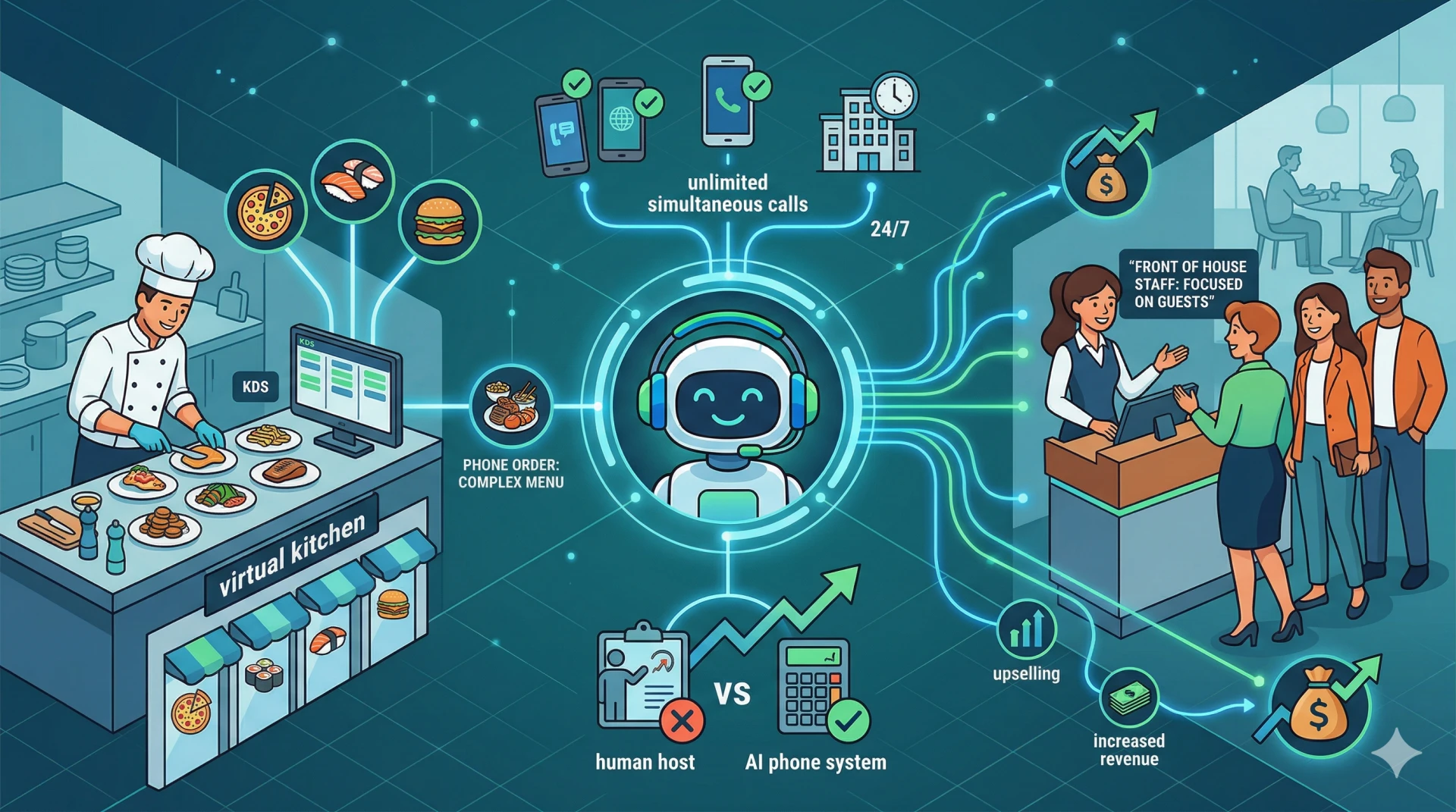
By implementing Intelligent voice assistants for restaurants, the phone no longer competes for attention. These systems are designed to handle unlimited simultaneous calls, greeting every customer on the first ring. Whether it’s a simple question about holiday hours or a complex order with multiple modifications, the AI handles it with 97% accuracy, allowing your in-person staff to remain 100% focused on the guests in the dining room.
2. The Shift from "Answering Machine" to "Revenue Engine"
Earlier versions of automated phone systems were often glorified answering machines that frustrated customers with rigid "press 1 for pizza" menus. In 2026, the technology has evolved into a conversational partner. Today’s AI can understand natural speech, regional accents, and even "messy" ordering habits (e.g., "Wait, actually make that a large, and can you put the dressing on the side?").
This intelligence is a major reason why phone orders still drive restaurant revenue even as third-party apps continue to grow. Customers often call because they want a level of customization or reassurance that a static app interface can’t provide. When an AI can handle those nuances perfectly while consistently upselling—suggesting a drink or an appetizer that a busy staff member might forget to mention—the phone line transforms from a cost center into a high-margin revenue stream.
3. Seamless Operations with Real-Time POS Sync
The true "escape velocity" for restaurant AI in 2026 has been deep integration. A standalone "bot" that requires a manager to manually re-enter orders into the system is just creating more work. True Intelligent voice assistants for restaurants are now fully integrated with major POS systems like Toast, Square, and Clover.
This means that when an item is "86’d" (out of stock) in your kitchen, the AI knows instantly. It won't sell a dish you don't have, and it injects every successful order directly into your Kitchen Display System (KDS). This level of automation is why the AI phone system costs vs. hiring a host in 2026 are so compelling. You aren't just saving on hourly wages; you’re eliminating the "hidden costs" of manual entry errors, misheard orders, and the $150,000 average annual loss restaurants face due to employee churn.
4. Supporting the "Human" Side of the Business
Perhaps the most overlooked benefit of AI phone ordering for restaurants is its impact on employee retention. Restaurant work is notoriously high-pressure. By removing the constant "interruption" of the ringing phone, you lower the ambient stress level of the entire kitchen and front-of-house team.
When your team can find their rhythm without being pulled away every three minutes, they are more productive and less likely to quit. In 2026, the restaurants that win will be the ones that use technology to protect their culture. They use AI to handle the "robotic" tasks, giving their human employees the space to provide genuine hospitality and connection—the things that no machine can replicate.
The Bottom Line
The "Labor Paradox" isn't going away, but the tools to navigate it are better than ever. Certus AI provides the bridge between high-volume demand and lean, efficient operations. By turning your phone line into an automated, POS-integrated revenue engine, you ensure that your restaurant is always ready for the rush, even when your staff needs a breath.
Is your restaurant ready to lead the Quiet Kitchen revolution? Let’s automate your phone lines and protect your growth.