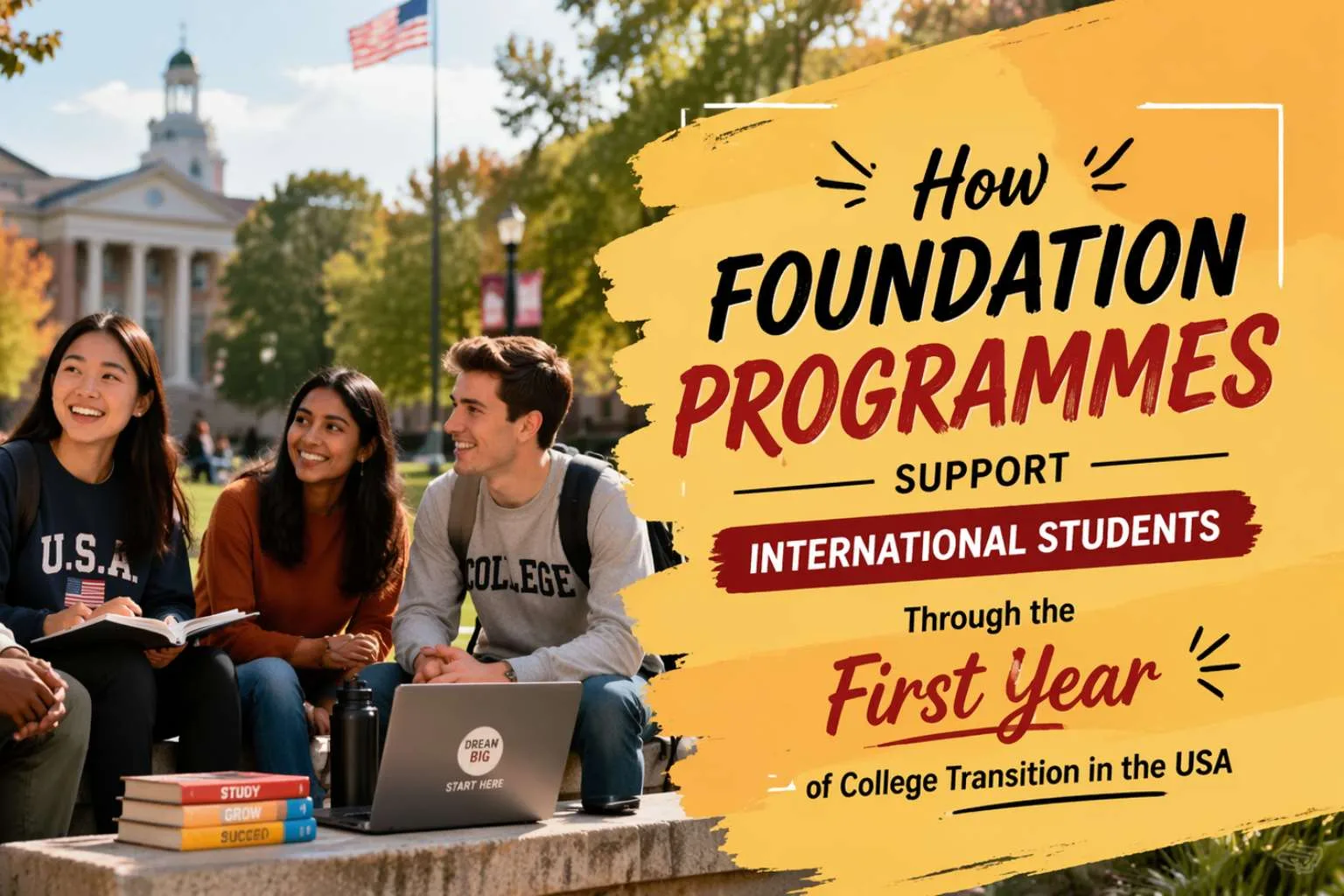
Foundation programmes in the USA play a crucial role in supporting international students during their first year of college. These programmes are designed to ease the transition into the American education system by providing both academic and personal support. For students coming from different educational backgrounds, foundation courses help bridge the gap between high school and university. They focus not only on academic skills but also on cultural adaptation, language development, and integration into campus life.
The Role of Foundation Programmes in U.S. Higher Education
Foundation courses are designed as preparatory programs for students who do not meet the direct entry requirements of U.S. universities. These courses typically last between 6 and 12 months and focus on subjects such as English language proficiency, academic writing, and introductory-level courses in various disciplines. The ultimate goal is to prepare students for a successful transition into a full undergraduate degree programme.
Foundation programmes are often offered in partnership with universities, and upon completion, students are guaranteed progression into degree courses, provided they meet the programme’s academic requirements. They are particularly beneficial for international students who need to adjust to a different education system and culture.
Academic Support: Bridging Knowledge and Credit Gaps
One of the main benefits of foundation programmes is the academic support they offer. These courses help international students bridge the gap in their knowledge and skills. Students who might struggle with certain academic subjects due to differences in educational systems are given the opportunity to strengthen their knowledge before they start their degree programme.
English Language Support
Foundation programmes place a significant emphasis on improving English language skills. Academic English is very different from everyday English, and many international students struggle with it. These programmes often include intensive language courses designed to prepare students for the demands of university-level writing, presentations, and research. Improving language skills helps students understand lectures, participate in class discussions, and complete assignments with confidence.
Subject-Specific Skill Building
Students in foundation programmes also gain subject-specific knowledge that prepares them for their chosen degree path. For example, if a student plans to study engineering, they may take introductory courses in mathematics and science. These courses are designed to ease students into the expectations and content of undergraduate courses, which often move at a faster pace.
Credit Transfer Opportunities
Some foundation programmes allow students to earn credits that count toward their undergraduate degrees. This not only accelerates their academic progress but also reduces the overall time and cost of completing their degree. Foundation students gain an understanding of the university’s academic structure, learning strategies, and assessment methods, which can help them perform better once they enter their degree courses.
Social and Cultural Adaptation Support
Adapting to life in the U.S. can be challenging, especially for students who are far from home. Foundation programmes offer extensive support to help students adjust to a new culture and social environment.
Orientation and Campus Integration
Most foundation programmes include an orientation period at the start. During this time, students are introduced to the university's campus, resources, and academic culture. This helps reduce anxiety about unfamiliar systems and expectations. Students are also given practical advice on managing their time, finances, and living arrangements in a new country.
Peer Support and Community Engagement
Peer support plays a key role in helping international students feel at home. Foundation programmes often assign mentors or buddies from senior cohorts who can help guide students through their first year. These peer mentors provide practical advice on everything from academics to social events. Additionally, foundation students are encouraged to participate in extracurricular activities and student clubs, which are great ways to make new friends and feel part of the university community.
Academic Advising and Personalised Learning Pathways
Personalised academic support is a core component of foundation programmes. Academic advisors work closely with students to track their progress, address any academic concerns, and offer guidance on course selection. Advisors help ensure that students stay on track and are aware of their academic standing, particularly if they need additional support.
Advising on Course Selection and Degree Progression
Foundation students are often unsure about which degree to pursue. Academic advisors play a critical role in guiding them through this process. They provide insights into various degree programmes, explain the career opportunities related to each path, and help students choose the most suitable course for their interests and strengths. Advisors also assist in mapping out a roadmap for degree progression, ensuring that students are aware of the prerequisites and required courses for their chosen field.
Early Intervention Systems for Struggling Students
Many foundation programmes use data-driven systems to identify students who may be at risk of falling behind. These early intervention strategies can help prevent academic failure by offering extra support in areas where students are struggling. For example, if a student is having trouble with a particular subject, they can receive additional tutoring or attend office hours with their professors.
Psychological Resilience and Institutional Support
Transitioning to a new country and educational system can be overwhelming. Foundation programmes understand the mental health challenges international students face and offer support to help them overcome these obstacles.
Counselling and Wellbeing Services
Many universities offer free counselling services for international students. These services can help students deal with stress, homesickness, and other emotional challenges. Mental health professionals assist students in coping with the pressures of adapting to a new culture while maintaining academic performance.
Building Resilience Through Social Integration
The sense of belonging is crucial for mental well-being. Foundation programmes actively promote social integration through group projects, team-building activities, and participation in social events. These activities allow students to build connections and form friendships, which can provide emotional support during difficult times.
Measurable Outcomes and Success Indicators
Foundation programmes are successful when students successfully progress into their undergraduate degree courses and achieve good academic performance. Universities track these outcomes to measure the effectiveness of their foundation courses.
Retention and Graduation Rates
One of the key indicators of a successful foundation programme is the retention rate. Students who complete a foundation programme and move on to their undergraduate studies are more likely to stay enrolled in the university and complete their degree. Universities often report higher retention rates among students who have participated in foundation courses compared to those who entered directly into undergraduate programmes.
Post-Graduation Success
The ultimate measure of success is whether students go on to graduate and succeed in their careers. Foundation students who have received academic and social support are more likely to graduate within the expected time frame and enter the workforce with the skills they need.
Case Studies and Examples
Many U.S. universities have developed highly effective foundation programmes that ensure the success of international students. These programmes offer strong academic preparation and comprehensive support systems.
For example, the University of California, Berkeley offers a foundation programme that includes English language support, subject-specific courses, and a robust orientation programme. Similarly, the University of Washington has a pathway programme that guarantees progression into an undergraduate degree, provided the student meets the academic requirements.
Emerging Trends and Innovations in Foundation Programmes
The landscape of foundation programmes is constantly evolving to meet the needs of international students.
Flexible Duration Options
Some foundation programmes now offer flexible duration options, such as 6-month or 9-month pathways, to cater to different student profiles. These shorter courses are ideal for students who may already have some academic preparation but need additional language support or subject-specific training.
Hybrid and Digital Learning Models
With the rise of digital learning, some foundation programmes are adopting hybrid or online models. These programmes offer students the flexibility to study remotely while receiving the same level of academic support and cultural integration as traditional on-campus courses.
Strategic Guidance for Prospective International Students
Choosing the right foundation programme is an important decision. Prospective students should consider several factors before applying.
How to Choose the Right Foundation Programme
- Look for accredited institutions with a strong reputation in supporting international students.
- Check if the programme offers guaranteed progression to your desired degree.
- Consider the costs involved, including tuition fees and living expenses.
- Ensure that the programme provides sufficient academic and cultural support to help you adjust to life in the U.S.
Visa and Admission Requirements
Students should be aware of the visa requirements for studying in the U.S. Foundation programmes typically require students to have a valid student visa, such as the F-1 visa. Admission requirements vary by institution, but most programmes require proof of academic qualifications, English language proficiency, and financial stability.
Cost and Financial Planning
Foundation programmes vary in cost, depending on the institution and location. It's important to budget for tuition fees, accommodation, and other living expenses. Some universities offer scholarships or financial aid for international students, which can help reduce the financial burden.
Conclusion
Foundation programmes provide a structured, supportive pathway for international students to successfully transition into U.S. higher education. These programmes offer academic preparation, cultural integration, and personal support, all of which help students adjust to their new environment and succeed in their degree programmes. By selecting the right foundation course, students can ensure a smooth transition and set themselves up for long-term success in the U.S.