
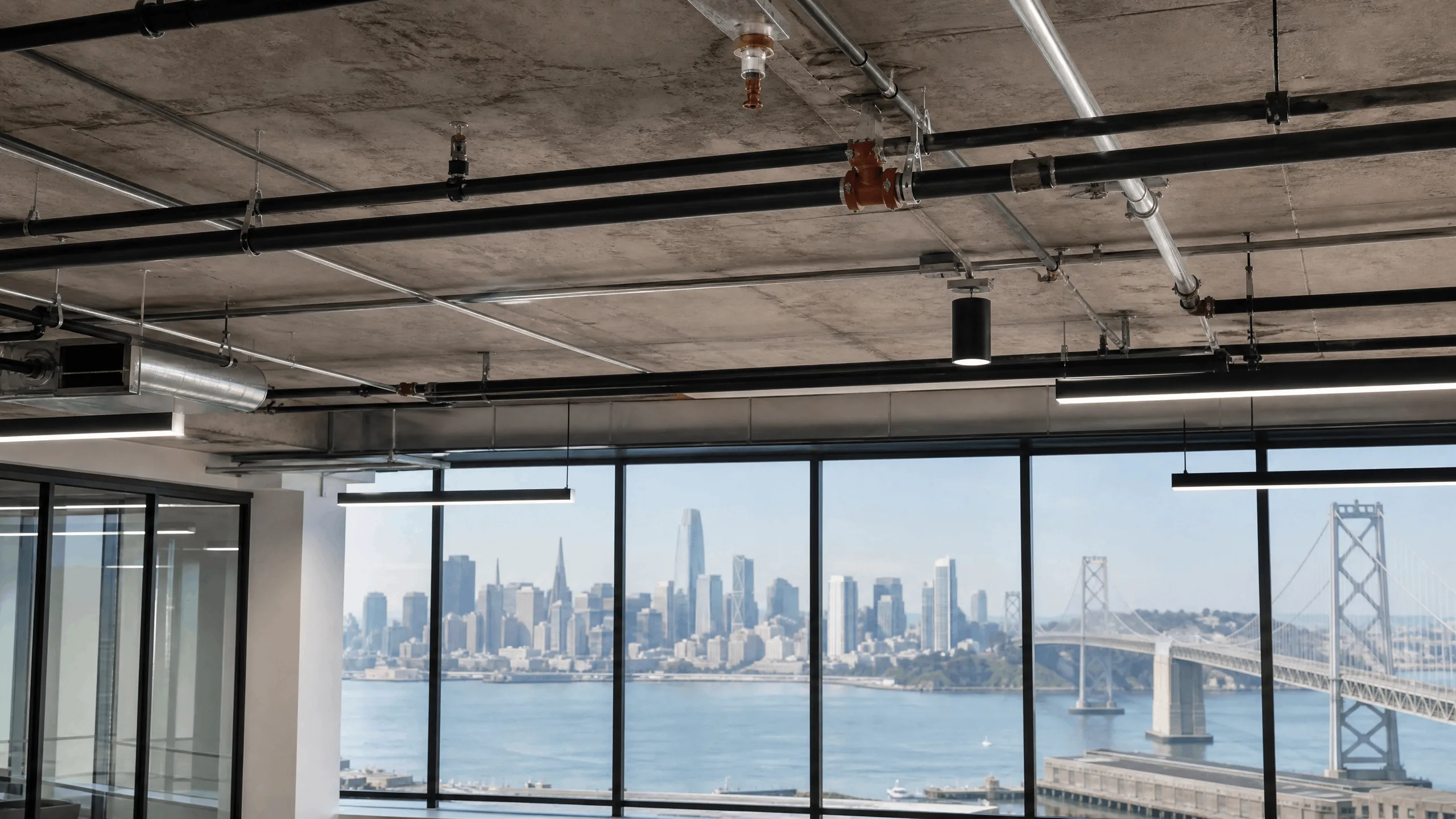
The San Francisco Bay Area is one of the most densely built, architecturally diverse, and code-rigorous regions in the United States. From high-rise tech campuses in San Jose to mixed-use residential developments in Oakland and custom hillside homes throughout Marin County, virtually every construction project in the Bay Area intersects with a layered set of fire safety requirements. And at the center of most of those requirements is fire sprinkler installation.
If you are a developer, builder, property owner, or business operator in the region, understanding how fire sprinkler installation in Bay Area projects connects to state and local safety codes is not just useful knowledge. It is practically unavoidable. Let’s walk through what the codes require, which buildings are affected, and what a compliant installation process actually looks like.
The Code Framework Behind Bay Area Fire Sprinkler Requirements
California adopts the International Building Code (IBC) and NFPA standards with state-specific amendments through the California Building Code (CBC) and California Fire Code (CFC). These codes set baseline requirements for fire sprinkler systems, and local Bay Area jurisdictions, whether that is San Francisco, Oakland, San Jose, or Contra Costa County, layer additional requirements on top.
For commercial buildings, fire sprinkler installation in Bay Area projects must comply with NFPA 13, the national standard for commercial fire sprinkler system design and installation. NFPA 13 governs everything from hydraulic calculations and water supply adequacy to sprinkler head placement and system type selection. It is the non-negotiable baseline for any commercial project seeking a certificate of occupancy.
For residential construction, California mandated fire sprinkler installation in all new one- and two-family homes statewide in 2011. Residential systems are installed under NFPA 13D for single-family homes and NFPA 13R for multifamily buildings up to four stories.
Which Buildings Need Sprinklers In The Bay Area?
The straightforward answer is: most new commercial construction and all new residential construction. But the specific triggers vary. Commercial buildings that exceed certain size thresholds, contain higher-hazard occupancies, house large numbers of people, or include sleeping areas are almost universally required to have fire sprinkler systems. High-rise buildings are mandated to have full-building coverage. Schools, hospitals, hotels, and assisted living facilities face mandatory requirements based on occupancy classification.
On the residential side, any new home built in California after 2011 requires a fire sprinkler system. Additions and renovations to existing homes do not automatically require retrofitting the entire system, but significant structural additions may trigger partial requirements depending on your jurisdiction.
The Installation Process From Start To Finish
A compliant fire sprinkler installation in Bay Area project involves considerably more than running pipe through walls. The process begins with a system design phase, during which hydraulic calculations are performed to ensure adequate water pressure and flow throughout the entire sprinkler network. These calculations are based on the building’s layout, occupancy type, hazard classification, and local water supply data.
Once the design is complete, permit applications are submitted to the local jurisdiction and reviewed by the Authority Having Jurisdiction (AHJ), typically the local fire marshal’s office. Bay Area jurisdictions are known for thorough plan review processes, so working with a contractor who has existing relationships with local permitting offices can meaningfully accelerate your timeline.
Installation follows permit approval, with licensed fire sprinkler fitters handling all pipe work, head placement, valve assembly, and water supply connections. Final inspections are conducted by both the fire protection contractor and the AHJ before the system is certified and the building is cleared for occupancy. Trusted companies like Freedom Fire Protection manage every stage of this process for residential and commercial projects across the Bay Area and Central Valley.
Staying Compliant After Installation
Code compliance does not end at installation. Bay Area property owners and managers are required to maintain their fire sprinkler systems in accordance with NFPA 25, the standard for inspection, testing, and maintenance of water-based fire protection systems. Annual inspections are required at a minimum, with additional quarterly checks for certain system components and five-year internal pipe inspections.
Failure to maintain an operational, inspected system can result in code violations, insurance complications, and potential loss of the building’s certificate of occupancy. For commercial building owners, especially, staying on top of inspection schedules is as important as the initial installation.
The Cost Of Non-Compliance Versus The Value Of Protection
Some property owners hesitate over the cost of fire sprinkler installation in Bay Area projects, particularly in a high-cost construction market. But the risk calculus is not complicated. The NFPA reports that fire sprinklers reduce the death rate in fires by 87 percent and reduce property damage in commercial fires by approximately 70 percent. Bay Area commercial real estate represents enormous financial value. The cost of a compliant fire sprinkler installation is a fraction of what a single serious fire event could cost in property loss, legal liability, and business interruption.
Work with a licensed, experienced fire protection company to ensure your Bay Area project meets every applicable code from day one.