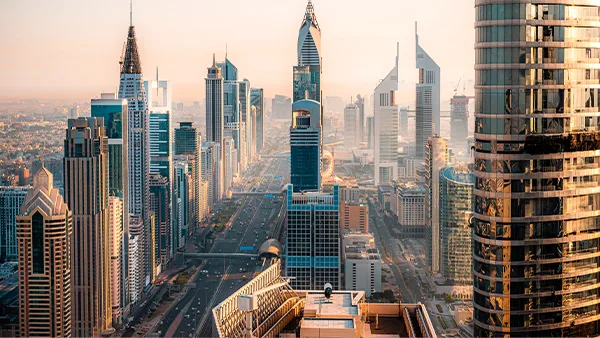
Fifty years ago Dubai was a trading port with a modest skyline. Today it has one of the most scrutinised real estate markets on the planet. That shift didn't happen by accident. It was built project by project, regulation by regulation, and deal by deal. Understanding how it got here helps explain why buyers from over a hundred countries are still arriving to invest.
Where It Started
The early phase of Dubai's property story was about infrastructure. Roads, ports, airports, and the foundations of a city that didn't exist in any recognisable modern form until the 1970s. Development was government led and tightly controlled. Private real estate as an investment category barely existed. What changed that was a deliberate policy decision in the early 2000s to open property ownership to foreign nationals. That single shift rewired the entire market.
The first major freehold zones were announced and developers moved quickly. Projects were launched, investors arrived, and a market that had been quiet for decades accelerated almost overnight. It created fortunes. It also created the conditions for the 2008 correction, which hit Dubai harder than almost anywhere else. What came after that was a more structured, regulated market with lessons built in.
The Developers Who Shaped The City
No single Dubai real estate developer built the city alone. But a small number of large developers shaped its character in lasting ways. Emaar built Downtown Dubai and handed the world its most photographed tower. Nakheel created the Palm. Meraas developed coastal and cultural districts that changed how residents use the city. Each of those decisions set in motion thousands of secondary developments around them.
The real estate property developers that followed built on the frameworks those early movers established. Zones were defined, master plans drawn, and building typologies repeated across new districts. That consistency is part of what gave the market its international credibility. Buyers knew roughly what they were getting regardless of which part of the city they were looking at.
What The Regulatory Framework Built
RERA came out of the 2008 fallout. When the first boom unravelled, it was clear the rules hadn’t kept pace with the money coming in. Escrow accounts, mandatory project registration, defined buyer rights. None of that existed before. The authority built it from scratch. buying property in Dubai a more structured process and gave international buyers a clearer framework to work within.
The Dubai Land Department sits alongside RERA as the registration and transaction authority. Between the two, the market has a level of documentation and oversight that compares reasonably well with mature markets in Europe and Asia. That reputation has been earned over time and it's a meaningful part of why transaction volumes have held up through global uncertainty.
How Off-Plan Became Central To The Market
The off plan property model took hold early and never really let go. Developers found they could fund construction through pre-sales. Buyers found they could access lower entry prices and structured payment plans. The model suited both sides and it became the dominant way new stock was brought to market. Today the majority of new residential units in Dubai are sold before they're built.
The risks that came with that model in the early years have been significantly reduced through regulation. Escrow accounts protect buyer funds during construction. Project registration is mandatory before sales can begin. A serious property developer in Dubai looks like has changed since the first projects launched. The credible ones now get checked on what they’ve handed over, not just what they’ve sold. Delivery through the slow years counts more than launches during the good ones. Buyers who look at track record before they look at renders tend to make better decisions.
Why International Buyers Keep Coming
Tax position is part of it. There is no income tax on rental yield and no capital gains tax on property sales in Dubai. For investors from high-tax markets that alone changes the return calculation. The tax position is part of it. No income tax on yield, no capital gains on a sale. For buyers from high-tax markets that alone reshapes the numbers. The infrastructure plays a role too. So does how the city has been built over the last twenty years. You can see where the money went.
Anyone buying property in Dubai today is entering a market with more data, more regulation, and more completed projects to benchmark against than at any previous point in its history. The speculation of the early 2000s has been replaced by something more considered. Prices still move. The market still has cycles. But the foundations underneath it are more solid than the city's speed of growth might suggest.
What The Next Phase Looks Like
Dubai's population is still growing. Infrastructure investment continues. New districts are being master-planned and existing ones are densifying. Visa changes have made a difference too. Long-term residency is now accessible for property owners at certain thresholds. People aren’t just buying to invest. Some are buying to stay. That shift in buyer intention has changed how parts of the market price and perform.