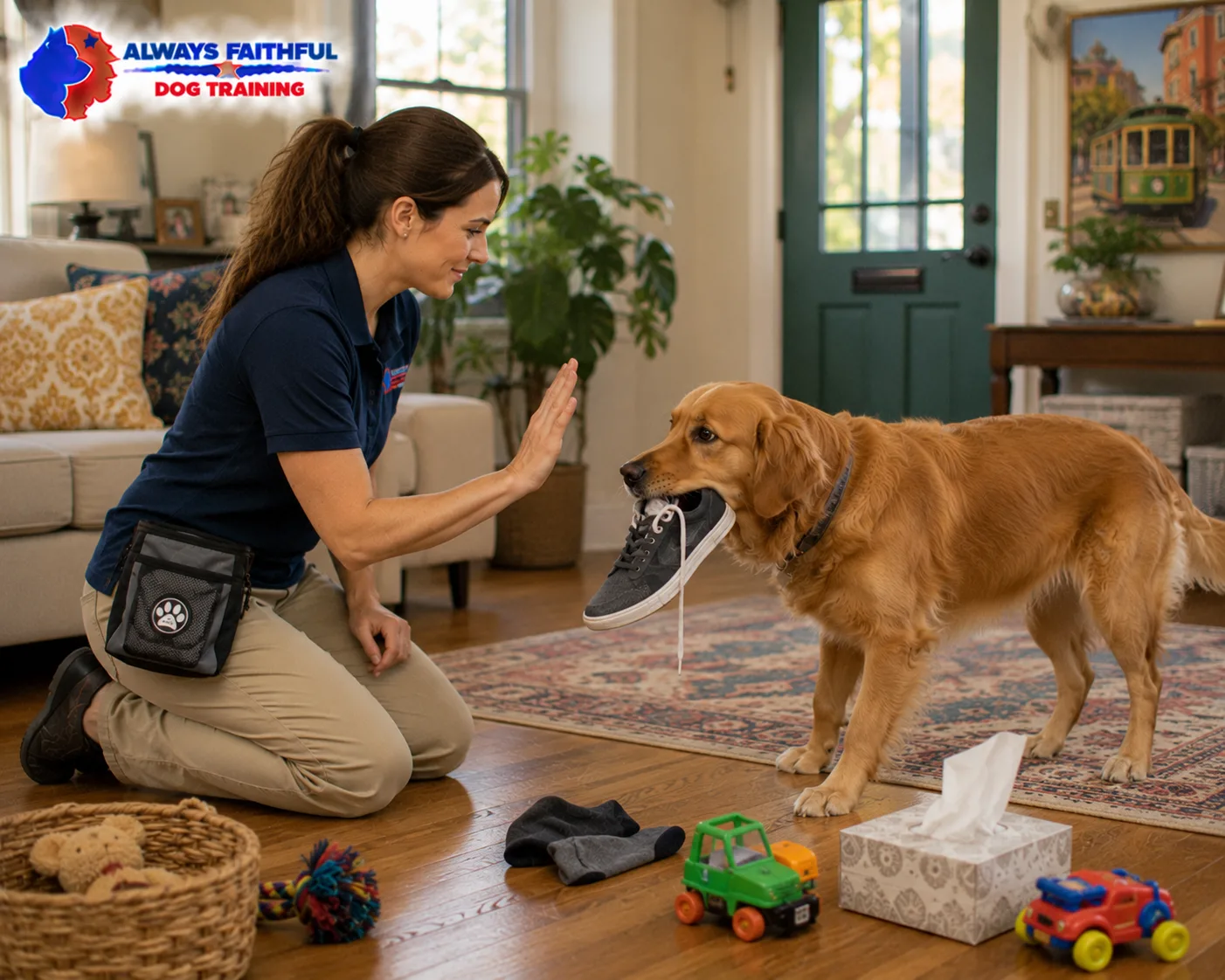
A dog's day is made up of many transitions. Playtime eventually ends, outdoor activity leads back indoors, meals finish, visitors leave, and periods of excitement are followed by quieter moments. Some dogs handle these changes easily, while others struggle to shift their attention from one activity to another. Effective Dog training can teach dogs that an enjoyable or exciting activity has an ending and that another behavior is expected afterward. For owners researching Dog training Near me, understanding transition skills can be an important part of creating calmer routines at home.
Why Transitions Can Be Difficult for Dogs
Dogs can become deeply focused on whatever they are doing. A dog chasing a toy may not immediately want to stop. A dog exploring the yard may resist coming inside. A dog excited about visitors may continue looking for interaction even after the guests have settled down.
This does not necessarily mean the dog is deliberately refusing to cooperate. The change itself may be difficult because the dog's attention and energy are still connected to the previous activity.
Transition training helps create a bridge between those two states.
The Difference Between Stopping and Transitioning
Simply stopping an activity is not always enough. If a dog is playing intensely and the owner suddenly ends the game, the dog may still have considerable energy and may look for another outlet.
A transition gives the dog something meaningful to do next. Instead of moving directly from high excitement to complete stillness, the owner can guide the dog through a sequence that gradually changes its focus.
For example, play can be followed by walking, then a short period of calm behavior. This creates a predictable pattern without requiring every transition to happen identically.
Recognizing the Dog's Energy Level
Not every transition should be approached in exactly the same way. A dog coming inside after calmly exploring the yard is in a different state from a dog returning after an energetic game.
Owners can observe breathing, movement, attention, and overall excitement before deciding what should happen next.
A highly energized dog may benefit from controlled movement before being expected to settle. A relatively calm dog may be ready for a quiet activity immediately.
Understanding the dog's current state helps owners choose realistic expectations.
Creating Clear End Points
Dogs benefit from learning that activities have clear beginnings and endings. If play continues whenever a dog demands it, the dog may have difficulty understanding when interaction is finished.
An owner can establish a consistent signal that indicates the end of an activity. This does not need to involve complicated commands. The important part is that the signal is followed by a predictable change in what happens next.
Over time, the dog can begin recognizing that the end of one activity does not mean something negative is happening.
Moving From Excitement to Calm
One of the more useful transition skills involves reducing arousal gradually. A dog that has just been running, wrestling, or chasing may not immediately be prepared to relax.
A short period of controlled walking can provide a useful bridge. The owner can then guide the dog toward a quieter behavior once its energy begins to decrease.
This teaches the dog that excitement has a natural endpoint and that calm behavior can follow enjoyable activity.
Using Transitions During Ordinary Household Life
Transition practice does not need to happen only during formal sessions. Everyday activities provide numerous opportunities.
A dog can practice moving from the kitchen to another room, from outdoor time to indoor time, or from interaction with a family member to independent rest.
The goal is to make changes between activities understandable rather than allowing each transition to become an unpredictable event.
The Role of Predictable Communication
Clear communication becomes particularly important when a dog does not know what is coming next. If the owner's expectations change constantly, the dog may continue trying different behaviors to determine what will produce another opportunity for play or attention.
Consistent signals can make transitions easier. The dog gradually learns that certain actions lead toward another activity while others indicate that the current activity is finished.
This type of communication can reduce unnecessary conflict between dogs and their owners.
Practicing the Skill in the Middle of the Day
A useful part of Dog training Near me can be learning how to structure transitions rather than focusing exclusively on individual commands. Owners can practice this skill during moments that naturally occur throughout the day.
For example, after a period of play, the dog can move into a calmer activity before resting. After outdoor exploration, the dog can transition indoors without turning the doorway into another opportunity for excitement. After receiving attention from family members, the dog can learn that interaction eventually comes to an end.
These repeated experiences help the dog understand that changing activities is a normal part of daily life.
Avoiding Sudden Expectations After High Excitement
Expecting immediate stillness after intense activity can create unnecessary difficulty. The dog's physical and mental state may not change instantly.
Instead, owners can build intermediate steps into the routine. Movement can gradually become slower, interaction can become quieter, and the environment can become less stimulating before the dog is expected to settle.
This approach gives the dog time to adjust rather than treating every transition as an abrupt command to stop.
Transition Skills Can Help With Family Routines
Households often contain many different activities happening close together. Children may start playing, adults may begin preparing food, someone may leave the house, or family members may move from one room to another.
A dog that understands transitions can become more adaptable to these changing levels of activity.
The dog does not need to participate in every event. Learning when to engage and when to disengage allows the household to continue functioning without the dog constantly becoming involved in every change.
Teaching Dogs That the End of Fun Is Not a Punishment
Some dogs resist transitions because they have learned that stopping an enjoyable activity always means losing something valuable.
Owners can change this association by making the next activity meaningful in its own way. A calm walk, quiet interaction, access to a comfortable resting area, or another appropriate activity can follow the end of play.
This helps the dog learn that an activity ending is simply part of the routine rather than a negative event.
When Professional Guidance May Help
Some dogs have significant difficulty moving away from specific activities. They may bark, grab objects, jump, run away, or become highly frustrated when an interaction ends.
When these reactions are persistent, owners may benefit from professional assessment. A qualified trainer can observe the sequence, identify what happens immediately before the difficult behavior, and help build a gradual transition plan.
The solution may involve changing the environment, adjusting the activity's intensity, improving communication, or teaching alternative behaviors.
Building Flexible Daily Habits
Transition skills become more valuable when they work across different circumstances. Dogs should not learn that only one exact sequence is acceptable.
Once a dog understands the general concept, owners can vary the activity, location, duration, and timing. This helps the dog become comfortable with the broader idea that daily life naturally involves changes.
The result is not a dog that never becomes excited. Instead, it is a dog that can move from excitement toward another appropriate behavior with clearer guidance.
Final Thoughts
Everyday life rarely consists of one continuous activity, so dogs benefit from learning how to shift their attention when circumstances change. Dog training can teach dogs that play, exploration, interaction, and excitement all have natural endpoints, followed by another appropriate behavior. For owners looking into Dog training Near me, transition skills offer a practical training area that can improve how dogs move through ordinary household routines without requiring every part of the day to follow a rigid schedule.