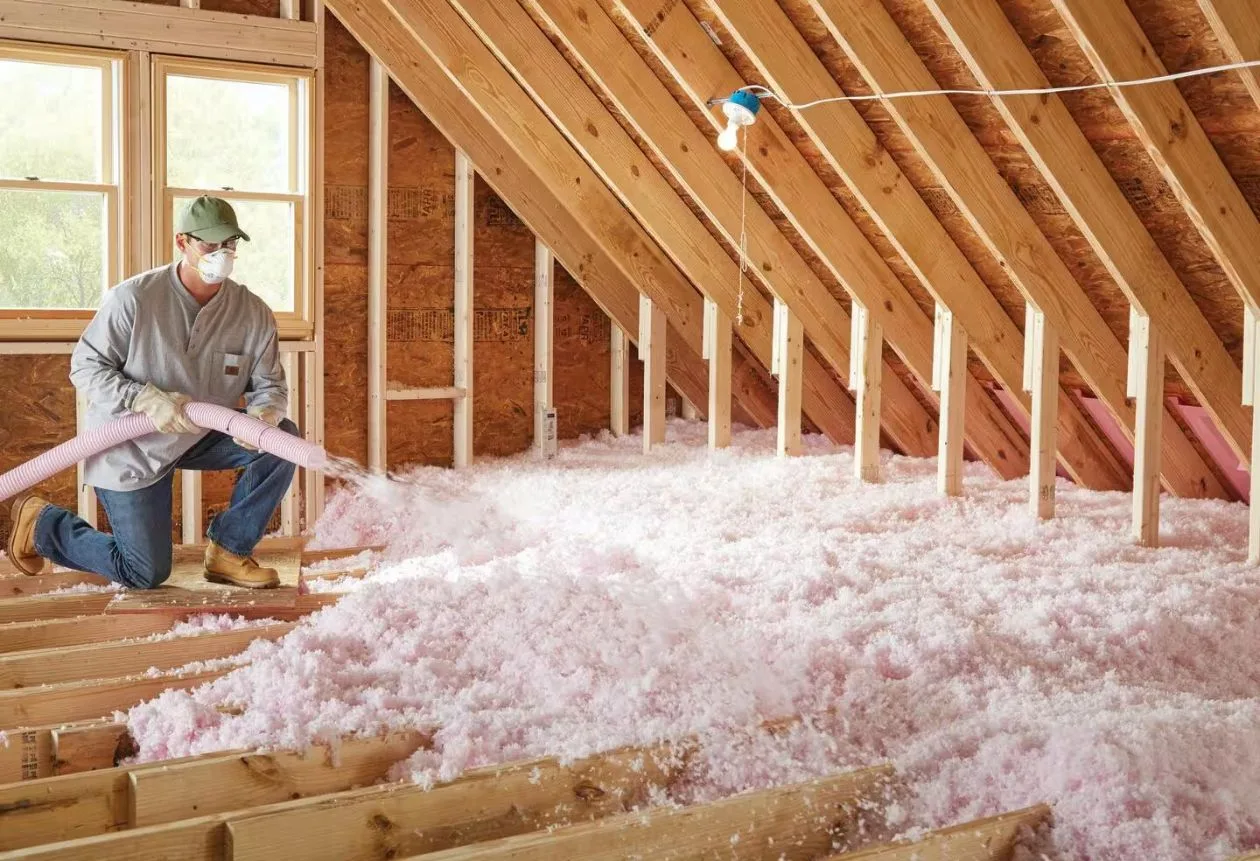
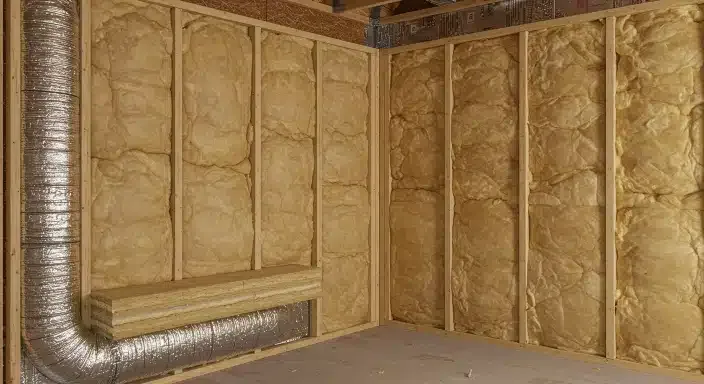
Unfaced fiberglass batt insulation in Medford, Oregon, slows heat transfer by trapping pockets of air within fine glass fibers. It fits between wall studs, floor joists, and ceiling framing to help keep homes warmer in winter and cooler in summer. For Medford homeowners, it can be a practical insulation option when the correct R-value, proper installation, and moisture control are in place.
Unfaced fiberglass has no attached paper or foil facing. This makes it useful in many insulation projects where a separate vapor retarder is not required or where the existing wall assembly already provides the needed moisture control. Understanding how it works can help you choose the right insulation for your home.
Why Use Unfaced Fiberglass Batt Insulation?
Unfaced fiberglass batts are pre-cut or continuous sections of insulation designed to fit inside building cavities. They are commonly installed in exterior walls, attics, floors, and other framed areas. The glass fibers slow heat movement through the insulated space. However, the batts do not stop air leaks on their own, so gaps around windows, wiring, pipes, and framing should be sealed separately.
For Medford homeowners, this insulation may be useful when building a new home, remodeling a room, or upgrading an older property's thermal performance.
Key Benefits for Homeowners
- Better indoor comfort: Properly installed batts slow heat transfer through walls and ceilings, helping reduce temperature differences between rooms.
- Potential energy savings: Insulation can reduce heating and cooling demand when the overall building envelope is properly designed and air leaks are addressed.
- Flexible installation: Batts fit standard framing cavities and can be installed around many common building layouts with careful cutting.
- No attached facing: Unfaced products can suit projects where a separate facing is unnecessary or where the assembly requires a different vapor-control approach.
- Straightforward upgrades: During renovations, accessible wall or ceiling cavities may be insulated without changing the home's exterior appearance.
How Does Unfaced Fiberglass Insulation Work?
Fiberglass insulation works by slowing conductive heat flow through a building assembly. Its fine fibers hold small pockets of air, which reduce heat movement through the material.
During winter, insulation helps slow heat loss from heated rooms. In summer, it slows outdoor heat from moving into cooler indoor spaces. Actual performance depends on the insulation's R-value, coverage, installation quality, and the rest of the building envelope.
What Is R-Value?
R-value measures resistance to heat flow. A higher R-value generally means better insulation performance when comparing materials under equivalent conditions. The appropriate R-value depends on where the insulation is installed, the home's construction, and applicable building requirements. Walls, ceilings, and floors may need different insulation levels.
Before buying materials, check the manufacturer's label for the product's tested R-value and required thickness. Do not compress a batt into a smaller cavity, because compression can reduce its installed thermal performance.
Unfaced vs. Faced Fiberglass Batt Insulation
Both types use fiberglass to slow heat transfer, but they differ in their attached covering and how they may be used in a building assembly.
FeatureUnfaced FiberglassFaced FiberglassAttached coveringNo paper or foil facingUsually has a paper or foil facingCommon applicationsCavities where no attached facing is neededApplications where the facing is specified as part of the assemblyMoisture controlRequires appropriate moisture-control planningFacing may serve as a vapor retarder, depending on the productInstallationMust fit the cavity without gaps or compressionFacing must be installed according to product and code requirementsBest choiceDepends on the wall or ceiling assemblyDepends on the wall or ceiling assemblyNeither type is automatically better for every home. The correct choice depends on the location, existing materials, and how the wall or ceiling manages moisture. The U.S. Department of Energy's Building Science Education resources on vapor retarders explain why vapor-control materials must be selected and placed according to the building assembly.
Common Insulation Problems and How to Avoid Them
Fiberglass insulation performs best when it fills the intended cavity evenly and remains protected from moisture. Small installation errors can leave parts of a room uncomfortable or reduce the value of an insulation upgrade.
Common problems include:
- Gaps around framing: Uninsulated spaces allow more heat to pass through the building envelope. Batts should be cut to fit around obstructions without leaving open areas.
- Compressed insulation: Forcing thick batts into shallow cavities changes their installed performance. Choose a product suited to the available cavity depth.
- Air leaks: Wind and temperature differences can drive air through cracks around plumbing, wiring, windows, and doors. Seal appropriate openings separately from installing insulation.
- Moisture damage: Roof leaks, plumbing leaks, or condensation can wet fiberglass and nearby framing. Find and correct the moisture source before replacing or adding insulation.
- Poor attic coverage: Insulation that blocks required ventilation paths or leaves sections uncovered may reduce overall performance. Follow the attic design and maintain required clearances.
How Medford Weather Affects Insulation
Medford has warm, dry summers and cooler, wetter periods during the year. Homes need to manage summer heat while limiting heat loss during colder weather. Unfaced fiberglass batt insulation can help with both goals when installed in the correct locations. In summer, attic insulation can reduce heat transfer from a hot roof space. In winter, wall and ceiling insulation helps retain indoor heat.
Moisture control remains important during cooler, wetter weather. Fiberglass does not stop water from entering a wall, and it does not correct condensation caused by poor air sealing or an unsuitable wall assembly. Installation can take place throughout the year when the work area is suitable. For projects involving open walls or attics, the contractor should ensure cavities are dry, leaks are repaired, and the insulation is installed according to the manufacturer's instructions.

Is Unfaced Fiberglass Batt Insulation Right for Your Home?
Unfaced fiberglass is often worth considering for standard framed walls, accessible attics, and floors. It may be less suitable as a standalone solution when a building has severe air leakage, persistent moisture, or irregular cavities that are difficult to fill properly. A contractor should inspect the existing conditions and explain whether fiberglass batts, spray foam, or another insulation material best fits the project.
Oregon's residential energy requirements address insulation and the building thermal envelope. Consult the Oregon Building Codes Division's residential energy compliance guidance to understand the applicable requirements. Code requirements can vary with the project, so confirm which provisions apply before work begins.
Why Consider All Foam & Insulation, LLC?
Choosing insulation involves more than selecting a material with a high R-value. Proper fitting, air sealing, and moisture management all affect how the finished building performs. All Foam & Insulation, LLC focuses on spray foam insulation services and insulation solutions. If you are considering fiberglass batt insulation in Medford, ask the company whether it offers this specific service or can help assess the insulation options suitable for your property.
A useful consultation should cover the areas needing insulation, the existing framing, the recommended R-value, and any air leaks or moisture concerns that need attention before installation.
Request Information About Your Insulation Project
Contact All Foam & Insulation, LLC to discuss your insulation needs and ask about suitable options for your home.
- Phone: (541) 826-9600
- Email: [email protected]
Frequently Asked Questions
Is Unfaced Fiberglass Batt Insulation Good for Exterior Walls?
Yes, it can work well in framed exterior walls when the product's R-value matches the cavity, and the wall assembly is designed to manage air and moisture. Proper fitting and air sealing are essential for good performance.
Does Unfaced Fiberglass Insulation Need a Vapor Barrier?
Not always. The need for a vapor retarder depends on the climate, wall or ceiling design, and applicable code. Adding an unsuitable vapor barrier can trap moisture, so the full assembly should be evaluated before installation.
Can Unfaced Fiberglass Insulation Be Used in an Attic?
Yes. Unfaced batts can be installed in suitable attic floors and other approved locations. They must be installed at the correct depth without blocking required ventilation or covering equipment that needs clearance.
What R-Value Should I Choose in Medford, OR?
The correct R-value depends on the installation location, building design, and applicable energy requirements. Ask a qualified contractor to assess the project and verify the appropriate insulation level rather than choosing by thickness alone.
Can Fiberglass Batt Insulation Reduce Energy Bills?
It can help reduce heating and cooling demand by slowing heat transfer through insulated areas. Actual savings depend on existing insulation, air leakage, HVAC efficiency, weather, and how the home is used.
Is Unfaced Fiberglass Better Than Spray Foam?
Neither option is best for every project. Fiberglass batts are flexible and often suitable for standard framing cavities, while spray foam can provide insulation and, depending on the product and installation, air sealing. Compare cost, cavity conditions, moisture needs, and required performance before deciding.
Author & Reviewer
Author: Joe Lorenz
Joe Lorenz is the owner of All Foam & Insulation, LLC. Since establishing the company on January 1, 2009, he has focused on providing spray foam insulation services and dependable insulation solutions. His work emphasizes quality, comfort, energy efficiency, and long-term building performance.
Reviewer: Lily Johnson
Lily Johnson reviewed this article and offered feedback informed by eight years in the spray foam insulation field. Her review focused on making insulation information clearer and more useful for homeowners researching practical solutions for their properties.